A Detailed Guide to Mandarin Orange Cultivation Techniques and Management Methods
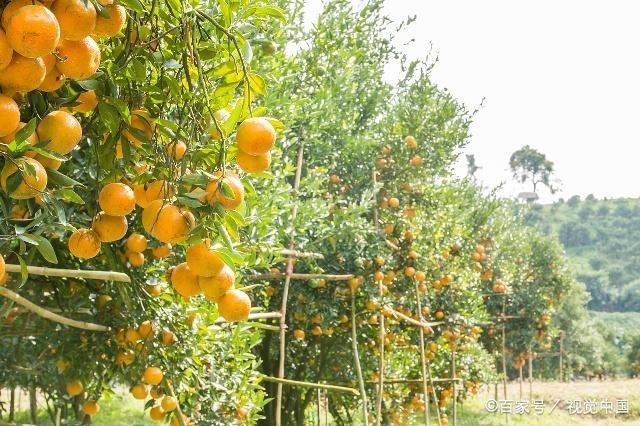
The mandarin orange (Citrus reticulata Blanco) is a plant belonging to the Rutaceae family. It prefers a warm, humid climate and is slightly more cold-tolerant than pomelo, sour orange, and sweet orange. The Citroideae subfamily of Rutaceae is distributed between 16° and 37° north latitude. It is a tropical and subtropical evergreen fruit tree (except for trifoliate orange), and three genera are used for commercial cultivation: Poncirus, Citrus, and Fortunella. The citrus cultivated in China and other countries around the world is mainly of the genus Citrus.

Cultivation Techniques
Site Selection
Planting Season
Planting Spacing
Soil
Fertilizer and Water
Mandarin oranges need irrigation during dry months, so when winter is dry and the temperature is above 13°C, irrigation must be carried out. In addition, dehydration is dangerous, as it causes water in the fruit to flow to the leaves and makes the fruit shrivel. In the past, irrigation was mainly carried out by furrow irrigation or sprinkler irrigation above the canopy, but sprinkler irrigation carries the risk of salinization, and furrow irrigation can cause decreased soil aeration. Nowadays there is a trend toward drip irrigation and micro-sprinkler irrigation under the canopy, irrigating in strips so that part of the soil surface remains dry. In orchards where phosphorus and potassium fertilizers were not fully applied before planting, the application of phosphorus and potassium fertilizers should be increased year by year; one month after young trees are planted, new roots begin to grow, and dilute manure water can be applied. The amount of fertilizer should be small rather than large, and dilute rather than concentrated, especially chemical fertilizers, which require even more attention when applied to avoid root injury. Before each new shoot flush and during the growth period, quick-acting fertilizer should be applied 1 to 2 times, striving for 3 to 4 shoot flushes per year: spring shoot fertilizer from late February to early March, summer shoot fertilizer in mid- to late May, early autumn shoot fertilizer in early to mid-July, and winter fertilizer in late November. In areas prone to freeze damage, fertilization should be stopped from August to October to prevent the emergence of late autumn shoots and winter shoots, avoiding nutrient consumption that leads to freeze damage. In the second year after planting, the amount of fertilizer applied should be gradually increased, organic fertilizer should be applied in combination with soil improvement, the amount of phosphorus and potassium fertilizer should be increased, and an appropriate amount of lime should be added to acidic soil, in order to cultivate a dense root mass and robust autumn shoots, laying the foundation for fruiting in the third year. For fertilization of 2- to 3-year-old trees, continuous topdressing should be carried out during the growth period of each shoot flush; apply shoot-promoting fertilizer about half a month before shoot emergence, and apply one shoot-promoting fertilizer as topdressing if few shoots emerge; after shoots self-prune or are pinched, apply one shoot-strengthening fertilizer as topdressing, and after autumn shoots turn green, apply manure water 2 more times as topdressing. When fertilizing, attention should be paid to the differences between weak trees and strong trees. To ensure three normal growth flushes in weak trees and increase the number of new shoots, their summer shoots can be stimulated in the first year after planting; when the summer shoots grow to 7 to 8 leaves, pinch them and apply supplementary fertilizer. The summer shoots after supplementary fertilization become plump and thick, and the early autumn shoots stimulated by fertilization are robust, which can play the role of using a small amount of fertilizer to strengthen shoots. In the second year after planting, the summer shoots of weak branches should not be cut back, because after cutting back, due to poor nutritional conditions, the new shoots that emerge will be weak in growth.
Training and Pruning
Flower and Fruit Retention
- Corresponding measures to retain flowers and fruit should be taken in response to flower and fruit drop.
- Cultivating a robust tree vigor and accumulating sufficient nutrients is the foundation for retaining flowers and fruit.
- To retain flowers and fruit, leaves must first be retained; during the growth and development of the fruit, different mandarin orange varieties require different leaf-to-fruit ratios for high-yielding trees.
- Plant growth regulators can be used to retain flowers and fruit, mainly including guangzengsu, nucleotide types, cytokinin types, and so on.
- Control spring shoots and remove summer shoots.
- Girdling: select robustly growing trees and, from April to June, girdle lateral branches 4 to 5 cm in diameter with two rings at a spot 4 to 5 cm from the fork.
- Thin flowers and fruit: after the fruit set is stable, remove small fruit, overly dense fruit, and fruit hidden close to the ground in stages, retaining normal green fruit.
- Supplementary pollination: carry out artificial pollination during full bloom on sunny days after the dew has dried.