A Detailed Guide to Geranium Planting Methods and Care Tips
Geranium, also known as fish geranium, zonal geranium, rulahong, rilanghong, and yangkui, belongs to the Geraniaceae family, which includes about 230 species of perennial succulent subshrubs or shrubs. Geraniums originated in southern Africa and are widely cultivated around the world. Young geranium plants are succulent herbs, while older plants become semi-woody; in the West they are excellent flowers for decorating windowsills, and on the European continent, such as in Germany and Austria, they are especially common.
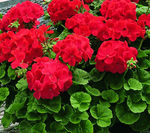
Growth Habits:
Geraniums like warm winters and cool summers. Indoors in winter, keeping the temperature at 10-15°C during the day and above 8°C at night is enough for them to bloom normally. However, the optimal temperature is 15-20°C. Geraniums prefer dry conditions and dislike dampness, so do not water too much in winter; water only when the soil is dry. When the soil is wet, the stems become soft and tender, which is unfavorable for the sprouting and opening of flower branches; long-term excessive moisture will cause the plant to grow leggy, the flower branches to form higher up, and the leaves to gradually turn yellow and fall off.
Geraniums need sufficient sunlight during their growing period, so in winter they must be placed in a sunny spot. With insufficient light, the stems and leaves grow leggy, the pedicels become thin and weak, and the inflorescences develop poorly; flower buds under weak light often fail to open properly and wither early. Geraniums do not like heavy fertilization; too much fertilizer will make geraniums grow excessively and hinder flowering.
Planting Methods:
1. Sowing method
Place geranium seeds in a pot and cover with soil, but not too deep. The germination temperature is 20-25°C, and they will sprout after 2-5 days. After the seeds germinate, they should receive light immediately to prevent leggy growth.
2. Cutting method
In spring and autumn, cut healthy branches from the geranium plant, about 7-8 cm long. Remove the lower leaves, insert into soil, and place in a cool area for care. After 20 days of cutting, roots will form; when the roots grow to 3-4 cm, the plant can be transplanted into a pot.
3. Watering
Geraniums like moisture, so keep the soil moist, but never let water accumulate, otherwise the roots are prone to rot.
4. Pinching
When the geranium plant grows to 10-15 cm, pinch off the growing tips to encourage new branches to grow.
5. Pruning
During the vigorous growth period of geraniums, the plant should be pruned. After flowering, remove the flower branches promptly to avoid consuming too many nutrients.
6. Fertilizing
During the growing period, geraniums need topdressing once every 15 days with a thin liquid fertilizer. However, be careful not to use too much nitrogen fertilizer, to avoid leggy branches; after the plant sprouts, apply a thin phosphorus fertilizer once.
7. Light
Geraniums like light, so ensure sufficient sunlight. In summer, shade appropriately to avoid direct sun exposure. Getting sufficient sunlight helps geraniums extend their flowering period.