Detailed Guide to Planting Methods and Care Tips for Peace Lily
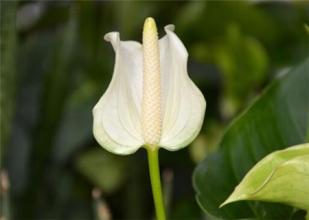
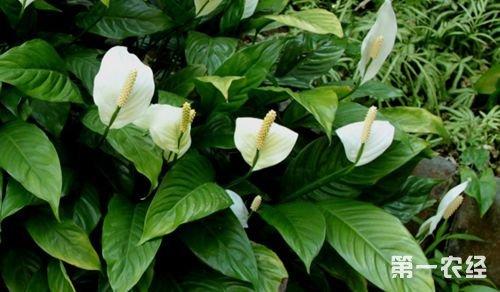
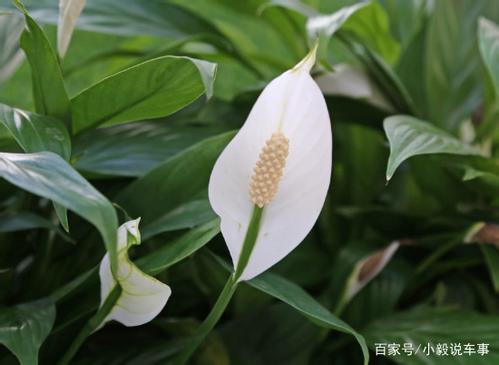
Peace lily (scientific name: Spathiphyllum kochii Engl. & K.Krause) is a perennial herb in the Araceae family. The plant is 30 cm-40 cm tall, stemless or with a very short stem; the leaves are oblong or nearly lanceolate, with a distinct midrib and petiole, dark green. It blooms in spring and summer; the spathe is large and conspicuous, rising above the leaves, white or slightly green, and the spadix is creamy yellow.
Growth Habits
It likes high temperatures and high humidity, and is also fairly shade-tolerant. The leaves of the peace lily are relatively large and quite sensitive to humidity, and it fears strong sunlight and exposure; in summer provide 60-70% shade, but long-term insufficient light makes it difficult for the plant to bloom. A fertile loam rich in humus is best for the soil. The optimum growing temperature is 22-28°C, with 24-30°C from March to September and 18-21°C from September to March of the following year; the winter temperature should not be lower than 14°C. Below 10°C the plant's growth is hindered and the leaves are prone to cold damage. During storage and transport of potted peace lilies, keep the temperature at 13-16°C and the relative humidity at 80-90%; the plant can tolerate a dark environment for 30 days.
Propagation Methods
Division: For propagating peace lily by division, May to June is the best time. Lift the whole plant out of the pot, cut the rhizome apart from the base of the clump, making sure each division has at least 4 leaves, then plant them separately and place them in partial shade to recover.
Sowing: After the peace lily flowers, seeds can be obtained through artificial pollination. The seeds must be sown immediately after collection; the germination temperature is 30°C, and germination occurs 10-15 days after sowing. If the temperature is too low during germination, the seeds are prone to rotting. After disinfection, inoculate them on an added culture medium, and after 45 days callus tissue and adventitious buds grow.
Tissue culture: Using young inflorescences and lateral buds of the peace lily as explants, after disinfection inoculate them on MS medium supplemented with 10 mg/L 6-benzylaminopurine and 2 mg/L indoleacetic acid; after 40-45 days callus tissue and adventitious buds grow. Then transfer the adventitious buds to MS medium supplemented with 2 mg/L indoleacetic acid, and after 30-40 days roots are induced, forming complete plantlets.