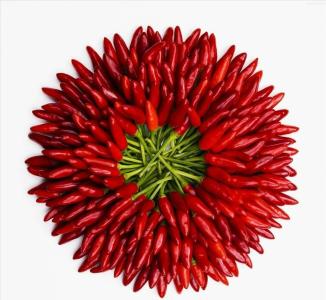
Pepper, also known as: ox-horn pepper, long pepper, sweet pepper, bell pepper, Latin name: Capsicum annuum L., is an annual or limited-perennial herbaceous plant of the class Magnoliopsida, family Solanaceae, genus Capsicum. The stem is nearly hairless or slightly pubescent, with branches somewhat zigzag-bent. The leaves are alternate; at the branch tips the nodes do not elongate and the leaves become paired or clustered, oblong-ovate, ovate, or ovate-lanceolate, with entire margins, the apex shortly acuminate or acute, the base narrowly cuneate; the flowers are solitary and nodding; the calyx is cup-shaped with inconspicuous 5 teeth; the corolla is white with ovate lobes; the anthers are grayish purple. The fruit stalk is relatively stout and nodding; the fruit is long finger-shaped, with an acuminate and often curved apex, green when unripe, and red, orange, or purplish red when ripe, with a pungent taste. The seeds are flat kidney-shaped and pale yellow.
Planting Methods
1. Seed treatment: Seedlings are generally raised from the Spring Equinox to Qingming. Sun the seeds for 2 days to promote after-ripening, increase the germination rate, and kill pathogens carried on the seed surface. Alternatively, soak them in 0.5% trisodium phosphate, or 300-400 times potassium permanganate, or 1% thiourea for 20-30 minutes to kill pathogens carried on the seeds. After repeatedly rinsing the chemical solution off the seeds, soak them in 25-30 degree warm water for 8-12 hours.
2. Sowing for seedlings: After the seedbed is prepared, irrigate it with enough bottom water, then spray with 3000 times Llvheng No. 1 for disinfection. Then scatter a thin layer of fine soil, evenly sprinkle the seeds onto the seedbed, cover with another layer of fine soil 0.5-1 cm thick, and finally cover with a small tunnel to retain moisture and increase temperature.
3. Seedbed management: After sowing, the daytime temperature should be 25-34.7 degrees, and the soil temperature about 20 degrees. Seedlings emerge in 6-7 days. After 70% of the seedlings have pushed through the soil, scatter fine soil 0.5 cm thick over the seedbed when there is no water on the leaf surface, to fill cracks and preserve moisture and prevent the seedling roots from being exposed. The seedbed must have an adequate water supply, but the soil must not be too wet. When the peppers reach 5 cm in height, the seedbed should be ventilated to harden the seedlings; the ventilation openings should be adjusted flexibly according to the growth of the seedlings and the weather temperature, and 10 days before transplanting the seedlings can be hardened in the open air. Hardening should be done gradually and must never be done all at once. If the
seedlings grow leggy, spray 500 mL per kg of chlormequat, or 5 mL per kg of mepiquat chloride. Weak and yellow seedlings can be sprayed with Tianda 2116; before transplanting, use virus-killing agents or plant disease-killing agents to drench the roots and spray the leaves, which has a good effect on preventing viruses.
Management Process
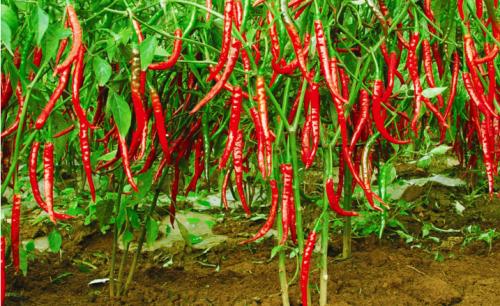
Peppers like warmth, water, and fertilizer, but high temperatures make them prone to disease, waterlogging easily kills the plants, and too much fertilizer easily burns the roots. Different stages of the entire growth period have different management requirements. After transplanting and before harvest, the goal is to promote roots and promote plant growth; from the start of harvest to the full fruiting stage, the goal is to promote plant growth and push fruit development; after entering the high-temperature season, the goal is to protect roots and preserve plants and prevent plant decline and death; in the late fruiting stage, management should continue to be strengthened to increase yield and income.
1. Management before the start of harvest
During this period the soil temperature is low and the root system is weak, so there should be more promotion and less control. That is, water lightly and topdress early; cultivate frequently and restrain seedling growth only slightly; water lightly to help the seedlings recover, and a little manure water can be applied along with it; after watering, cultivate promptly to increase temperature and preserve moisture and promote root development. The seedling-restraining period should not be too long, about 10 days or so, and light watering and light restraining can be used to regulate the relationship between roots and shoots. After the seedling-restraining period ends, water and topdress promptly to increase early yield. The topdressing should be mainly nitrogen fertilizer, combined with some phosphorus and potassium fertilizer, to promote strong and healthy plants, prevent flower drop, and promptly remove the side branches on the main stem below the first flower.
2. Management from the initial harvest stage to the full fruiting stage
At this stage the temperature gradually rises, rainfall gradually increases, and pests and diseases occur one after another; this is the key period that determines whether yield will be high or low. To prevent premature aging, the first pepper should be harvested early, watering should be timely, and the soil moisture should be kept constant, to promote plant growth and push fruit development, and strive to close the rows during the high-temperature season. When entering the full fruiting stage, soil should be banked up around the plants to protect the roots before the rows close, and topdressing should be carried out together with the banking.
3. Management during the high-temperature season and afterward
The hot rainy season easily induces viral disease, with severe flower and fruit drop, and sometimes heavy leaf drop. Therefore, in hot and dry years, irrigation must be done at the beginning of the drought period, not at the end of the drought period, so as to always keep the soil moist and inhibit the occurrence and development of viral disease. After rain, apply a small amount of chemical fertilizer to preserve the plants, and also irrigate promptly to prevent drought after the rainy season from forming a peak of viral disease. In the high-temperature season, irrigation should be done in the morning and evening. During the full flowering stage, spray 800-1000 times chlormequat 3-4 times, which has a good effect on preserving flowers and increasing yield.
4. Management in the late fruit-shrinking stage
After the hot rainy season, when the temperature turns cooler, the green pepper plants resume normal growth, and management must be strengthened to promote the formation of a second full fruiting stage and increase late yield. Water promptly, and together with watering apply quick-acting fertilizer to supplement the deficiency of soil nutrients.
5. Pest and disease control
① Viral disease: Pepper viral disease is mainly prevented; spray 1000-2000 times Bingdu Kuaike solution, or 20% Virus A 500-700 times solution, or 20% Bingduling 500 times solution for control.
② Phytophthora blight: Spray 77.2% Previcur water agent 800 times solution or 75% chlorothalonil wettable powder 800 times solution for control; apply once every 7-8 days, spraying 2-3 times in succession.
③ Aphids: Choose 10% imidacloprid or 2.5% deltamethrin emulsifiable concentrate wettable powder 2000-3000 times solution for spray control.
④ Leafminer: Spray 20% Banqianjing 1500-2000 times solution or 10% Qianchongsha 800-1500 times solution for control.
6. Timely harvest: 60 days after the peppers flower, the fruit matures and is picked in batches. When picking the fruit, the fruit stalk should not be included, so as not to prick other fruits. To avoid rotting and cracking of fresh fruit, it is best to harvest at the color-turning stage or the half-ripe stage.