Detailed Guide to Begonia Planting Methods and Care Tips
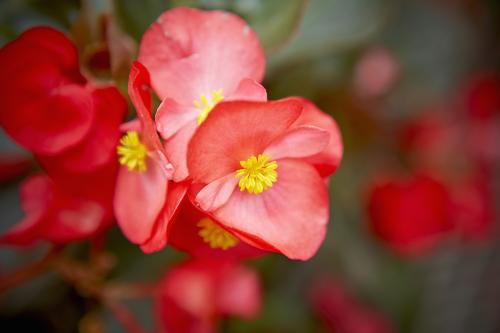
Begonia (scientific name: Begonia grandis Dry): a perennial herbaceous plant of the genus Begonia in the family Begoniaceae. The rhizome is nearly spherical, the stem is upright, up to 60 cm tall, with longitudinal ridges and no hairs. The stem leaves are alternate, the leaf outline is broadly ovate to ovate with the two sides unequal, the upper surface is brownish green, often with a red blush, the lower surface is lighter in color with a purplish red tinge, the stipules are oblong to lanceolate and membranous, the flower scape has longitudinal ridges and no hairs; the flowers are fairly numerous and pink, the bracts are oblong with a blunt tip and fall early; the anthers are obovate-spherical, the ovary is oblong, the capsule hangs down, the outline is oblong, the seeds are oblong and small, light brown and extremely numerous, flowering in July, beginning to bear fruit in August.
Growth Habits of Begonia
The suitable growth temperature is 19-24°C, and the winter temperature should not be lower than 10°C, otherwise the leaves are easily damaged by frost, but the rhizome is relatively cold-tolerant. In a warm environment it grows rapidly, with lush stems and leaves and bright flower colors. Begonia is sensitive to light. It is generally suitable for growing in morning light and diffused light, and strong light easily causes leaf scorch.
In addition, its response to the photoperiod is also very obvious. Under conditions of short daylight and a nighttime temperature of 21°C, the flowering period is noticeably delayed. Because it grows naturally in forest understories or ravine areas with relatively high humidity. Therefore, wild species grow in forest understories with good drainage and leaf-mold soil layers or in rock crevices, which is extremely favorable for root growth and development.
1. Potting
Seedling-raised plants with 3-4 leaves, and cutting-raised plants 10-15 days after rooting, can be divided and potted.
2. Watering
For management after potting, watering once a day in winter is sufficient, and watering is generally done around midday; in summer the watering frequency is slightly higher, once in the morning and once in the evening each day. During the peak summer growth period of begonia, attention should also be paid to spraying every day to keep the relative humidity at 56%-60%. In spring and autumn, watering once a day is also sufficient; sometimes in the evening, depending on the weather conditions, supplementary watering can be given, that is, watering the existing pots with a small amount of water.
3. Fertilizing
Half a month after potting, the spacing between pots should be increased to promote sturdy side branches, and a topdressing of dilute fertilizer should be applied once. The fertilizer ratio is best at N:P:K of 3:1:2 or 2:1:2, and trace elements can then be supplemented. The fertilizer concentration must not be too high, otherwise it easily burns the roots; thereafter topdress once every 20-30 days.
4. Light and Temperature
Begonia also has relatively strict requirements for light and temperature, and the regulation of light and temperature varies according to the species. Generally, controlling the growing period at around 24°C is sufficient; in summer, ventilation should be strengthened to avoid high temperature and excessive humidity. During the dormant period, maintain around 10°C; at this time reduce watering and avoid water accumulating on the leaf surface.
5. Pest and Disease Control of Begonia
Begonia is easily attacked by aphids, mealybugs and red spider mites, and is prone to powdery mildew and bacterial damping-off. To prevent infection and spread of pests and diseases, the method we usually adopt is to improve ventilation conditions and avoid dense planting during cultivation. If begonia is found to be attacked by pests and diseases, infected plants and leaves should be removed immediately. If disease occurs, various fungicides can be used to inhibit the spread of pests and diseases.