A Detailed Guide to Dahlia Planting Methods and Key Management Points
The dahlia (Dahlia pinnata Cav.), also known as the garden dahlia, pinnate dahlia, Japanese dahlia, dahlia, and sweet potato flower, is a plant in the Asteraceae family and the Dahlia genus. It is a perennial herb with large, tuberous roots. The stems are upright, much-branched, 1.5-2 m tall, and sturdy. It is native to Mexico, where people regard it as a symbol of generosity and magnificence, and therefore honor it as the national flower.
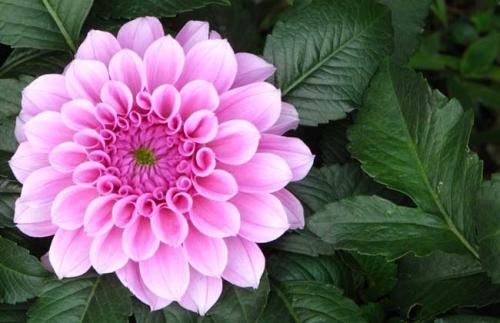
How to plant dahlias
1. Soil: Dahlias grow best in loose, fertile, well-drained sandy loam. They require crop rotation, have moderate fertility requirements, and can grow well at pH 6.7-7.8.
2. Sunlight: Dahlias love light and do not tolerate shade. If kept in a shaded place for a long time, they will grow poorly, with weak roots, thin leaves, slender stems, and small, pale flowers, and some may even fail to bloom. Therefore, potted dahlias should be placed in a spot with ample sunlight. During the leaf-growing stage, they need sufficient light, with daily sunlight of more than 6 hours, so that the plants grow robustly and the flowers are large and full. If daily sunlight is less than 4 hours, stem and leaf branching and flower bud formation will be affected to some extent; especially under cloudy and rainy conditions with little sunlight, flowering will be poor, stems and leaves will grow poorly, and the plants will be prone to disease.
3. Temperature: They prefer a cool climate and are not strict about ecological factors, so they are highly adaptable. During the growing period, they are not demanding about temperature and can grow normally between 5-35°C, but 10-25°C is *** most suitable.
4. Watering: The amount of water given can control the height of the dahlia plant. During the seedling stage, water should be controlled to promote dwarfing. In summer, to lower the temperature, increase air humidity, and reduce water evaporation from the stems and leaves of the dahlia, water should be sprayed 1-2 times a day. Water once at 3-4 p.m., and the amount should not be too large.
5. Fertilizing: Dahlias love fertilizer. During the growing period, a topdressing should be applied once every 7-10 days, or diluted liquid fertilizer should be applied 2-3 times. However, because dahlias are afraid of heat and often enter a semi-dormant state in summer, no fertilizer or only extremely dilute fertilizer may be applied at this stage. After the plant forms buds, the amount of phosphorus fertilizer can be increased to make the flowers bloom better. The root system of dahlias is rather delicate, and concentrated fertilizer should be avoided throughout the entire growing process.
6. Pests and diseases: Dahlias generally mainly suffer from problems such as powdery mildew, gray mold, bacterial wilt, viral disease, and snout moths, so pesticides should be sprayed regularly for treatment.
7. Pruning: When cultivating dahlias for medium and small flowers, only remove the side buds on several nodes at the lower part of the stem so that they bloom successively. If you want to cultivate a large single flower, only the terminal bud should be retained and all other side buds removed. At the end of June and the beginning of July, after the *** flower, the weather gradually becomes hotter and plant growth slows; pruning can be carried out at this time. When pruning, first twist the stem in the middle of the branch, between two leaves, and bend it downward, leaving a height of 20-30 cm. After a few days, when the wound has dried and shrunk, cut it again. This can prevent rainwater from pouring into the hollow stem and causing rot. If grown until October, it can bloom again.