Detailed Explanation of Pomelo Planting Techniques and Management Methods
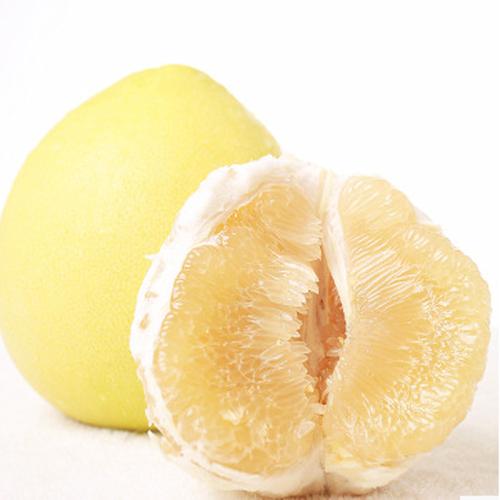
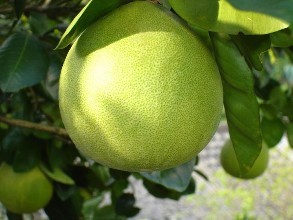
The pomelo is a tree of the genus Citrus in the family Rutaceae. The young branches, undersides of leaves, pedicels, calyx and ovary are all covered with soft hairs; young leaves are usually dark purplish-red, and young branches are flattened and angular. The leaves are fairly thick, deep green, broadly ovate or elliptic; the inflorescence is a raceme, sometimes also with axillary solitary flowers; flower buds are pale purplish-red, rarely milky white; the calyx is irregularly 5- to 3-lobed; the style is thick and long, and the stigma is slightly larger than the ovary.
Planting Methods
I. Field Planting
1. Planting density: Pomelo trees grow vigorously and have large crowns; grafted trees enter full bearing age in 6-7 years, so the planting density for block planting should not be too close. On slopes above 20 degrees, plant 45 trees per mu; on 10-20 degree slopes, plant 40 trees per mu; on gentle slopes below 10 degrees, plant about 35 trees per mu. Pomelo trees like warmth and moisture, need fertilizer and water, and require deep, fertile soil; special attention should be paid to planting pomelo trees in soil that is relatively fertile and has adequate moisture, or in places with good water source conditions.
2. Planting time: Generally spring and autumn rainy seasons are suitable, from late February to late April in spring; from mid-September to mid-October in autumn. Where conditions permit, planting can also be done in other seasons, but it is not advisable to plant under low-temperature winter conditions or under summer drought conditions.
3. Planting density: Spacing of 4x4 m or 4x5 m, generally about 40 trees per mu; dwarfing and close planting are also possible, with 50-60 trees per mu.
4. Planting method: Before planting pomelo trees, dig a large pit 1 m square, apply a large amount of organic fertilizer and an appropriate amount of phosphate fertilizer as base fertilizer, and backfill soil to 20-30 cm above the ground; when planting, gently place the seedling into the hole, plant with loose, crumbled soil, press the fine soil around the root ball firmly by hand, and leave the graft union exposed above the ground; after planting, shape the planting basin to 20 cm above the ground and water thoroughly to settle the roots.
II. Soil Cultivation
1. Deep plowing and hole expansion, soil mellowing: Deep plowing to improve the soil and mellow the soil must begin when the orchard is established and be expanded year by year. For young pomelo trees, ring-shaped trenches can be dug around the planting area and deep plowed year by year. In mature pomelo orchards, strip-shaped deep trenches can be made around the outer edge of the canopy, about 0.5-0.7 m deep and wide, with green manure and other organic fertilizers and inorganic fertilizers buried in layers; deep plowing can also be done every other year, every other row, or by rotating the position for each tree each year.
2. Planting green manure extensively: Use the land while nourishing it. Planting green manure extensively to cover the ground can prevent erosion in summer, lower soil temperature, increase air humidity and suppress weeds, while also increasing soil organic matter and improving soil fertility. If legumes, vegetables, etc. are intercropped, early returns can also be increased; their stalks and pruned residues can be used as cover and turned into the soil to increase soil organic matter.
3. Intertillage and earthing up: Intertillage should be combined with weeding, generally 3-4 times a year, namely after fruit harvest in winter, in summer or autumn, and once each combined with sowing and intercropping. The depth of intertillage is 10-15 cm (appropriately deeper when combined with intercropping and sowing); the closer to the trunk, the shallower it should be, so as to avoid damaging large roots. Earthing up is best done before the dry season arrives or after fruit harvest in winter. In gentle slope areas, earth up once every 3-4 years; in places with steep slopes and severe erosion, earth up once every other year.
III. Fertilization
Young pomelo trees are small and their roots are young and tender, so it is advisable to apply fertilizer frequently and lightly, 5-6 times a year. For fruiting trees, generally 4 applications are needed, namely the rejuvenation fertilizer, the bud-promoting fertilizer, the fruit-stabilizing fertilizer and the fruit-swelling fertilizer.
1. Rejuvenation fertilizer (base fertilizer): Apply before and after fruit harvest; its application amount accounts for half of the annual fertilizer application. A large amount of slow-release fertilizers such as green manure, compost, barnyard manure and cake fertilizer should be applied, together with quick-acting nitrogen fertilizer and phosphate fertilizer.
2. Bud-promoting fertilizer (pre-flowering fertilizer): Generally applied in February-March; this fertilizer should be mainly quick-acting nitrogen fertilizer, mainly using human and livestock manure, with appropriate combined application of urea.
3. Fruit-stabilizing fertilizer: Apply quick-acting nitrogen fertilizer and phosphate fertilizer half a month before the June fruit drop; decomposed human and livestock manure can be used, and a 1% superphosphate extract can be sprayed.
4. Fruit-swelling fertilizer: Apply in mid-to-late June, using quick-acting nitrogen fertilizer and phosphate-potassium fertilizer.
IV. Irrigation and Drainage
Pomelo trees are evergreen year-round, have a large annual growth volume of branches and shoots, a long fruit-bearing period, and large leaves and fruits, so their water requirements are high. When cultivating pomelo trees, irrigation must be used to ensure their water requirements; irrigation should be based on the water needs of pomelo trees at each phenological stage and the drought conditions at the time. Overall, moderate water is needed throughout the annual growth and development process, and it is especially sensitive during spring bud break and flowering and during the peak fruit growth period. Where there is spring drought or summer drought, irrigation must be carried out at that time. In low-lying places with high groundwater levels or during the rainy season, attention should be paid to drainage; before the rainy season arrives or during heavy rain periods, the drainage system of the pomelo orchard should be checked at any time and promptly repaired and dredged so that drainage is smooth and unobstructed.
V. Training and Pruning
Pomelo trees have strong vigor and a tall body. In the young stage, under conditions of sufficient fertilizer and water, apical dominance is strong, branches and shoots grow upright, and a tree shape with an obvious trunk is easily formed; new shoots are numerous and vigorous. After fruiting, branches droop due to the weight of the fruit, and the branches bend downward, causing the tree shape to become umbrella-like, so light does not easily penetrate into the interior of the canopy and branches weaken and fruits become small. Most of the fruiting mother branches of pomelo trees are inside the canopy and are biennial leafless branches (commonly known as "claws"). According to the growth and fruiting characteristics of pomelo trees, the "modified lateral trunk form" and the natural "open-center form" are suitable for production; the trunk height should be 40-60 cm, with 30-40 cm between main branches, and a total of 5-6 main branches should be trained. When pruning pomelo trees, the principle should be "heavy at the top, light on all sides, heavy on the outside, light on the inside," that is, at places where branches and leaves are dense around the canopy, prune to thin them out; heavily prune the top branches and lightly prune the internal branches, so that light inside the canopy is good and the fruit is abundant and of good quality. Generally, the relatively slender leafless branches on 3-4 year old lateral branches inside the canopy are excellent fruiting mother branches and must be retained. For lateral branches on the outer edge of the canopy that are too long or that disrupt the tree shape and affect the balance of tree vigor, attention should be paid to thinning and heading back so as to achieve the goal of ventilation and light penetration.