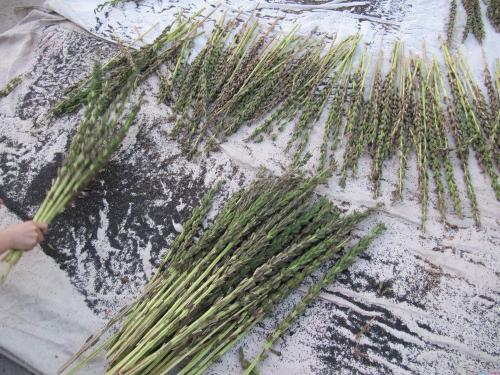
Sesame, also known as zhima or huma (scientific name: Sesamum indicum), is the seed of huma, an annual erect herbaceous plant, 60-150 cm tall. It is found throughout the world's
tropical regions as well as parts of temperate regions. Sesame is one of China's main oil crops and has high application value. Its seeds have an oil content of up to 55%. Since ancient times, China has had many kinds of foods and delicious
dishes made with sesame and
sesame oil, which have long been renowned throughout the world.
Sesame is called the crown of the eight grains. Sesame is an oil crop, and the oil extracted from it is called sesame oil, huma oil, or xiangyou, characterized by a mellow fragrance and suitable for both raw and heated use.
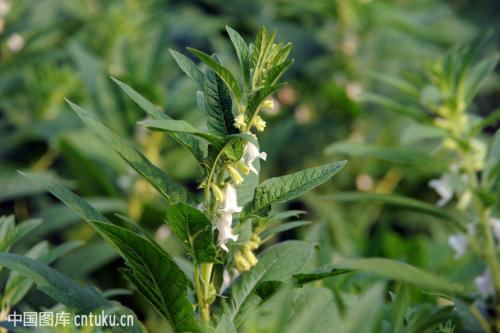
Cultivation Techniques:
Sowing
1. Sowing period: The suitable sowing period for summer sesame is from late May to early June. The suitable sowing period for autumn sesame is early to mid-July, and under conditions with good heat, it can be delayed to late July.
2. Sowing rate: Per mu, the seed rate is 400 grams for broadcast sowing, 350 grams for drill sowing, and 250 grams for dibbling. In fields with high
soil fertility, few pests and diseases, and high moisture content, sowing can be appropriately reduced.
3. Sowing methods: There are three types: dibbling, broadcast sowing, and drill sowing. Broadcast sowing is the traditional sowing method in the Jianghuai region and is suitable for sowing to capture soil moisture. With broadcast sowing, the seeds are evenly and thinly distributed, the soil cover is shallow, and seedlings emerge quickly, but it is not conducive to field management.
Drill sowing can control row and plant spacing, implement reasonable close planting, and facilitate field management such as thinning and intertillage, and is suitable for mechanized operations. For dibbling, 5-7 seeds per hole. Regardless of the sowing method, shallow sowing and even sowing with a depth of 2-3 cm is appropriate.
Fertilization
In order to obtain high-quality and high-yield sesame, scientific and rational fertilization is key. Production practice has proven that the key to fertilizing sesame lies in grasping the timing and methods, requiring seedling fertilizer to be "early," bud fertilizer to be "skillful," and flower fertilizer to be "heavy." When fertilizing, attention should be paid to the combination of nitrogen, phosphorus, potassium, and
trace elements, and the combination of
organic fertilizer and inorganic fertilizer, achieving the three-fertilizer combination of base fertilizer, seed fertilizer, and topdressing, scientifically fertilizing, and realizing early development, steady growth, and no premature aging of sesame. The specific methods are discussed below:
Early application of seedling fertilizer: Because sesame seeds are relatively small, and because basal nitrogen fertilizer is often applied in excess, it is easy for seedlings to grow excessively and form leggy seedlings. Therefore, sesame should be combined with early thinning and early final thinning, and seedling fertilizer based mainly on quick-acting fertilizer should be applied early according to seedling condition. Applying seedling fertilizer well is an important measure for early development and healthy growth of sesame. For seedling-stage fertilizer, diluted decomposed human excrement or urea is preferable. Generally, after final thinning, 2-3 kg of urea per mu is applied as topdressing. When drought is severe, drought resistance should be carried out first before topdressing, or dilute human excrement may be used for irrigation after dilution. For those with poor seedling vigor, the method of "opening a special meal" should also be adopted to apply seedling-promoting fertilizer. When topdressing seedling fertilizer to sesame, owing to the shallow root system of sesame, it should be applied as shallowly as possible or concentrated at the roots.
Skillful application of bud fertilizer: The budding stage of sesame enters the period of flower bud differentiation, when the plant's vegetative growth and reproductive growth are both flourishing simultaneously. Therefore, applying bud fertilizer well plays a decisive role in high sesame yield. Bud-stage fertilizer is generally based mainly on nitrogen fertilizer, supplemented by phosphorus and potassium fertilizer. Per hectare, 75-150 kg of urea can be applied respectively, plus 150-225 kg of phosphorus fertilizer and 75-150 kg of potassium fertilizer. When fertilizing, for drill-sown sesame, a furrow can be opened about 10 cm from the sesame plants for band or spot application, applied into the 10 cm deep soil layer to facilitate root absorption, and covered with soil after application; for broadcast-sown sesame, decomposed cake fertilizer or granular urea can be mixed into finely crushed soil, thoroughly stirred, and broadcast, and immediately after fertilization, intertillage and loosening of the soil should be carried out to cover the fertilizer. In dry weather, water should be sprayed after application to fully exert the fertilizer effect. The drenching method can also be used, that is, 4-6 kg of urea per mu mixed with 200 kg of water and poured over the base of the sesame plants. In addition, in boron-deficient areas and boron-deficient soils, boron fertilizer should also be appropriately added.
Heavy application of flower fertilizer: Sesame grows most rapidly when it enters the flowering stage, and the nutrients absorbed during this period account for 70%-80% of the entire growth period. In order to meet the needs of plant growth and development, spraying potassium dihydrogen phosphate 1-2 times can delay leaf senescence, make sesame grow vigorously, accumulate more photosynthetic products, increase the number of flowers and capsules, ensure steady growth without premature aging in the later stage, and make the seeds plump and full. At the same time, during the flowering and podding stage, lateral roots have begun to form in large numbers, the absorption capacity of the root system is enhanced, the growth rate of the plant accelerates, and the demand for nutrients also increases significantly. Therefore, a heavy application of flowering and podding fertilizer is needed. For branching varieties, it is generally applied when branches appear; for single-stem varieties, it is applied from budding to early flowering stage. For foliar fertilization, generally 0.4% potassium dihydrogen phosphate is used. Generally, 5-8 kg of urea per mu mixed with 200 kg of water is poured over the base of the sesame plants, or decomposed cake fertilizer, human excrement fertilizer, etc. may also be applied. In addition, from early flowering to full flowering, foliar topdressing can be carried out by choosing a sunny afternoon and spraying a 0.3% potassium dihydrogen phosphate solution on both sides of the leaves, with each interval of 5-6 days, for 2-3 consecutive sprayings.
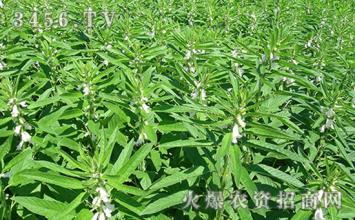
Field Management
After sesame is sown and seedlings emerge, when the first pair of true leaves appears, thinning should be carried out in combination with shallow hoeing. When the second and third pairs of true leaves appear, shallow hoeing should be combined with thinning. When the third to fourth pairs of true leaves appear, final thinning should be carried out in combination with intertillage. Generally, for single-stem varieties, 8,000-10,000 plants per 667 sq m; for branching varieties, 6,000-8,000 plants. For each intertillage and weeding, thinning and final thinning, manure water should be applied according to seedling condition to promote growth. Sesame requires more water during its flowering period throughout its life. During this period, thin manure water should be applied according to weather and seedling condition to keep the soil moist. At the same time, from budding to early flowering, sesame should be heavily fertilized once, with 6-7 kg of urea per 667 sq m mixed with water and applied, and foliar fertilizer sprayed 2-3 times. At the final flowering stage, the top 3 cm should be removed to concentrate nutrients for supply to the capsules. The main disease of sesame is stem spot disease, which can be prevented with carbendazim before onset. The main pest in the early stage is the cutworm, which can be killed manually or with poison bait; in the later stage, the main pest is the sesame hawk moth, which can be controlled with decis.