Pecan Planting Methods and Key Technical Points Explained
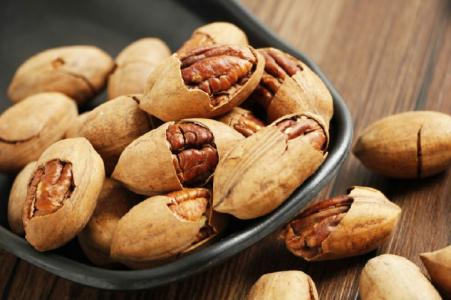
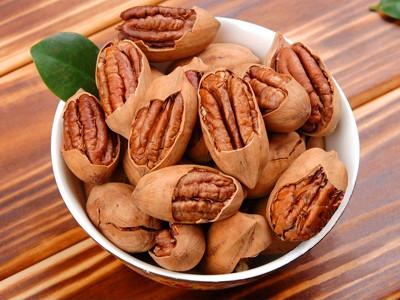
The pecan (Carya illinoensis ( Wangh. ) Koch) [is the fruit of the American hickory, belonging to the genus Carya in the family Juglandaceae, also known as the thin-shell hickory or long hickory, with the English names pecan or hickory. It is native to the United States and northern Mexico, and is one of the world's top ten nuts. It is also known as the thin-shell hickory , the "longevity nut", the "American hickory", and the "long hickory".
Pecan planting techniques:
Planting
For pecans, choose a plot with deep, loose soil, sufficient water sources, and shelter from the wind and facing the sun. A spacing of 4m×5m to 7m×8m between plants and rows is suitable. The planting hole should be 1 to 1.5m in diameter and 1 to 1.2m deep; keep the topsoil and subsoil separate. First place a layer of straw at the bottom of the hole, then cover with topsoil to 20cm; add 50kg of organic fertilizer, 20g of Jiadifen powder, and 500g of superphosphate, and mix thoroughly with the soil. Plant the seedlings from December to January. After planting, firm the tree basin and water thoroughly to settle the roots. Direct sowing to establish an orchard is also possible. Sowing can be done from October in winter to March of the following year, except during freezing weather. When transplanting, it is best to keep a soil ball for short-distance moves; for long-distance transport, immediately coat the roots with mud slurry after digging up the seedlings, which provides protection.
Training and pruning
Early pruning of pecans should be light, retaining appropriately more main branches so they bear fruit early. When pruning, ensure the inner canopy is well ventilated and lets in light. In the early stage, shoots on the upper part of the canopy should be retained as much as possible, while the lower part of the canopy can be gradually thinned, and overly dense large branches can be sawed off when necessary. Saw cuts must be smoothed flat and coated with a protective agent to prevent rot. After hickory trees enter the aging stage, all parts above the point where renewal shoots emerge on the canopy can be sawed off, and the sprouted renewal shoots should be cultivated; all dead parts of the main branches of the aging canopy should be cut off. When carrying out truncation and renewal, it is best to combine this with deep plowing and fertilization.
Fertilization management
High-yield pecan orchards produce more than 500kg per 667 sq m. Within 1 to 3 years of establishing the orchard, crops such as soybeans, corn, and Atractylodes macrocephala can be intercropped. During intercropping, the orchard should be cultivated and weeded, and appropriate amounts of organic fertilizers such as burnt mud ash, cake fertilizer, and barnyard manure should be applied. Each year from July to August, cut down weeds, shrubs, thorns, and vines in the woodland 1 to 2 times, spread the cut weeds over the woodland, and plow the mulch into the soil in winter to increase soil fertility. Each spring before sprouting, apply about 30kg of urea per 667 sq m; during the fruit enlargement period, apply 80kg of special fruit tree fertilizer; and in autumn, apply 3000kg of base fertilizer. After entering the fruiting stage, increase fertilizer application according to the fruiting situation. Foliar fertilizer can be sprayed about once every 15 days along with pesticide application: spray 0.3% urea in the early and late growth stages, and spray 0.3% monopotassium phosphate in June to July. In winter, water thoroughly for overwintering and for budbreak. During the rainy season, drain promptly to prevent waterlogging. Fruiting trees are fertilized twice a year. In February, open radial trenches along the tree basin and apply 20kg of corn stalks and 5kg of night soil per tree. In July, fertilization is mainly with a three-element compound fertilizer, applied at 0.2kg per sq m.
Pest control
Pecan pests and diseases include pecan branch blight, star longhorn beetle, Parasa lepida, coffee wood borer moth, and others. Focus on doing a good job of pest and disease control in the orchard in winter, and during the growing season carry out timely control according to the occurrence of pests and diseases.
Control methods: (1) Strengthen tree vigor, prevent branch damage, and spray fungicides such as carbendazim or chlorothalonil during the disease period.
(2) For wood borer moth control, see "Plane tree".
(3) Manually or with light traps kill adult longhorn beetles, and insert zinc phosphide poison sticks into the bore holes, or plug the bore holes with cotton balls dipped in dichlorvos, to poison the longhorn beetle larvae.
(4) During the larval stage of the nettle caterpillar, spray agents such as dichlorvos or trichlorfon.