Sword Bean Planting Methods and Key Technical Points
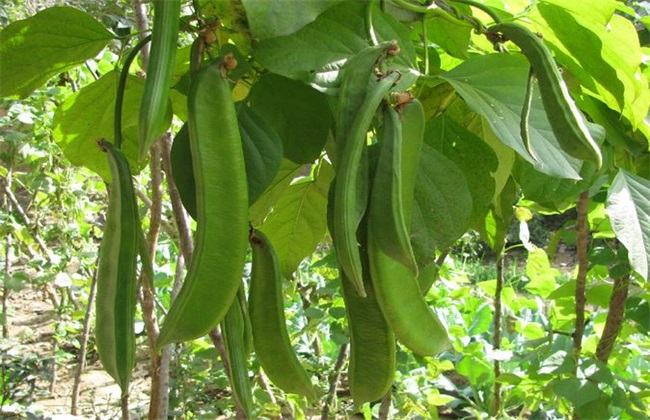
The sword bean is also a type of legume. It is mainly consumed as fresh, relatively tender pods, and frequently appears in our daily lives in the form of a simple stir-fry. It is very nutritious, and for young women who love beauty, eating more sword beans can help whiten the skin. Many cosmetics now contain sword bean ingredients, and at the same time the sword bean can also be used as medicine; it is quite effective for treating some relatively common minor ailments.
Planting Time
The sword bean is a relatively heat-tolerant plant, so it can be sown in all three seasons of spring, summer and autumn. However, the varieties planted in each season differ slightly, and we choose the corresponding variety with better resistance according to the change of season. Spring planting is generally around February or March, summer sowing is around May, and autumn sowing in August will then be transplanted for establishment. The ideal temperature for sword bean seed germination is between 25 and 30 degrees, while the optimal temperature for sword bean seedling growth is between 20 and 25 degrees. The temperature in the sowing month of each season will be more or less unsuitable, so when sowing we must also maintain and control the field temperature well.
Planting Methods
1. Land Preparation
Planting sword beans is actually very simple. In the countryside in the past, most fields were used to grow major crops, such as corn, rice and so on, while sword beans were not really needed, so just one or two plants would be grown, casually planted on the field ridges, which shows that its requirements for soil are not high and that little land preparation is needed. If high yield is desired, it is generally planted in sandy soil with good drainage and irrigation functions and strong permeability. When preparing the land, ridges need to be made and furrows dug, with each ridge about 30 cm wide, which ensures smooth drainage in the field. Finally, base fertilizer is applied, generally by spreading a layer of livestock manure on each ridge.
2. Sowing
The seed coat of the sword bean is relatively hard. If it is not treated before sowing, germination is very slow, so we generally soak the sword bean seeds in water for about one day, then put them into formalin solution for seed dressing, take them out after 20 minutes and rinse them in clear water; generally about three rinses are enough. Finally the seeds are put into a cotton cloth bag and placed in an environment of 25 to 30 degrees for sprouting. After about five days the white sprouts will grow, and then sowing can be carried out. When sowing, we use the method of hole sowing, digging holes on the prepared ridges at a spacing of 40 cm per plant, then placing two to three seeds in each hole, and finally covering the seeds with thin soil and watering once.
3. Fertilization
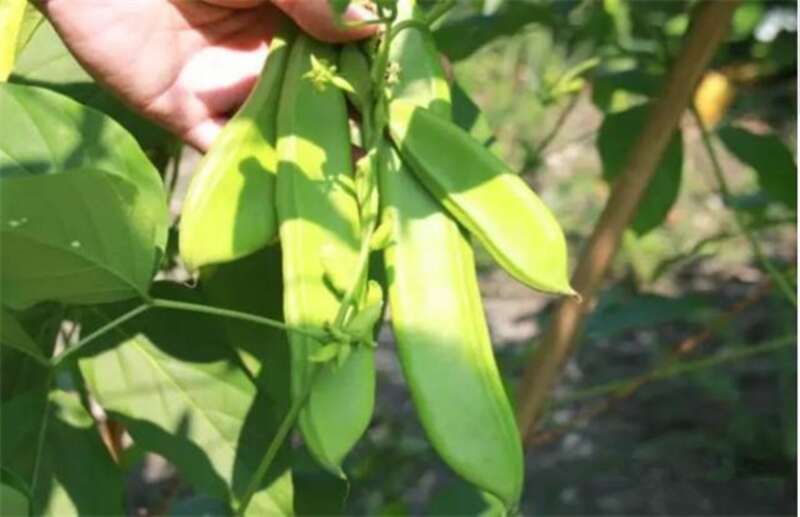
After the sword bean seedlings break through the soil, we can prepare to weed and fertilize. Generally about one week after emergence, we carry out one intertillage and weeding. After weeding, an average of 1,000 jin of farmyard manure, 50 jin of compound fertilizer, 50 jin of potassium fertilizer and 30 jin of phosphate fertilizer needs to be applied per mu, and it can be watered in after mixing with water. The second fertilization is when the sword bean seedlings grow to about 30 cm; in order to promote seedling growth, we mainly apply 1,000 jin of urea. The third fertilization is when the sword bean flowers and forms pods; at this time the purpose of fertilization is to promote flowering and preserve the pods, so a certain dose of foliar fertilizer and boron fertilizer can be sprayed, and at the same time 100 jin of potassium fertilizer is applied.
4. Trellising
Trellis management is something that must be done when the sword bean seedlings grow to 40 to 50 cm, because the sword bean seedlings grow somewhat long. If they are allowed to crawl and grow on the ground, first, the field does not have such a large space, and second, crawling on the ground means they are greatly affected by moisture, temperature and light, which will seriously reduce yield. Therefore, we generally build a support beside each plant, then attach some strings to the support, and then lift the bean seedlings onto the trellis so that they climb and grow along the strings on the trellis. This not only increases yield but also makes later harvesting and daily field management more convenient.
5. Disease Prevention
The most common diseases of sword bean include root rot, Phytophthora blight, rust and powdery mildew. The commonly used control methods are spraying with dexon, chlorothalonil, zineb and thiophanate-methyl, once every ten days, about three times in total. The main pests are aphids, South American leafminer and tobacco whitefly. For aphids, 40% dimethoate emulsifiable concentrate at 2000 times dilution, or dichlorvos at 800 times dilution, can be sprayed for control. For South American leafminer and tobacco whitefly, 10% imidacloprid wettable powder, 20% diflubenzuron suspension concentrate and so on can be used for control.