Sweet potato (fan shu), also called di gua or dried sweet potato (Sweet potato); di gua refers to the tuberous roots of two different plants in southern and northern China respectively. In northern regions it mainly refers to sweet potato, sweet potato; while in some southern regions (Sichuan, Chongqing, Hubei, etc.) it refers to jicama (yam bean), which is a different species.
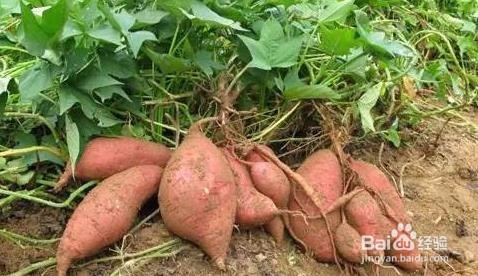
Planting methods:
Seeds: choose high-yielding varieties suited to the local area.
Temperature: Sweet potato likes warmth and fears cold. Low temperatures are harmful to sweet potato growth. When the temperature drops to 15°C, growth stops; below 9°C, the tubers will gradually suffer cold damage and rot; the aboveground stems and leaves quickly lose their vitality and die when frosted. Within the range of 18-32°C, the higher the temperature, the faster the sweet potato grows; above 35°C is unfavorable for growth. The suitable temperature for tuberous root formation and enlargement is 20-30°C, with 22-24°C being most suitable.
Water: Sweet potato has high yields both aboveground and underground, with luxuriant stems and leaves, a well-developed root system, rapid growth, and strong transpiration, so its water demand throughout its life is relatively large. According to measurements, during the entire growth period of sweet potato, each mu requires 400-600 cubic meters of water. The root initiation and seedling recovery stage and the branching and tuber formation stage each account for 10-15% of total water consumption, the vigorous stem and leaf growth stage accounts for about 40% of total water consumption, and the rapid tuber enlargement stage accounts for 35%. The relative soil moisture content should be kept at 60-70% in the early and late growth stages; in the mid-growth stage, which is the vigorous stem and leaf growth stage and the tuber enlargement stage, the relative soil moisture content is best kept at 70-80%. If there is too much soil moisture, oxygen supply becomes difficult, affecting tuberous root enlargement and reducing dry matter content.
Light: Sweet potato likes light and warmth and is a crop that does not tolerate shade. The nutrients it accumulates and stores basically all come from photosynthesis. The more light there is, the more favorable it is for increasing yield. The photosynthetic intensity of leaves receiving light is more than 6 times that of shaded leaves. With insufficient light, leaf color turns yellow and severe cases lead to leaf drop. Poor light exposure generally reduces yield by 20-30%, so tall-stalk crops should not be intercropped or relay-cropped in sweet potato fields. Sweet potato is a short-day crop. A daily sunshine duration within the range of 8-10 hours can induce sweet potato flowering and fruiting; while a long daily sunshine duration is favorable for vegetative growth and promotes yield increases, with about 13 hours per day being better.
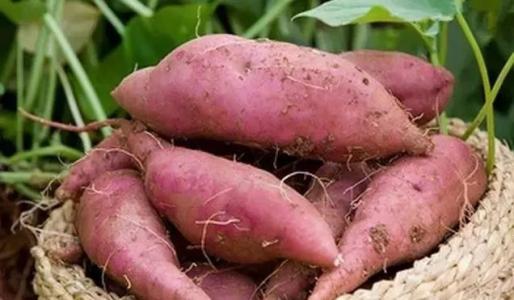
Soil: Sweet potato has strong adaptability to soil and good tolerance of acidity and alkalinity, and can adapt to a soil pH range of 4.2-8.3. The most suitable soil conditions for high-yield, high-quality sweet potato are pH 5-7. Paddy-upland rotation is advocated; paddy fields can reduce the harm of diseases, insects, and weeds in dry fields to the lowest degree, and at the same time redistribute soil nutrients. Deep, loose soil with good aeration, such as sandy loam or loam, is best, as it can produce more tubers, a high proportion of large tubers, high yield and good quality, smooth and brightly colored tuber skin, and a good marketable rate. Deep, loose soil that retains water and fertilizer is favorable for root growth and tuberous root
weight gain. Good permeability provides sufficient oxygen, promotes root respiration, favors cambium activity in the roots, promotes tuberous root enlargement, and also favors microbial activity in the soil, speeding up nutrient decomposition for root absorption.
Ventilation: Choose open, well-ventilated fields. In the mid-to-late growth period of sweet potato, the vines are relatively thick and dense, and the air among the vines contains relatively high water vapor and other harmful gases, which is unfavorable for plant respiration and also affects photosynthesis. When a field has good air circulation conditions, excess water vapor can be carried away, regulating the temperature and humidity among the vines, making the vine growth robust without excessive vegetative growth, and promoting the transfer of nutrients to the underground part.
Harvest: Do not water easily within 20 days before digging the tuberous roots, so as not to reduce the storage tolerance of the tuberous roots. If autumn waterlogging occurs, drain it promptly; otherwise the sweet potato will not store well, and in severe cases a "hard core" rot phenomenon may also appear.