A Detailed Guide to Peony Planting Methods and Key Technical Points
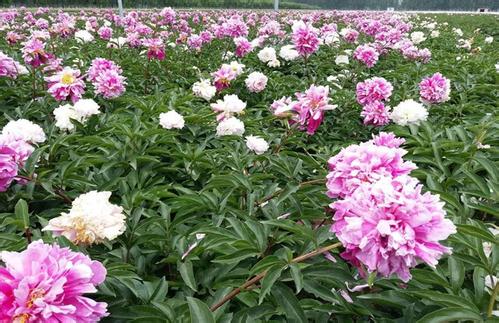
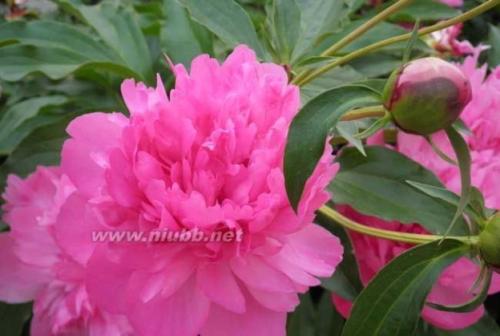
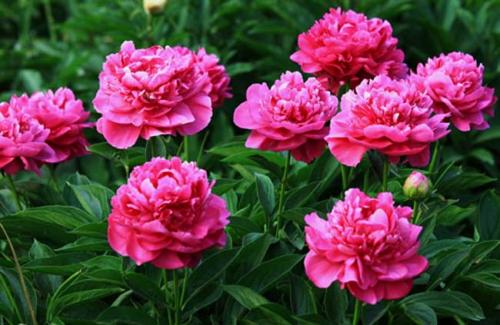
The peony (Paeonia lactiflora) is a herbaceous peony, and its blooming season each year runs from May to June. Its flowers generally grow at the top of the stem or in the leaf axils near the top. The original species has white flowers that bloom especially large and vivid, with each flower having five to thirteen petals. Horticultural varieties are far more diverse, with many colors including white, yellow, green, red, purple and many others. Its flower stem is 10 cm to 30 cm, and the petals can even reach a hundred or more. Its fruit is spindle-shaped, and the seeds are round or oblong.
Planting Methods
Peony flower plantations place great importance on setting planting specifications for peony cultivation. They are generally planted in a staggered "pin" shape, with each peony plant occupying roughly one square meter, so that on the whole, large-scale peony growing can produce plants more uniform than expected. In addition, attention should be paid to controlling the depth and width of the planting pit, following the basic principle of "narrow at the top, wide at the bottom" for reasonable planting.
First, the base fertilizer in the peony planting pit must be managed. Generally, well-decomposed dry manure is used as the base fertilizer and mixed with the soil at the bottom to ensure a basic fertilizer supply. In general, there are also many ways to plant them, including division (division is the method used most often), sowing, cuttings and layering.
Peonies root deeply into the soil, so the soil is required to have good drainage, and the soil texture should preferably be a little loose, otherwise it easily causes root rot and similar problems. The soil fertility must be guaranteed, so choose soil with high fertility as much as possible. When fertilizing, focus on compound fertilizers such as phosphate fertilizer and potassium fertilizer (but chemical fertilizers cannot solve the problem of nutrient depletion, so peonies are better suited to a crop rotation model).
Plant growth cannot be separated from water, and the supply of moisture can ensure good peony growth. However, because the peony itself has fleshy roots, pay attention to the frequency of watering, and by no means water too much, otherwise it will cause root rot in individual plants, and in severe cases it will even lead to "waterlogging", which can deal a devastating blow to a peony planting field.
Peonies are still quite easy to look after, and their temperature requirements are not very high; they like a relatively warm environment, but their cold tolerance is also quite good. Generally, open-air plantations can be set up in the Central Plains region, and they can adapt to most temperature changes; only when the temperature is too extreme may growth be affected. But there is no need to fear the harm that high or low temperatures may bring to peonies.
The normal growth of peonies cannot be separated from photosynthesis, so light is essential. Because they can be grown in the open air, they can enjoy full sunlight. When the light is too intense, the humidity of the environment can be appropriately increased to reduce the impact of overly strong light on peony growth. But by no means carry out high-density shading, because a long-term shaded environment will make peonies grow weakly and affect both yield and flowering season.