Detailed Explanation of Planting Methods and Technical Points for Rhododendron pulchrum
Rhododendron pulchrum, also known as (Rhododendron pulchrum), is an evergreen or semi-evergreen shrub of the genus Rhododendron in the family Ericaceae. When planted in masses, it blooms in a splendid display of myriad colors, adding a natural landscape effect to gardens. It can also be planted in clumps beside rocks, by pond edges, and along lawn borders to enhance the garden atmosphere. Potted plants placed in hotels, living rooms, and public places are dazzling and eye-catching.
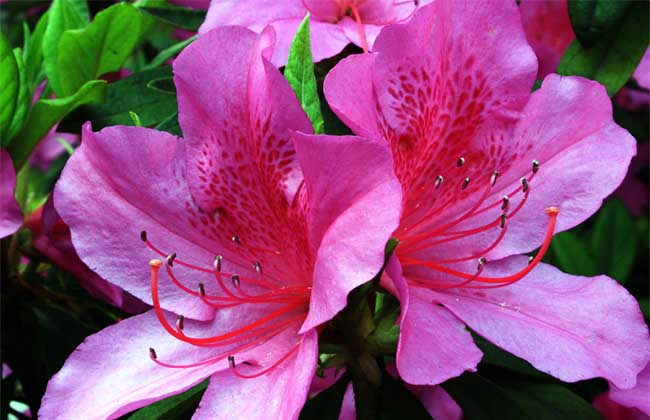
Propagation Methods of Rhododendron pulchrum
1. Cuttage: Cuttage propagation of Rhododendron pulchrum is carried out during the plum rain season. Select semi-mature young branches 12-15 cm long, remove 2-3 leaves from the base, keep the apical leaves and cut them in half. Treat the cuttings with 0.8% indolebutyric acid solution for 2-3 seconds, insert them into a sand bed, and maintain the room temperature at 15-18°C. Roots will form 50-60 days after insertion.
2. Layering: Layering propagation of Rhododendron pulchrum is carried out in April-May using the air layering method. Select 2-3 year old mature branches, perform ring barking 20-30 cm from the branch tip, 2 cm wide, and wrap with leaf mold and plastic film. Healing and rooting occur in 4-5 months, and in autumn they are cut off and potted.
3. Sowing: Sowing propagation of Rhododendron pulchrum is best done in April, using indoor pot sowing. The suitable germination temperature is 22-24°C, and germination occurs 10-15 days after sowing, but the seedlings grow slowly.

Cultivation Methods of Rhododendron pulchrum
1. Potting soil: Rhododendron pulchrum prefers acidic soil and requires loose, well-drained soil rich in humus. Take 4 parts leaf mold, 2 parts old potting soil, and 1 part each of sand, burnt soil, and sawdust, add an appropriate amount of cake fertilizer, mix well, and pile-compost for half a month before use.
2. Potting: When potting Rhododendron pulchrum, the seedlings should carry more of their original soil and have their roots disturbed as little as possible. Excessively long roots should be appropriately shortened, and larger plants should have their upper branches pruned. First, cover the drainage hole at the bottom of the pot with overlapping broken tile pieces, spread a layer of coarse-grained soil as a drainage layer, fill part of the culture soil in the center, then place the plant in the pot and straighten it, add soil and press firmly. The planting depth should be equivalent to the original depth at which the seedling was lifted from the ground, then water thoroughly.
3. Watering: Rhododendron pulchrum fears both drought and waterlogging. From the end of November to mid-to-early February of the following year, most open-field potted Rhododendron pulchrum are in a dormant or semi-dormant state, so water appropriately according to the dryness and wetness of the potting soil. In late February, when the temperature rises, flower buds and leaf buds begin to sprout, so appropriately increase the frequency of watering. From March to June is the vigorous growth period of new shoots, when water demand increases, so watering frequency should be appropriately increased. From July to September, temperatures are high, so watering is needed every day. After October, the amount of watering can be reduced.
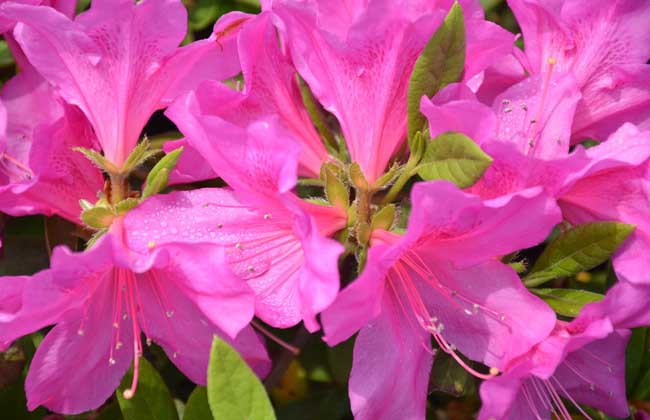
4. Fertilizing: Rhododendron pulchrum does not like heavy fertilizer; apply dilute fertilizer frequently. Use long-acting fertilizers as base fertilizer, such as cake fertilizer, bone meal, and dry composted manure and other organic fertilizers, buried in the potting soil when potting, repotting, or in winter. Use quick-acting fertilizers as top dressing, such as human manure organic fertilizer or nitrogen, phosphorus, and potassium chemical fertilizers. From the beginning of spring to before flowering, apply phosphorus-potassium fertilizer 1-2 times a month, and stop fertilizing when flowering. After autumn cools, apply 1-2 times of liquid fertilizer mainly composed of phosphorus fertilizer, and stop top dressing after winter begins.
5. Pruning: During the growing period, Rhododendron pulchrum must be pinched and pruned to remove dead branches and sprouting tiller branches, which is beneficial for balanced tree shape development. For ground planting, choose acidic soil with high and dry terrain, sufficient sunlight, and deep soil layers. Apply fertilizer once each before and after flowering every year, prune out overly dense inner branches, cut back leggy branches, and prune away dead and diseased branches to ensure that Rhododendron pulchrum can grow robustly.
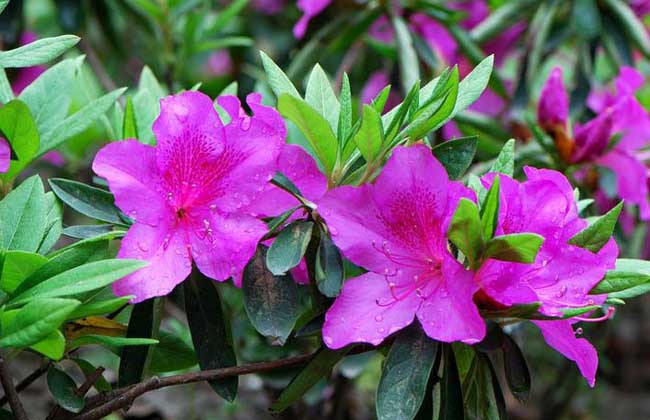
Management:
Potted plants should be repotted every spring after flowering, using acidic soil rich in humus. Water promptly as needed, especially during the flowering period, keeping the potting soil from drying out. Fertilizer and water are key to growth and development; during the growing period, fertilize once every half month or use Huifriend 21-7-7 acid fertilizer. In winter, growth basically stagnates, so fertilizer and water should be strictly controlled. During the growing period, pinching and pruning must be done to remove dead branches and sprouting tiller branches, which is beneficial for balanced tree shape development. For ground planting, choose acidic soil with high and dry terrain, sufficient sunlight, and deep soil layers. Apply fertilizer once each before and after flowering every year, prune out overly dense inner branches, cut back leggy branches, and prune away dead and diseased branches.