A Detailed Guide to the Planting Methods and Key Techniques for the Money Tree
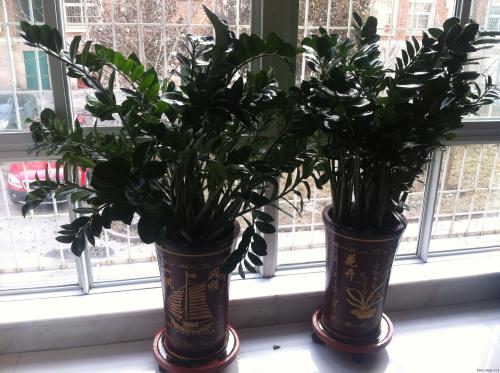
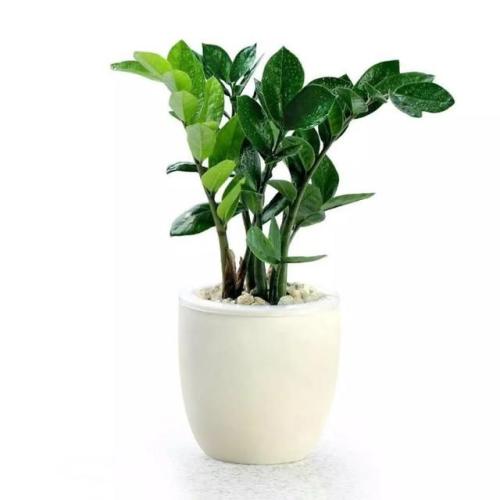
The money tree (Zamioculcas zamiifolia) is a perennial evergreen herbaceous plant and a very rare foliage plant that bears underground tubers. The above-ground part has no main stem; adventitious buds sprout from the tuber to form large compound leaves, and the leaflets are fleshy with short petiolules, firm and deep green; the underground part is a fleshy, enlarged tuber. Pinnately compound leaves emerge from the top of the tuber, the leaf rachis is sturdy, and the leaflets are opposite or nearly opposite along the rachis. The spathe is green and boat-shaped, and the spadix is relatively short.
Growth Habits of the Money Tree
The money tree prefers warm, hot and slightly dry conditions, partial shade, and an environment with small annual average temperature fluctuations. It is relatively drought-tolerant, but fears cold, and avoids strong direct sunlight and exposure. It is afraid of heavy, sticky soil and water accumulation in the pot; if the potting soil has poor aeration, it can easily cause its tuber to rot. It requires loose, fertile soil that drains well, is rich in organic matter, and is acidic to slightly acidic. It has strong sprouting ability: after cutting off the thick, large compound leaves, new leaves will quickly emerge from the top of the tuber.
How to Grow the Money Tree and Points to Note
1. Pay attention to the temperature and planting depth when dividing the plant. Division should be done when the temperature is above 18°C. You can split open a spot where the tuber joins are weak and plant it in a prepared pot. Do not bury it too deep; burying the top of the tuber 1.5-2 cm below the soil surface is sufficient. It is best to apply sulfur powder or plant ash to the split area.
2. The ideal growing temperature is 20-32°C. When summer temperatures are high, move the plant to a cool indoor spot and mist the leaves more often to lower the temperature. In winter, when room temperature falls below 5°C, it will harm the plant's growth, so timely cold-protection measures are needed.
3. It must not be exposed to overly strong sunlight. The money tree is a plant that likes light but is also shade-tolerant, and it is not suited to growing in strong light. It is best placed beside a window with something to screen the light, so that it can receive sufficient sunlight without the leaves being scorched by harsh exposure. The shading effect should ideally reach 60%; excessively dark conditions will cause the leaves to turn yellow.
4. It needs fairly good soil for its growth. The soil should not only be loose, fertile and well-draining, but also rich in organic matter and ideally acidic to slightly acidic. When choosing soil, you can use coarse sand, peat, washed coal cinder and a small amount of garden soil mixed together, and adjust its pH to between 6-6.5 so that it is in a slightly acidic state.
5. Keep the soil in a slightly dry state. Because the money tree is highly drought-tolerant, it is best to keep the potting soil on the dry side normally. When the temperature is above 34°C, it is best to water once a day. In autumn and winter, water as little as possible, and you can spray the leaves instead of watering.
6. When the temperature is above 15°C, fertilize twice a month. Because the money tree relatively likes fertilizer, you can fertilize twice a month during the growing season. The most convenient choice is to buy fertilizer specifically made for money trees, which is sold in flower markets. If using chemical fertilizer, choose a mixture of 02.% urea plus 0.1% potassium dihydrogen phosphate.