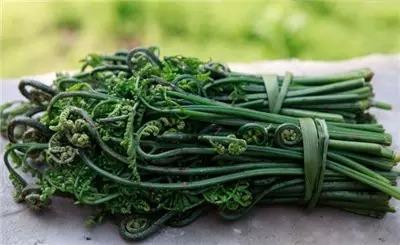
Detailed Explanation of Fern Cultivation Methods and Technical Points
Bracken fern (Pteridium aquilinum var. latiusculum), also known as fist vegetable, cat's claw, and dragon-head vegetable, thrives on sunny plots in shallow mountain areas and is mostly found in sparse coniferous-broadleaf mixed forests. Its edible part is the unopened young leaf bud. The International Agency for Research on Cancer (IARC) classifies bracken fern as a Group 2B carcinogen, grouped together with substances such as chloroform, dichlorvos, and nitrobenzene.

Cultivation Techniques
Propagation: Bracken fern has two propagation methods, namely sexual propagation (spore propagation) and asexual propagation (rhizome division propagation). In production, asexual propagation methods are mostly used. For asexual propagation, dig out the underground rhizomes, select healthy ones for division and planting, with a row spacing of 70-80cm and a plant spacing of 50-60cm, and transplant when the seedlings are 10-15cm tall.
Transplanting: In spring, combine with land preparation, apply 2000 kg of pure chicken manure per mu, then make beds. Ground beds, sunken beds, and flat beds are all acceptable, with a bed surface width of 1-2 m, a height of 20 cm, and a length of 15-20 m, leaving a 50 cm working path between beds. When the seedlings are 10-12 cm tall, transplant them with a soil ball. When transplanting, dig planting holes about 20 cm in diameter and 15 cm deep, place them at a density of 10 plants per square meter, with a plant spacing and row spacing of 30 cm each, then fill soil around the seedlings to 12 cm and immediately water thoroughly once; after the water seeps down, cover with soil.
Fertilization: Open-field cultivation needs to be renewed once every 3-4 years, so sufficient farmyard manure and phosphate fertilizer should be applied before planting, with an application rate of 1000-1500 kg of organic fertilizer per mu and 10 kg of diammonium phosphate per mu. After the second year, every autumn, apply chicken, pig, horse manure, etc. as top-dressing manure, and turn it into the soil layer along with loosening the soil. This not only increases soil fertility and loosens the soil, but also plays a role in heat preservation, cold protection, and moisture retention. If manure sources are insufficient, fallen leaves can also be covered, which also has a certain effect.