Red Bean Planting Methods and Cultivation Techniques
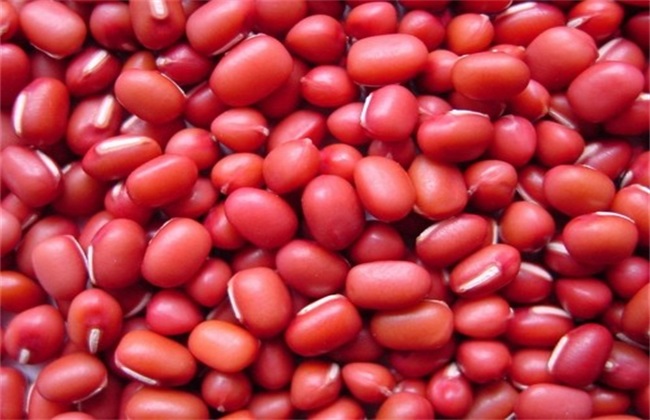
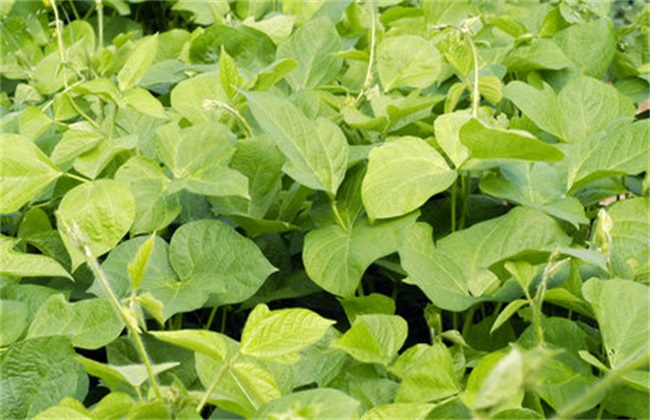
Red bean (scientific name: Vigna angularis (Willd.) Ohwi et Ohashi): an annual upright or twining herb, up to 90 cm tall, with pinnate compound leaves; stipules peltately inserted, arrow-shaped, leaflets ovate to rhombic-ovate, entire or shallowly trifid, both surfaces slightly covered with sparse long hairs. Flowers yellow, pedicels very short; bracteoles lanceolate, calyx campanulate, standard petal oblate or nearly reniform, wings broader than the keel, ovary linear, style curved, pod cylindrical, seeds usually dark red or other colors, oblong, hilum not sunken. Flowering in summer, fruiting from September to October.
Planting Methods
1. Reasonable seed selection
There are now quite a few types of red bean seeds on the market, divided into large red beans and small red beans, and large red beans and small red beans are further divided into many varieties, so the first thing we must consider when selecting seeds is the yield of the red beans, followed by whether the seed germination rate is high, and finally the various resistances of the seeds. We will choose red bean varieties suitable for local planting according to factors such as the soil, climate, temperature and rainfall of different regions. At the same time, no matter how good a variety is, you must not buy old seeds; the survival rate is too low and the losses are too great.
2. Scientific land preparation
Since red beans themselves have a stronger ability to adapt to the environment than other crops, we can choose to ignore the selection of the planting site, but one thing that must be considered is that the planting site should not have too much water, that is, the soil moisture should not be too high, otherwise it is very easy for disease to occur and affect yield. When preparing the land, we need to completely clear all debris from the field, plow the soil deeply once, then spread a layer of lime to eliminate bacteria, expose it to the sun for about ten days or so, spread a layer of livestock manure or plant ash, and then make ridges and open furrows and wait for sowing.
3. Sowing methods
The seed coat of red beans is relatively hard. If sown directly, the seeds germinate very slowly, and the germination rate is not very high either. Therefore, before sowing we need to soak the red bean seeds in clean water for about twenty minutes, then dress the seeds with a chemical agent, leave them for about twenty minutes, then rinse them clean with water, and then place them in an environment at a temperature of 25 degrees Celsius to sprout. After about five days they can be sown. There are two sowing methods: one is to make a small hole in the ground at intervals of 30 cm, sow three seeds in each small hole, and then cover the seeds with soil. The other is to first raise the seeds in a seedbed, and when the seedlings grow to about 10 cm, transplant them at a certain density.
4. Fertilization techniques
Fertilizing red beans requires technical skill; you cannot fertilize randomly. Too much fertilizer will cause the bean seedlings to grow excessively without forming pods, too little fertilizer will result in pods that are not plump and quality that does not meet standards, and the wrong type of fertilizer will cause the plants to die or become diseased. The entire growing period requires two applications of fertilizer. The first is the seedling-promoting fertilizer, that is, about one week after planting, on average one mu requires 100 jin of urea, 50 jin of phosphate fertilizer and 30 jin of compound fertilizer. The second fertilization is when the red bean seedlings enter the flowering and pod-setting stage. This period is when red beans need the most nutrients and is also the key period that determines yield. On average, evenly spread 300 jin of farmyard manure, 100 jin of potassium fertilizer and 50 jin of boron fertilizer per mu.
5. Disease prevention
Red beans have relatively strong resistance to diseases, so under normal circumstances pests and diseases rarely occur, but occasionally rust disease, aphids and leaf rollers appear. The most effective control method is to spray 5% triadimefon wettable powder at 1000-1500 times dilution, or 40% Fuxing emulsifiable concentrate at 8000 times dilution, or
50% carboxin emulsifiable concentrate at 800 times dilution, or 50% sulfur suspension concentrate at 200 times dilution, spraying once every six or seven days, two to three times is enough. For aphids and leaf rollers, mainly use trichlorfon solution or dimethoate emulsion for spraying.