Green Bean Planting Methods and Technical Key Points
The green bean, also called the common bean or kidney bean, originated in South America and was introduced to our country four hundred years ago. Because green beans like warmth and fear cold and heat, they grow best at 15-30 degrees Celsius. Outside this range they can no longer pollinate and set pods normally, and below 3 degrees Celsius they freeze to death. Green beans are not strict about sunlight; as long as temperature and moisture requirements are met, they can be grown for several seasons a year, hence the name "four-season bean."
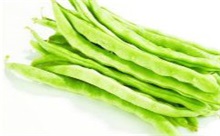
Green beans have strict moisture requirements; they like humidity and fear both waterlogging and drought, and high temperature with drought in particular has a very large impact on green bean yields. Green beans are not strict about soil, but they should not be grown in continuous cropping. Their nutrient requirements are not very high; they need more potassium and nitrogen, and less phosphorus, but phosphorus has a great impact on yield, so phosphorus fertilizer must be applied when growing green beans.
Planting Methods
1. Plot selection. Choose sandy loam or loam with deep soil, rich organic matter, loose and fertile texture, good drainage and a pH of 6-7. Plots at an altitude of 700-1000 m with a sunny aspect are best; a large day-night temperature difference favors green bean growth, and the picking period can reach more than 70 days.
2. Determining sowing time. In high-altitude mountainous areas, sowing can be done from early to late June.
3. Land preparation and fertilizing. Deeply plow the land, harrow the soil fine, and make deep furrows and high beds. Bed width including the furrow: 1.5 m for paddy fields, 1.4 m for dry land, with the bed surface about 1 m wide. For base fertilizer, generally apply 50-75 kg of lime and then plow and make beds. Dig a furrow in the middle of the bed and band-apply 1500-2000 kg of barnyard manure, 50 kg of compound fertilizer and 1 kg of borax per mu; before sowing, apply 50 kg of calcium magnesium phosphate fertilizer in holes per mu.
4. Disinfection and sowing. Select seeds that are large, plump and free of pests and diseases. Before sowing, dress the seeds with 50% carbendazim at 0.4% of the seed amount for disinfection. If the soil is dry, water the bed surface thoroughly before sowing. Plant 2 rows per bed, with a row spacing of 65-70 cm and a hole spacing of 25-30 cm; sow 3-4 seeds per hole, using 2-2.5 kg of seed per mu. At the same time, sow "backup seedlings" for transplanting to fill gaps. After sowing, use methods such as covering with green grass and tree branches and watering to resist drought, ensuring full, strong and healthy seedlings and laying the foundation for high green bean yields.
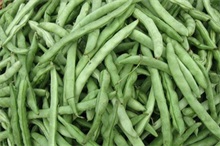
5. Field management
(1) Thinning and gap filling. Check seedlings and fill gaps 7-10 days after sowing, and do the thinning work well; generally leave 2 healthy seedlings per hole.
(2) Cultivation and weeding. The first weeding is 10 days after sowing, and the second is before the vines climb. This time, cultivate and clean the furrow soil and mound it at the base of the plant stems to promote the development of adventitious roots. Cultivate shallowly, to the extent that the root system is not damaged.
(3) Promoting strong seedlings. When the seedlings have grown 2 leaves, spray 900-fold "481" natural brassin to promote robust seedling growth.
(4) Building trellises and laying grass. Build trellises in time before the vines "throw" and run; use 2.5 m long small bamboo sticks to build A-shaped trellises. After the vines climb the trellis, lay grass on the bed surface to help lower temperature and preserve soil moisture.
(5) Fertilizer and water management. According to the physiological characteristics of green beans, apply sufficient base fertilizer, apply little flower-promoting fertilizer, and apply heavy pod-setting fertilizer. The pod-setting fertilizer is generally applied 2-3 times, each time applying 10-15 kg of compound fertilizer per mu. For foliar topdressing, combined with pest and disease control, add 0.2% "potassium dihydrogen phosphate" to the spray liquid and add 10 g of molybdenum fertilizer to each knapsack sprayer of liquid for spraying, to increase the pod-setting rate and achieve the goal of high yield.
(6) Pest and disease control. The main insect pests are the bean pod borer, aphids and so on.
To control the bean pod borer, at the early flowering stage you can choose 5 g of 48% "Lorsban" plus 5 g of "Haizheng Mieling"; or 25 g of "phoxim" plus 6 mL of "Decis", mixed with 15 kg of water for spraying. At the pod-setting stage, you can choose the high-efficiency, low-toxicity, low-residue "bt" biological pesticide at 50 g plus 6 mL of "Decis", mixed with 15 kg of water, using 45-60 kg of spray liquid per mu for control. Control method: spray before 8 a.m. or in the evening, and grasp the principle of "treat the flowers, not the pods."
For aphid control, spray with 10% "Yibianjing" at 2000-fold dilution or 20% "Haoniandong" at 2000-fold dilution. The main diseases are rust, anthracnose, bacterial blight and root rot. For rust, spray with 20% "triadimefon" at 1000-fold dilution or 50% "carbendazim" at 800-fold dilution; for anthracnose, spray with 75% "chlorothalonil" at 800-fold dilution; for bacterial blight, spray with 72% agricultural streptomycin or Xinzhi streptomycin at 3000-fold dilution; for root rot, drench the roots with 70% "Dikson" at 500-fold dilution or 70% "Keshade" at 500-fold dilution.
6. Timely harvesting.
For common beans eaten as tender pods, harvesting can generally begin about 8-10 days after flowering. Harvest once a day, which both ensures pod quality and marketability and reduces excessive nutrient consumption by the plant that causes flower and pod drop, thereby increasing the pod-setting rate and marketable rate.