Detailed Guide to Crown Grass Planting Methods and Techniques
Crown grass (Amazon sword, Echinodorus) originates from Brazil in South America. Also known as Amazon sword plant and crown plant. Crown grass is a large aquatic plant with thick leaf stalks and broad, beautifully shaped leaves. The largest crown grass can grow nearly 100 leaves, with a maximum leaf length of up to 50 cm and leaf width of up to 8 cm. Crown grass is luxurious and magnificent, and is called the king of aquatic plants.
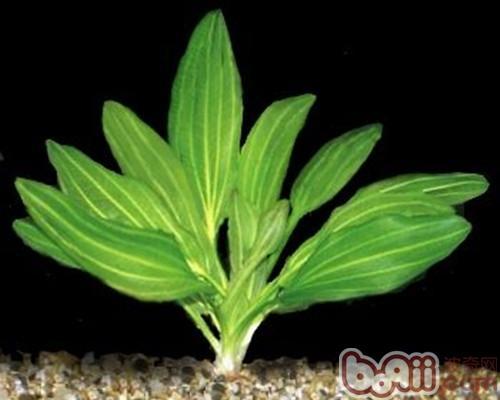
In the early stage of cultivation, light should be strong; during the growing period, moderate light is preferable. During the growing period, yellow leaves and dense leaves should be thinned out promptly. If there is no direct sunlight indoors, fluorescent supplementary lighting can be used. When crown grass receives insufficient light, new leaves tend to turn yellow, and old leaves gradually rot and die. In addition, the water body used for cultivating crown grass must maintain a certain degree of flow. Crown grass likes fertilizer; during the vigorous growth stage, a small amount of liquid fertilizer can be added to the water every week. When growing crown grass, keep the water quality clean and change the water regularly.
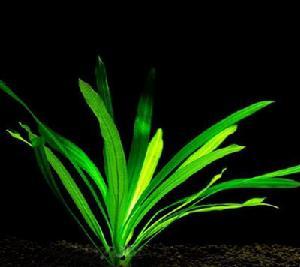
Cultivation techniques
1. Cultivation substrate: When decorating an aquarium indoors with crown grass, gravel with a diameter of 3-5 mm should be selected as the cultivation substrate.
2. Seedling cultivation: Crown grass is mainly propagated by division. If the water temperature is maintained at 20-26°C, it can be done year-round. Mature crown grass plants can send out relatively long stolons from the leaf axils, on which young crown grass shoots are scattered. When they reach a height of 6-8 cm, those that have already grown new roots can be broken off and planted separately. Tissue culture can also be used for seedling propagation.
3. Planting method: For tank cultivation of crown grass, the operation can be carried out in conjunction with propagation by division. If planting separately, the container used is usually a medium-sized aquarium. Note that the placement location should ensure the plants can receive the required light. First spread the cultivation substrate on the bottom of the aquarium to a thickness of 4-6 cm. To make the operation easier, first fill the tank halfway with water, and then planting can begin.
4. Management points: Crown grass can be cultivated in freshwater with relatively low hardness; note that salinity should not be too high. The pH of the water body is best controlled between 6.5-7.2, that is, slightly acidic to slightly alkaline. The cultivation water body should maintain a certain degree of flow. Crown grass has a relatively high demand for fertilizer; during the vigorous growth stage, a small amount of liquid fertilizer can be added to the water every week. At this time, the plants can absorb the needed nutrients through their leaves.
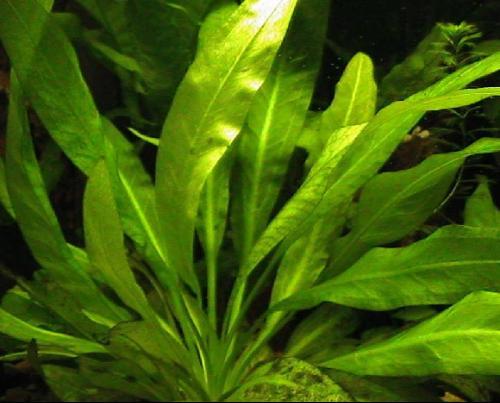
Crown grass has many varieties and bright colors, and is suitable for aquarium arrangement. When growing it, crown grass should be selected according to the size of the tank and the needs of the arrangement. Taller plants with larger leaves, such as heartleaf crown grass, flat crown grass, and broadleaf or ovate-leaf crown grass, are used for background arrangements. Shorter plants such as delicate crown grass, Schlueter's crown grass, and four-veined crown grass are used for foreground arrangements, while most other types are suitable for midground arrangements.