Detailed Explanation of Yellow Gardenia Planting Methods and Techniques
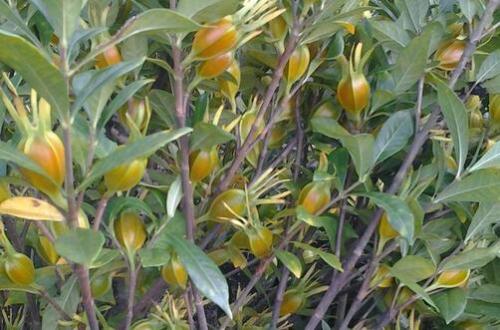
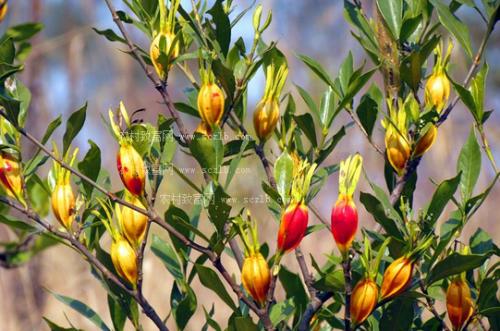
Yellow Gardenia (scientific name: Gardenia jasminoides Ellis) other names: Gardenia, Shan Zhi, Bai Chan, is the fruit of the plant Gardenia of the Rubiaceae family. The fruit of Gardenia is a traditional Chinese medicine, belonging to the first batch of medicinal and edible resources promulgated by the Ministry of Health, and has effects such as protecting the liver, promoting bile secretion, lowering blood pressure, sedating, stopping bleeding, and reducing swelling. In clinical traditional Chinese medicine it is often used to treat icteric hepatitis, sprains and contusions, high blood pressure, diabetes and other conditions. It contains crocin, and can be used as a yellow dye.
Propagation Methods
Seed Propagation
The sowing period is divided into spring sowing and autumn sowing, with spring sowing being better. From early February to late February (Start of Spring to Rain Water). Select plump, deep red fruits, dig out the seeds, rub them apart in water, scoop out the sunken seeds, and dry off the moisture; then mix evenly with fine soil or plant ash, sow in rows in the furrow, cover with fine soil, and then cover with rice straw; after germination remove the rice straw, weed frequently, and if the seedlings are too dense, thin them out gradually, maintaining a plant spacing of 10-13cm. After the seedlings are cultivated for 1-2 years and reach a height of more than 30 cm, they can be planted out.
Cutting Propagation
The cutting period is from late September to late October in autumn, and mid-to-late February in spring. Cut 2-3 year old branches, cut them at the nodes into cuttings 17-20cm long. Insert them at a slight angle, leaving one node above the ground. They can be transplanted after about one year.
Field Management
During the seedling stage, it is necessary to weed and water frequently to keep the seedbed moist, and diluted human waste is best for fertilizing. After planting out, weed, loosen the soil, and fertilize once each in early spring and summer, and mound the soil appropriately.
Soil
Gardenia is an indicator plant for acidic soil, so a slightly acidic soil environment is the key to determining whether gardenia grows well. The growing medium should be made by mixing 7 parts slightly acidic sandy red soil and 3 parts leaf mold. It is advisable to keep the soil pH between 4.0-6.5.
Temperature The optimal growth temperature for gardenia is 16°C-18°C. Both too low a temperature and direct sunlight are extremely unfavorable to its growth, so in summer gardenia should be kept in a well-ventilated, high-humidity, light-filtering sparse forest or shade shed. In winter, keep it in an environment with sunlight and a temperature not lower than 0°C, allowing it to go dormant; too high a temperature will affect flowering the following year.
Water
Gardenia likes humid air, and during the growing period watering should be increased appropriately. Usually, water when the potting soil turns pale, watering thoroughly each time. In the hot summer, spray the leaves 2-3 times a day to increase air humidity and help the plant cool down. However, after the flower buds appear, watering should not be excessive, to avoid bud drop. In winter, it is better to keep watering on the dry side to prevent root rot from too much water.
Fertilizer
Gardenia is a fertilizer-loving plant. In order to meet its fertilizer needs during the growing period while maintaining a slightly acidic soil environment, ferrous sulfate can be mixed into the fertilizer liquid in advance for fermentation. After entering the peak growing season in April, apply additional fertilizer once every half month (when fertilizing, it is best to dilute with more water to prevent burning the flowers). This can not only meet gardenia's fertilizer needs, but also keep the soil environment in a relatively balanced slightly acidic state, preventing the occurrence of chlorosis, while also avoiding the harm to gardenia from suddenly supplementing ferrous sulfate and causing local over-acidity.
Land Preparation
For the seedling bed, first plow deeply about 33cm, remove stones and grass roots, then make beds, with a bed height of 17cm and a width of 1.3m. Break up the clods, rake level, and apply 2000kg of base fertilizer per mu. Then, according to a row spacing of 27cm, dig horizontal trenches 7cm wide and 3cm deep, ready for sowing.