Kapok Planting Methods and Cultivation Techniques Explained
Kapok is a specialty of the south, and is the city flower of Guangzhou, Kaohsiung, China, and Panzhihua. After the flowers fall, the ground beneath the tree is strewn with fallen blossoms; the flowers do not fade or wilt, bidding farewell to the world in a most heroic manner. Why is kapok called the "hero flower"? Because it blooms in brilliant red yet is not vulgar; its stout trunk, its stance of standing tall between heaven and earth, is heroic and magnificent, and the color of its blossoms is as red as the strength of character of a warrior, its hue like the blood of heroes dyeing the treetops red.
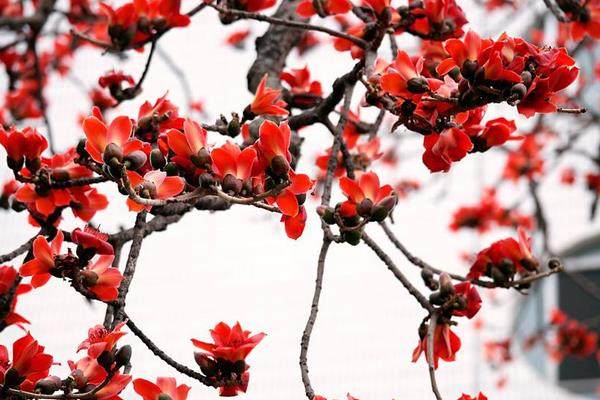
Kapok Planting Methods
1. Propagation time: For kapok, grafting is best done in February to March and June to July. In February to March, temperatures rise quickly and kapok begins to sprout and send out new shoots, so grafting at this time easily survives.
2. Growing soil: Kapok is not demanding about soil; both sandy soil and heavy clay soil are suitable. It prefers acidic soil, is relatively tolerant of drought, and also slightly tolerant of waterlogging. It is not very demanding about fertility; generally, soil with medium fertility and relatively high phosphorus and potassium is suitable.
3. Growing humidity: During the growing season, kapok should be kept with moist soil, or it can be planted directly into a watertight pot, which saves the trouble of watering every day. When temperatures are relatively high, also pay attention to spraying water on the leaves to maintain humidity.
4. Growing temperature: Kapok is not cold-tolerant. In East China, it can overwinter in the open ground with slight protection, and the winter temperature should not be lower than 5°C.
5. Growing light: Kapok has a relatively wide range of adaptability to light and can grow well in full sun or semi-shade, but avoids scorching sun exposure.
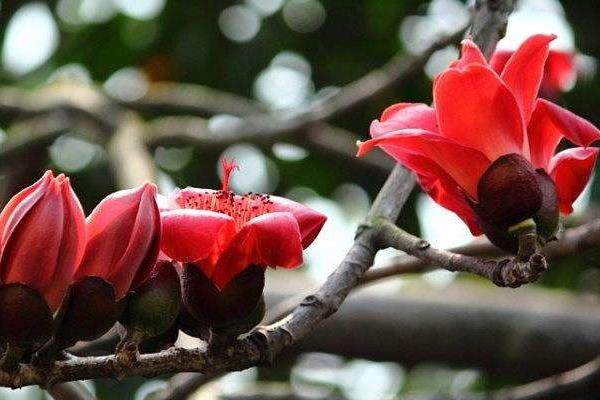
Cultivation Methods
Use sowing, cuttings, and division propagation. Collect the capsules before they split open; the seed germination viability period is short, so it is mostly sown immediately after collection, though it can also be stored short-term in moist sand. Sow in drills and cover with 2cm of soil. At an average temperature above 20°C, seedlings generally emerge completely in 4-5d. Cuttings are mostly taken in February to March or during the rainy season, using large branches 80-100cm long with a diameter of 1-2cm; insert them 10-15cm deep into the seedbed and keep the bed moist regularly. Division is done from suckers at the base of the mother plant; cutting off a section of mother root together with fibrous roots and replanting separately makes it easier to survive.
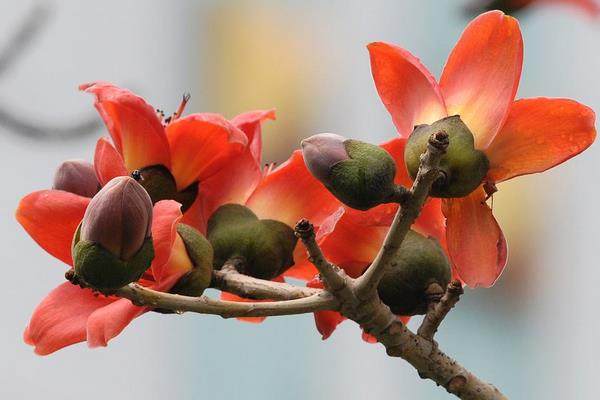
Planting Precautions
1. Fertilizer application: It is not demanding about soil; both sandy soil and heavy clay soil are suitable. It prefers acidic soil, is relatively tolerant of drought, and also slightly tolerant of waterlogging. It is not demanding about fertilizer; generally, in soil with medium fertility and relatively high phosphorus and potassium, apply decomposed cake fertilizer or compost as a base fertilizer at planting time, and topdress with phosphorus and potassium fertilizer before flowering and during the peak flowering period.
2. Watering key points: During the growth process of kapok, pay attention to keeping the soil moist; watering it in a timely manner is enough.
3. Pruning essentials: During the growing period of kapok, promptly remove residual branches and spent flowers. For leggy branches, control their growth by pinching, prompting new branches, making the plant full and well-shaped, and also extending the flowering period.