A Detailed Guide to Platycodon Planting Techniques and Management Methods
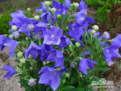
Platycodon (Platycodon grandiflorus), also known as baofuhua, bellflower or monkshood flower, is a perennial herbaceous plant with stems 20-120 cm tall, usually hairless, occasionally densely covered with short hairs, unbranched, very rarely branched in the upper part. The leaves are all whorled, partly whorled to entirely alternate, sessile or with very short petioles; the leaf blades are ovate, ovate-elliptic to lanceolate, with leaves ovate or ovate-lanceolate. The flowers are dark blue or dark purplish-white and can be grown as ornamental flowers.
Planting methods and care precautions
1. Fine land preparation and sufficient basal fertilizer: choose a sunny slope with deep soil or level ground with good drainage, plow deeply 25-30 cm, break up clods and level the soil, and make beds 150-170 cm wide. The furrow between beds is 30-35 cm wide. On the bed, open horizontal furrows 6 cm deep with a row spacing of 20-25 cm, and apply phosphate fertilizer in the furrows as basal fertilizer, at 20-25 kg of superphosphate per mu.
2. Timely sowing: Platycodon can be sown in autumn, winter or spring, but sowing in autumn from September to October or in spring from December to April of the following year is best; at this time seedlings emerge evenly, grow quickly and give high yields. Use drilling with a sowing width of 10 cm, cover with a layer of plant ash and fine soil after sowing, then cover with thin grass to maintain soil moisture and temperature, and remove the covering grass after seedlings emerge. Use 400 grams of seed per mu.
3. Field management: when seedlings are 2 cm tall, thin them appropriately and remove excess seedlings. When seedlings are 3-4 cm tall, thin to a final stand. Keep 1 strong seedling at a spacing of 10-14 cm. Replanting and thinning are done at the same time. During the seedling stage, weed 1-2 times and topdress, applying 1000 kg of clear manure water or 7 kg of urea per mu. When seedlings are 6.7 cm tall, topdress again, with the fertilizer solution increased by 20% compared with the first application.
4. Spraying the new foliar fertilizer Wanjiabao: Wanjiabao is a high-tech product successfully developed by the Institute of Chemistry, Chinese Academy of Sciences. It has multiple functions such as sterilization, disease resistance, drought resistance and cold resistance, and can increase crop yield by 20%-40%. Application method: use 25-45 grams per mu each time, dilute 800-1000 times, spray once every 10 days, evenly spraying on the leaf surfaces and all parts of the plants.
5. Pest and disease control: the common disease of Platycodon is leaf spot. The main pest is aphids. To control aphids, spray with DuPont Wanling at 1000 times dilution. For diseases, spray with Baidefu wettable powder produced by Germany's Agrevo at 500-700 times dilution.
6. Harvesting and processing: Platycodon sown in spring is dug in the late autumn of the same year, and that sown in autumn or winter is dug in the late autumn of the following year. Do not damage the roots when digging, so as to avoid rot affecting quality. Remove the root head and fibrous roots from the dug roots, soak them in water, wash off the soil, scrape off the outer skin with a bamboo slice, and after drying in the sun they become a marketable product.