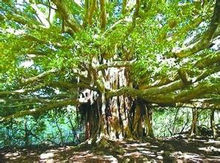
The Bodhi tree (scientific name: Ficus religiosa L.): it is a
Moraceae, Ficeae, Ficus genus
large tree plant, epiphytic on other trees when young, leaves leathery, triangular-ovate, basal veins three;
petiole slender, figs globose to oblate, style slender, stigma narrow. Flowering period March-April, fruiting period May-June.
The Bodhi tree is mostly cultivated on the coastal islands of Guangdong, Guangxi, Yunnan north to Jingdong in China. It is also distributed in Japan, Malaysia, Thailand, Vietnam, Sikkim, Pakistan and India, mostly cultivated, but in the Himalayan region, from Rawalpindi in Pakistan to Bhutan, it grows wild.
Bodhi tree planting methods
For seed propagation, select robust mother plants over 10 years old, collect seeds in November when the fruit turns red-black, repeatedly rub and wash the collected fruit, remove the flesh residue and skin debris to take out the seeds, dry them slightly and then sow. Generally, broadcast sowing on a sand bed is used. Before sowing, slightly compact the bed surface with a small wooden board, level the bed surface, and spread the seeds evenly on the bed surface. When sowing, avoid the seeds overlapping into small clumps, and try to spread every seed evenly on the bed surface.
After sowing, sift a thin layer of fine soil over the seeds, just enough to cover the seeds. After sowing, use rice straw or a shade net to build a shade shed, reducing water evaporation from the seedbed and keeping the bed surface moist. At the same time, spread ant-killing powder and the like around the sand bed to prevent the seeds from being harmed by ants, mole crickets and others when they germinate. Because Bodhi tree seeds have no dormancy habit, they can germinate and emerge about 10 days after sowing, and the seeds will germinate successively.
When about half have germinated, uncover all the rice straw, provide appropriate shading, and water thoroughly every morning and evening. When the seedlings grow to 2-4 cm, transplant them into 10 cm x 12 cm nutrition bags previously filled with soil (surface soil containing relatively high humus) for cultivation. After the seedlings are transplanted into the nutrition bags, use sunshade netting to build a shed for shade, and water thoroughly morning and evening. After the seedlings resume growth, every 7 days irrigate the roots with a 0.1% aqueous solution of urea + Norwegian compound fertilizer.
After root irrigation, pour in a small amount of water (nurseries with the conditions can use a sprinkler head to spray water), which is beneficial for the seedlings to absorb water and fertilizer. When the seedlings grow to about 15 cm, the water-fertilizer concentration can be increased to 0.2%-0.3%. At the same time, take corresponding measures to prevent the occurrence of diseases. When the seedlings grow to 30-50 cm, they can leave the nursery. Bodhi tree branches also root easily from cuttings. In spring or autumn, select robust mother plants 8-15 years old.
From the mother plant, select branches with plump axillary buds, cut semi-lignified parts about 15 cm long as cuttings (about 0.5-0.8 cm in diameter) for cutting propagation. The row spacing of cuttings is 5 cm x 10 cm, and the cutting depth is about 3 cm. After cutting, set up a small arched shed and cover it with white plastic agricultural film, keeping the front and back ends ventilated, and water multiple times a day to ensure that a relatively high relative humidity is maintained inside the small shed.
After cutting, spray the cuttings every 7 days with a 0.125%-0.2% concentration solution of broad-spectrum fungicide (chlorothalonil, carbendazim, etc.) to prevent the cuttings from rotting under high temperature and high humidity conditions. Roots can grow in about 10 days. Bodhi trees can also be propagated by large branch cuttings. Cut robust branches 10-15 cm in diameter and 1.5-2.5 m long from the tree, cut off all side branches and leaves, bury them 20-30 cm in the soil, and they can take root after 20 days.
Uses
-
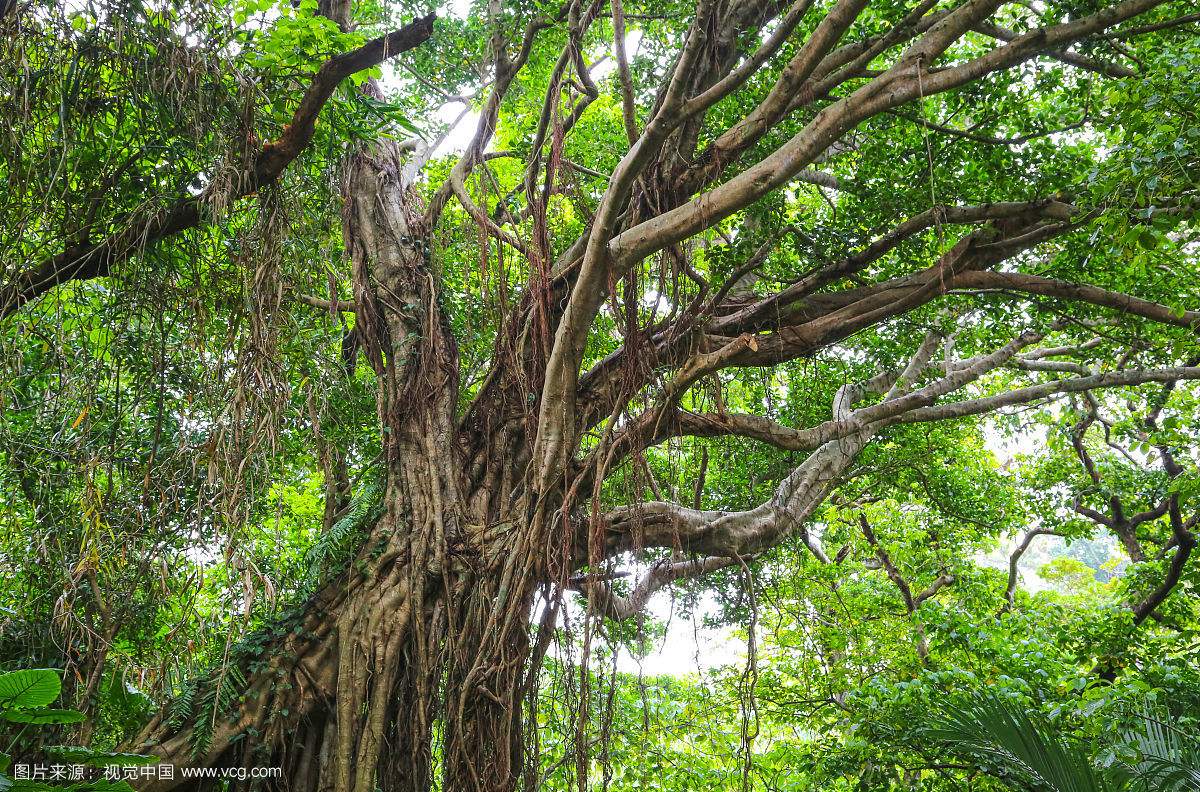
The Bodhi tree has moderate resistance to SO2 and Cl2 and strong resistance to HF, so it is suitable as a greening tree species in polluted areas; at the same time, its branches spread out, the tree form is tall, the branches and leaves are luxuriant, the crown is broad, elegant and impressive, and it is an excellent ornamental tree species, suitable as a greening tree species for courtyards and roadside.
-
The milky sap flowing from the branches and trunk of the Bodhi tree can be used to extract hard rubber; the branches and leaves can be used as feed for elephants, cattle and other livestock; the flowers are used medicinally, can induce sweating and relieve spasms, and also have a fever-reducing effect.
-
The difference between heartwood and sapwood of Bodhi tree wood is not obvious, diffuse-porous wood, interlocked grain, medium texture, light weight, small shrinkage, low strength, not glossy after painting, easy to glue, suitable for cutting boards, packing box boards and fiberboard raw materials.