Detailed Explanation of Rush (Juncus effusus) Planting Methods and Techniques
Rush, a traditional Chinese medicine name. It is the dried stem pith of the rush plant Juncus effusus L. of the family Juncaceae. From late summer to autumn, cut the stems, dry them in the sun, remove the stem pith, straighten it, and tie it into small bundles.
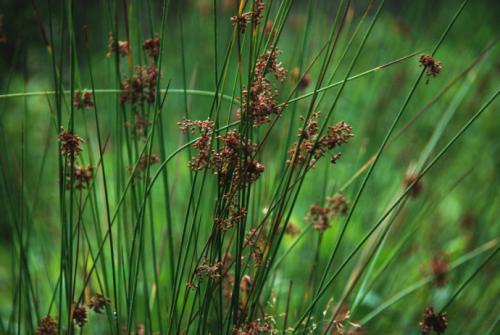
Propagation Methods
1. Site selection and land preparation: Rush is a moisture-loving plant, but the humidity of the planting site must not be too high either, otherwise it will affect the normal growth of the rush, so we should choose a plot with sufficient water sources but a complete drainage system for planting. Before planting, we need to evenly spread sufficient organic compost as base fertilizer, then plow the field, level the land, and it is ready for planting.
2. Propagation methods: Rush has two main propagation methods, namely seed propagation and clump division propagation.
Seed propagation is usually carried out by direct sowing, sowing in the field at a row spacing of 30 cm. Because the seed propagation method only considers row spacing when sowing, after the rush seedlings emerge we must thin and fill in seedlings at a certain spacing to ensure uniform seedlings in the field and a reasonable density of rush
Clump division propagation, on the other hand, uses the old clumps of rush for division, then plants them following the pattern of rice transplanting, planting at a spacing of 40 cm per row and 30 cm per plant, with each plant having at least 8 to 10 old clumps, so that the yield of planted rush will be higher.
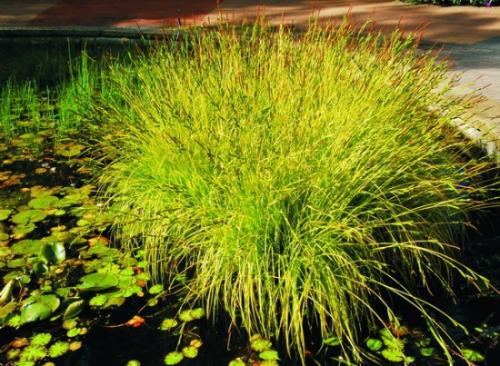
Rush planting techniques:
1. Reasonable close planting: In order to improve the yield and quality of rush, we should carry out reasonable close planting of the rush grown in the field. For the clump division propagation method, we usually plant at a spacing of 40 cm per row and 30 cm per plant at the time of planting, while the seed propagation method only considers row spacing when sowing, so after the rush seedlings emerge we must thin and fill in seedlings at a certain spacing to ensure uniform seedlings in the field and a reasonable density of rush.
2. Field management: If it is seed propagation, when the rush grows to about 10 cm we need to weed, and do so together with fertilization, which can promote the growth of the rush and at the same time allow the fertilizer to achieve ***greatest utilization effect. If it is clump division propagation, then we need to wait until the rush sends out new branches and leaves before weeding and fertilizing. Each year the rush basically only needs two rounds of weeding and fertilization, and reasonable fertilization should also be carried out according to the specific growth conditions of the rush.
3. Harvesting and processing: Rush is harvested in the autumn of the year of planting, when the stem tips begin to turn yellow and wither. After the cut stems are slightly dried, tie a large needle between two bamboo strips, place the rush between the two bamboo strips, use the needle tip to pierce the rush, and pull apart with both hands in opposite directions at the same time; the pith then comes out. Tie the pith into small bundles and dry them in the sun, and it is done. Rush should be bundled, wrapped on the outside with straw mats, and placed in a dry place; do not press heavily on it.
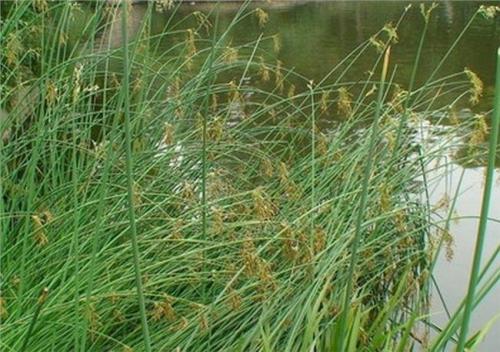
Effects and functions of rush
1. Treats difficult urination
Rush has the effect of treating difficult urination with painful, dribbling urination. In the traditional Chinese medicine industry, rush is a medicinal material of extremely high value, mainly used to treat strangury disorders, which is what we often call the "five stranguries", namely "qi strangury", "stone strangury", "strain strangury", "fat strangury" and "blood strangury". Rush can not only effectively relieve the symptoms of the five stranguries, but also regulate the body.
2. Treats restlessness and insomnia, and infantile convulsions
A child crying at midnight is a kind of disorder. Generally speaking, the main causes of its onset are two kinds: heart heat and spleen cold. If it is caused by heart heat, the baby will have a red face, hot breath, warm and hot hands and abdomen, restlessness, dislike of seeing lamplight, and will often cry while arching backward. If it is caused by cold of the spleen and stomach, you can see that the baby has a pale face, does not like to drink breast milk, has cold hands and abdomen, and refuses even complementary foods, and often curls up. If you find that the baby has the above symptoms, mothers can use rush to boil water to bathe the baby, which can effectively relieve the symptoms.
3. Treats insomnia and restlessness
Besides the above, the effects and functions of rush also include treating insomnia and restlessness. Friends who are often troubled by insomnia and restlessness can use rush to boil water or use rush to soak in water and drink it, which can effectively relieve insomnia symptoms, and it is very convenient; the preparation method is also relatively simple, and it can be consumed at home.