Detailed Explanation of Pulsatilla chinensis Planting Methods and Technical Points
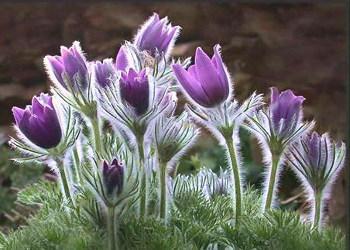
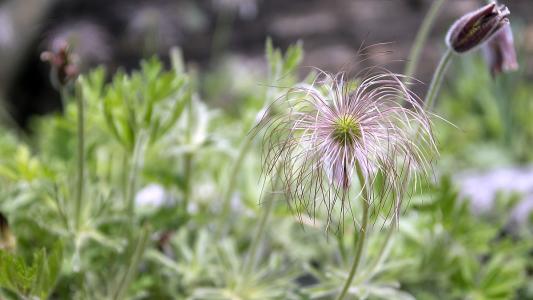
Pulsatilla chinensis (Latin scientific name: Pulsatilla chinensis (Bunge) Regel), of the Ranunculaceae family and the Anemone genus, is a perennial herbaceous plant with rhizomes, ovate leaves and blue-purple calyxes. It is also known by other names such as Naihecao, Fenrucao, Baitoucao, Laogucao and so on.
Cultivation Techniques
Site selection and land preparation: A slightly elevated site with sufficient sunlight, good drainage and loose, fertile sandy loam or loam should be chosen for cultivation; saline-alkali, easily waterlogged and heavy clay land is not suitable for planting. After selecting the site, apply fertilizer according to soil fertility, mainly fully decomposed farmyard manure, with less chemical fertilizer. Apply 3000-4000kg of farmyard manure per mu (667 sq m, the same below), and plow to a depth of 30-35 cm. After harrowing the clods fine, make beds 15-20 cm high and 1.0-1.2m wide, rake the bed surface fine with a rake, and make a slightly convex bed surface ready for sowing.
Seedling raising: Use new seeds harvested in the same year; old seeds must not be used. Those with sprinkler irrigation conditions can sow directly, while those without sprinkler irrigation conditions can sow after pre-germination. Seed pre-germination method: soak the seeds in warm water for 4-6 hours, changing the water once during this period, then remove them, drain off the water, and place them at 25-30 for pre-germination; during pre-germination, turn the seeds appropriately to prevent them from heating up; after 4-6 days, when more than 70% of the seeds have sprouted tips, they can be sown; if they cannot be sown in time, store the germinated seeds at 2-5°C. When sowing, at a rate of 2.5kg of seeds per mu, sow the seeds evenly on the bed surface, then cover the seeds with fine soil sifted through a sieve, generally covering with about 0.2 cm of soil, then water thoroughly, and cover the bed surface with straw, pine needles and the like to help retain moisture and promote seedling emergence.
Management: Under suitable conditions after sowing, pre-germinated seeds generally emerge 4-5 days after sowing, while seeds that have not undergone pre-germination take longer to emerge. After emergence, gradually remove the straw and other coverings, to the extent of half shading and half covering. After true leaves appear, spray with hymexazol mixed with foliar fertilizer to prevent damping-off, spraying once every 5-7 days, generally 2 sprays being sufficient. In addition, 2 applications of urea can be made according to growth conditions, applying 10kg each time followed immediately by watering or applied before rain in the rain, to prevent seedling burn. Weeding should be early and thorough, to prevent weeds from competing with seedlings for nutrients; Roundup can also be sprayed before emergence for weed control, but the timing of spraying must be well controlled.
Transplanting: Pulsatilla chinensis can be transplanted in both spring and autumn, and either 1-year-old seedlings of the current year or 2-year-old seedlings can be used for transplanting. Because Pulsatilla chinensis prefers a dry and cool climate, the transplanting field should preferably be a high, dry site or a sloping field. It can be transplanted on beds or in ridges; for bed cultivation, the plant and row spacing is generally 10 cm x 25-30 cm, and for ridge cultivation, the plant spacing is about 8 cm. If drought occurs after transplanting, water thoroughly after planting; Pulsatilla chinensis is extremely drought-resistant, so after seedling recovery it basically needs no watering in the absence of severe drought. Pulsatilla chinensis is tolerant of poor soil, and nitrogen fertilizer can be applied appropriately during the seedling stage; when bolting, the flower buds should be removed to favor root development; thereafter, each year before green-up, 10kg of compound potassium fertilizer can be applied per mu to help accelerate root growth.
Harvesting and storage: Generally, harvesting is done 2-3 years after transplanting. In autumn, after the aboveground parts wither, cut off the remaining aboveground stems, dig out the main roots with machinery or by hand, remove the soil and dry them in the sun to obtain the finished product. Generally, the yield per mu is more than 1500-2000kg of fresh Pulsatilla chinensis.