A Detailed Guide to Growing the Sedum pachyphyllum Succulent
Sedum pachyphyllum Rose is a succulent in the Crassulaceae family, genus Sedum, native to Mexico. It is a perennial subshrub with fleshy stems and leaves, growing 5-30 cm tall. The leaves cluster at the top of the stems, are cylindrical, pale green or pale grayish-blue, with red tips, and are 3-4 cm long. The flowers are small and yellow. Spring and autumn are the growing seasons; keeping the winter temperature at around five degrees allows it to overwinter safely. It is a perennial subshrub with many branches, growing 5-30 cm tall.
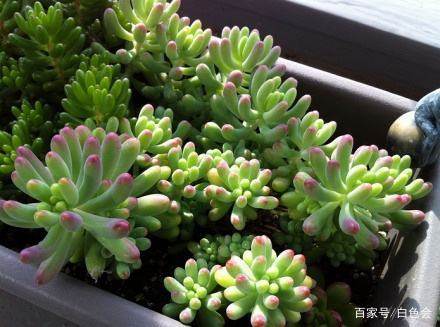
Growing Methods
1. Pot requirements: A ceramic-type pot is a very good choice for planting Sedum pachyphyllum, because ceramic-type pots have fairly good absorbency; even if we sometimes water too much, it is not a problem. This kind of pot can reduce the negative effects caused by overwatering, but ceramic pots gain weight after absorbing water, so if you choose this type of pot it must be very sturdy. Purple clay-type pots have better breathability than clay pots but are slightly inferior to ceramic pots, so we can also use purple clay pots when planting. With purple clay-type pots we especially need to pay attention to the thickness of the rim; the thinner the rim of a purple clay pot, the better the breathability.
2. Soil requirements: Many people choose the soil sold at flower and plant markets when growing succulents, but that soil still has limitations for the growth of Sedum pachyphyllum. So we can mix some growing medium ourselves. The growing medium we mix must be loose, with good breathability and drainage, and be a nutrient-rich sandy type of soil. During mixing, we need to combine organic-type fertilizers and inorganic-type fertilizers reasonably, and there should not be very fine, very small particles.
3. Watering key points: Sedum pachyphyllum belongs to the succulent type, so its whole body is basically made up of water. For this type of plant that can store water itself, we do not need to pay much attention to its watering situation. However, if you give it too much water, its body cannot absorb so much water and it can easily rot and wither. So when watering, we all need to observe the growth state of Sedum pachyphyllum. If it becomes shriveled and thin, that is a sign of lacking water; if it is not lacking water, it will look plump.
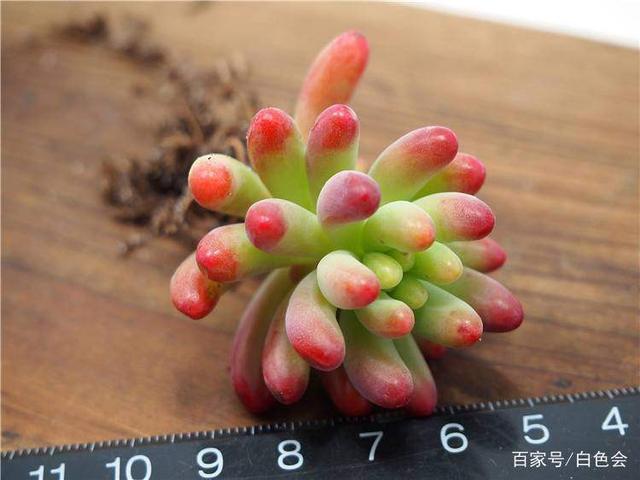
4. Light requirements: During the growing process, light is also very important for Sedum pachyphyllum. In fact, no matter what type of plant it is, it cannot grow without sunlight. If it cannot get enough light, Sedum pachyphyllum will become sickly, look listless, and its color will gradually dim. So in order to let Sedum pachyphyllum grow well, we need to give it enough sunlight. Lamp light is not acceptable; it must be sunlight.
5. Air humidity: The hot summer is the most difficult period to care for Sedum pachyphyllum. Because it often rains in summer, the humidity in the air rises very quickly and there is a lot of moisture, and Sedum pachyphyllum only needs to absorb moisture from the air to keep growing. So we need to strictly control watering, and we absolutely must not water too much; we need to look at the growth state of the succulent to decide whether to water.
6. Temperature requirements: Sedum pachyphyllum is a plant that is very afraid of cold, so in winter we need to pay strict attention. When the temperature is too low, we must take good measures to keep it warm and reduce the frequency of watering. With less moisture, Sedum pachyphyllum is less likely to freeze.