Detailed Guide to White Peony Cultivation Techniques and Management Methods
White peony (Baishao) is a plant of the genus Paeonia in the family Paeoniaceae; it is the dried root of the Ranunculaceae plant Chinese peony (Paeonia lactiflora). It is dug up in summer and autumn, washed clean, the head and tail and fine roots removed, boiled in boiling water and then peeled, or peeled and then boiled, and sun-dried.
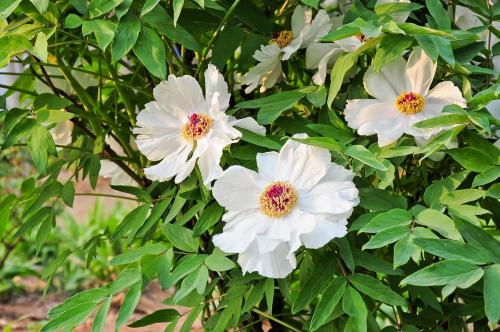
White Peony Cultivation Methods
1. White peony variety selection:
In recent years, medicinal herb growers in the main production area of Heze, Shandong, have selected two major series of peony strains based on the growth characteristics and usage needs of white peony. (1) Medicinal varieties, which have high yield and relatively good quality; the main varieties include 'Guoqi Wushuang', 'Hua Wuchong', 'Xiangyang Hong', and others; (2) Ornamental varieties, with large flowers, a full range of colors, and a long flowering period; the main varieties include 'Da Fugui', 'Hongyan Zhengguang', 'Qianceng Shao', and others.
2. White peony seed bud treatment:
White peony generally uses buds as propagation material. The buds of the peony are cut into several pieces following their natural growth shape, with 2-3 buds per piece and a bud flesh thickness of more than 2 cm. It is best to plant the buds immediately after cutting; if they cannot be planted in time, they should be stored temporarily. Choose a cool, high, dry, and ventilated place, spread moist fine sandy soil on the ground, pile the buds upward, and then cover with moist sandy soil for storage. Alternatively, dig a pit for storage, and pay attention to drainage when it rains to prevent mildew and rot.
3. White peony cultivation time:
The most suitable planting time in North China is September to October; in the south and areas with higher temperatures, planting can be done before the soil freezes. If planted too late, the peony buds have already sprouted new roots and are easily broken during planting, affecting the next year's growth.
4. White peony planting method:
First, separate the white peony buds by size and plant them separately, so that seedlings emerge uniformly and are easier to manage. For field cultivation, the row spacing is 50 x 30 cm, with 4000-4500 plants per mu. For cultivation mainly for tourism and ornamental purposes, the planting method can be flexibly and reasonably chosen according to the specific layout of the scenic spot. For hole planting, place 1-2 buds per hole, with a planting depth of 4-5 cm being suitable, cover with mature soil and apply human manure, then cover with soil mounded into a steamed bun shape to help overwintering. Around early March of the following year, before the peony buds sprout, open the steamed-bun-shaped soil mound.
White Peony Field Management
1. White peony intertillage and soil loosening:
After seedlings emerge, carry out intertillage and weeding 2-3 times each year. Intertillage should be shallow to avoid damaging roots and killing seedlings. In late October, before the ground freezes, cut off the branches and leaves 7-10 cm above the ground and earth up around the roots to help overwintering. In Heze, the "split the ridge and expose the roots" method is commonly used for cultivating white peony, that is, in early May of the second year after planting, gently push aside the soil around the peony plants to let the roots be slightly exposed, air them for 5-7 days, and then earth up around the roots again. This can raise soil temperature and kill insects and sterilize, achieving a yield-increasing effect, but the airing time should not be too long.
2. White peony topdressing, drainage, and irrigation:
From the second year onward, apply topdressing 3 times each year. The first time is from late March to early April, applying dilute human manure; the second time is in late April, applying 500 kg of human manure per mu; the third time is from October to November, mainly using barnyard manure, 1500-200 kg per mu. In late March of the third year, apply 750 kg of human manure, 50 kg of decomposed cake fertilizer, and 25 kg of superphosphate per mu; in late April, apply 1000 kg of human manure per mu; in November, apply 1500-2000 kg of stable manure.
In the fourth year, before harvest, apply topdressing 2 times. In late March, apply 1000 kg of human manure per mu, plus 10 kg of ammonium sulfate and 25 kg of superphosphate; in late April, except for phosphate fertilizer, apply the same amount again as above.
Each time fertilizer is applied, it is best to open holes on both sides of the plant and apply it there. Peony prefers dry conditions and fears waterlogging, so irrigation is generally not needed; in cases of severe drought, it is suitable to irrigate thoroughly once in the evening. In rainy seasons, clear the ditches and drain in time to reduce root diseases.
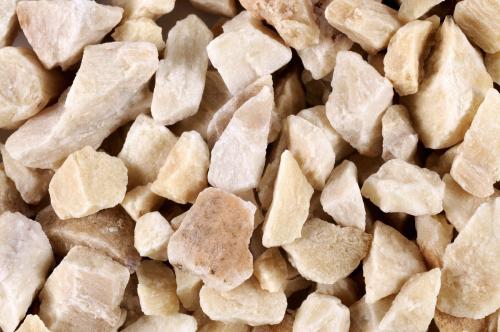
White Peony Harvesting and Processing
1. White peony harvest time:
White peony is harvested 3-4 years after planting. As for the harvest season, in Zhejiang it is from late June to early July, in Anhui, Sichuan, and other places it is in August, and in Shandong it is in September. If too late, the starch in the roots transforms, and after drying the quality is not firm and the texture is light and puffy. Choose a sunny day, cut off the stems and leaves, and dig out the whole root. Apart from keeping the buds for propagation, cut off the peony roots and process them for medicinal use.
2. White peony processing method:
Separate the peony roots into large and small ones, blanch them in boiling water for 5-15 minutes, stirring frequently while blanching. When the outer skin of the peony roots turns white, has no raw core, and has a fragrant aroma, quickly scoop them out and soak them in cold water, then take them out and scrape off the outer skin, trim both ends evenly, and dry them separately according to thickness. They can also be peeled first and then boiled, and sun-dried. Sun-drying peony is an important part of processing. If dried too intensely, the outside will be dry while the inside remains moist, and the surface will crack, making it prone to mildew and deterioration. Generally, put them out to dry in the morning, dry them in the shade for 3 hours at noon, put them out to dry again after 3 p.m., and in the evening gather them into a pile and cover with gunny sacks or straw mats so that the internal moisture of the peony roots seeps out, then put them out to dry again the next day. Repeat this until they are thoroughly dry inside and out, and then they are ready to be sold as commercial goods.
White Peony Site Selection and Land Preparation
Choose loam or sandy loam with good drainage and deep, fertile soil. Previous crops such as corn, wheat, beans, and sweet potato are relatively good. Before planting, intensive and careful cultivation is required, with a plowing depth of 25-30 cm, plowing and turning 1-2 times, and applying 2500-4000 kg of stable manure or compost per mu as base fertilizer in combination with plowing and turning. Level with a rake and make high beds 1.3 m wide. If the plot has excessive rain and poor drainage, the bed width can be about 1 m, with a ditch width of 40 cm between beds and a depth of more than 20 cm.
In existing young forests, orchards, barren hills, sloping land, field edges, and roadsides in sandy loam, white peony can all be cultivated. This is especially true for vacant land on both sides of roads and various tourist attractions, mountain villas, farm estates, and so on. After planting white peony, the flowers bloom in all colors and fill the air with fragrance, very charming. It not only plays a good role in beautifying the environment but also obtains considerable economic benefits, truly achieving two goals at once.
In addition, during the cultivation period of white peony, pest damage is unavoidable, so diseased branches and leaves need to be removed and a certain amount of medication sprayed for prevention and control. White peony has high medicinal value. The harvest period is generally in the fourth year after planting. Cut off the rhizome, then dig out the roots, keep the part used for propagation, and dry the rest to be used as medicinal material.
Efficacy and Effects of White Peony
Calms the liver and relieves pain, nourishes the blood and regulates menstruation, astringes yin and stops sweating. Used for headache and dizziness, hypochondriac pain, abdominal pain, limb cramps, blood deficiency and sallow complexion, irregular menstruation, spontaneous sweating, and night sweats.