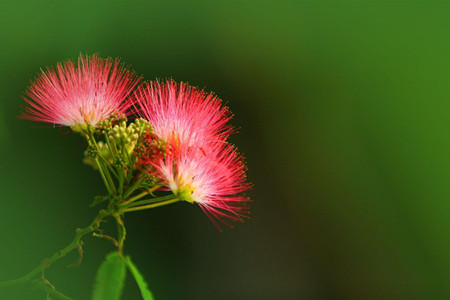
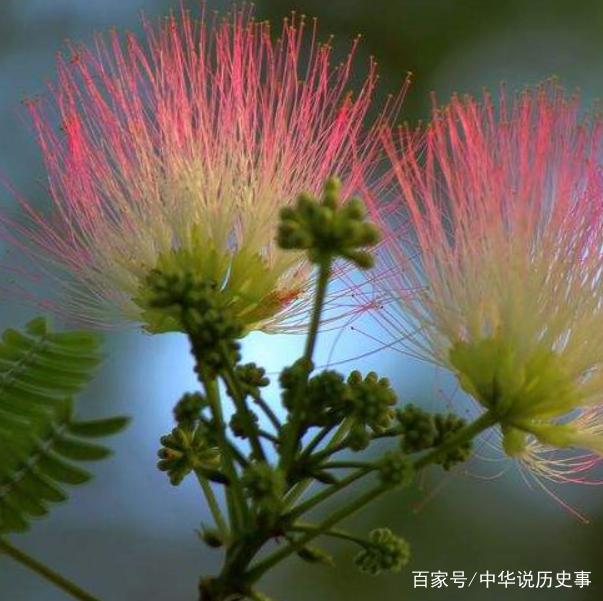
The silk tree flower (Latin scientific name: Albizzia julibrissin Durazz.) is a deciduous tree of the Fabaceae family and the Albizia genus. It prefers a warm, humid environment with plenty of sunlight, has a faint fragrance, and a mild taste. The filaments of the silk tree flower are pink, and the pods are flattened. It is a street tree and ornamental tree in cities. The heartwood is yellow-grayish brown, and the sapwood is yellowish white; it is durable and mostly used for making furniture. The tender leaves are edible, and the old leaves can be used for washing clothes. The bark is used medicinally and has a deworming effect. It also has a calming effect, mainly treating stagnation of qi with chest tightness, insomnia and forgetfulness, nourishing yin and supplementing yang, eye diseases, neurasthenia, and other conditions.
Seedling Raising Methods
In the production of nursery stock for silk trees, the nutritional pot seedling method is often used. First, nutrient soil needs to be prepared. Pit pond mud, or raw turf soil passed through a fine sieve, can be mixed evenly with fertilizer for preparation. When preparing the nutrient soil, an appropriate amount of trace elements, fungicides, and insecticides is added to treat the soil, thereby preventing harm to seeds and seedlings caused by harmful soil organisms and ensuring healthy growth of the nursery stock. When raising seedlings in nutritional pots, a north-south row orientation is generally used, with a bed spacing of 30~40cm, and a seedbed width of 1~1.2m is suitable. After the nutritional pots are filled with nutrient soil, water them thoroughly once, and sowing can be carried out the next day. The dibbling method is commonly used for silk tree nutritional pot seedling raising. Each pot can be sown with 3~4 seeds. After sowing, cover with soil to a thickness of 1cm and keep the soil moist.
Transplanting
After silk tree seedlings are grown, they need to be transplanted. Spring is the best time, meeting the requirements of "dig, plant, and water as you go." During the transplanting process, care should be taken to protect the root system and to be careful and meticulous. For transplanting large seedlings, if necessary, poles or ropes can be used for support to prevent them from being blown crooked by the wind or growing at a slant.
To ensure survival, the nursery stock should be treated by removing side branches and keeping only the main trunk. The trunk-setting height should be flexibly controlled according to different planting requirements, generally around 3m. When transplanting large seedlings, a sufficient soil ball should be carried, and supports should be set up to prevent wind from blowing them over. Water immediately after planting. In late autumn, open a trench around the trunk and apply fertilizer once to ensure sufficient fertility for growth the following year.
After transplanting, the frequency of watering should be appropriately increased. Applying sufficient base fertilizer in autumn is beneficial for root growth and for lush flowers and leaves the following year. To meet people's requirements for the ornamental value of the silk tree, pruning is needed at the end of each winter to remove diseased and insect-damaged branches and thin, weak branches, and to appropriately prune and adjust side branches, so as to achieve a straight trunk and a beautiful tree shape.
Strengthen management after planting, immediately irrigate thoroughly to promote timely healing of wounds, and minimize new wounds during routine management such as watering and fertilizing. Water during drought, drain water after rain, and fertilize regularly to enhance plant vigor and improve disease resistance.
Field Management
Sunlight
The silk tree flower loves light and is also very drought-tolerant. It belongs to the Fabaceae family, and it has strong adaptability to climate and soil. When growing it in pots, give it more light in a timely manner, and it will grow rapidly.
Temperature
The silk tree flower prefers a warm growing environment. The suitable temperature for growth is 13°C-18°C. Its cold resistance is also quite good. In the winter in the south, it is also very easy to raise and care for, and there is no need to deliberately move it into a greenhouse. Generally, it can withstand cold down to around minus 10 degrees, and in southern regions it can be placed outdoors directly for overwintering in winter.
Soil
The silk tree flower has low soil requirements, but fertile, moist, well-drained sandy loam and limestone loam are best.
Water and Fertilizer Management
The silk tree flower is tolerant of dryness and not tolerant of waterlogging. During maintenance, do not water too much, so as to avoid waterlogging and damage to the root system. The silk tree flower can be managed extensively, and its requirements for water and fertilizer are not very high. Even in poor areas, it may grow very vigorously. However, it should be noted that it does not like noise or dust, so this aspect needs to be controlled well during cultivation.
Three Key Points to Note When Growing Silk Tree Flowers
1. Stay away from polluted environments
The silk tree flower is naturally clean, and it likes a clean and warm growing environment. Note that it naturally dislikes dust. When growing it, stay away from polluted environment areas. Places with poor air are also not conducive to its growth. How is it best to plant silk tree flowers in pots? It can be placed in a place with good ventilation and air. It is best if it can face the sun, which is more conducive to its growth.
2. Stay away from noisy environments
The silk tree flower is naturally fond of quiet and does not like a living environment with noise. When growing it, pay attention to controlling the cultivation environment, try to control noise or stay away from noise. A comfortable, warm, and quiet growing environment is its favorite. In such an environment, it can grow more robustly and healthily and produce more beautiful flowers. The effects and functions of silk tree flowers are many, and it is a very suitable flower to grow.
3. Prune as little as possible
The root system of the silk tree is different from that of other plants. It is a shallow-rooted tree species, and its sprouting ability is relatively weak. During routine daily maintenance, prune as little as possible and just maintain a normal growth rate. Do not create a growth burden on the plant because of excessive pruning, ultimately affecting the normal growth of the plant.