A Detailed Guide to Amaryllis Planting Methods and Care Tips
Amaryllis (scientific name: Hippeastrum rutilum), also known as red-flowered lily (Flora Hainanica), huazhoulan (Essentials of the Economic Flora of North China), xiangaohuazhou, zhudinghong, zhudinglan, gutinghua, huazhoulan, baizilian, baizhilian, duihong, duiduihong, and others. It is a perennial herb of the genus Hippeastrum in the Amaryllidaceae family.
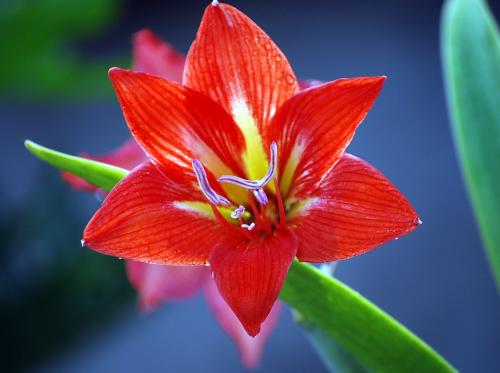
Amaryllis prefers a warm, humid climate, with an optimum growing temperature of around 23°C. It dislikes intense heat, and sunlight should not be too strong, so it should be kept under a shade for care. It is afraid of waterlogging. During the winter dormancy period, it requires a cool climate, ideally 11°C, and must not go below 5°C. It prefers sandy loam rich in humus and with good drainage. Artificial bulb-cutting is often used to propagate bulblets in large numbers. That is, it is cultivated by methods such as sowing, bulb division, bulb scale cutting, and tissue culture.
How to care for amaryllis in winter
Amaryllis blooms in April in spring and also blooms in winter. To promote flowering, management should be strengthened early. It grows quickly, and after 1 year of growth, it should be repotted into a suitable flower pot. After 1 or 2 years of growing amaryllis in pot soil, the soil becomes lacking in nutrients, so to promote growth and flowering in the new year, fresh soil should be used. It grows quickly, and after 1 or 2 years of growth, many small bulbs form around the top, so when repotting and changing the soil, divide the plants at the same time: plant the large plants together in one pot, the medium plants together in one pot, and the small plants together in one pot. When repotting, changing soil, and planting, apply a base fertilizer at the same time. After potting, apply a phosphorus-potassium fertilizer once a month. The fertilizing principle is to apply lightly and frequently, to promote flower bud differentiation and flowering. Amaryllis grows vigorously and blooms early, so pest and disease control should be carried out, spraying flower medicine once a month. Spraying should be done on clear days at around 9 a.m. and 4 p.m.; spraying under the strong midday sun should be avoided to prevent phytotoxicity.
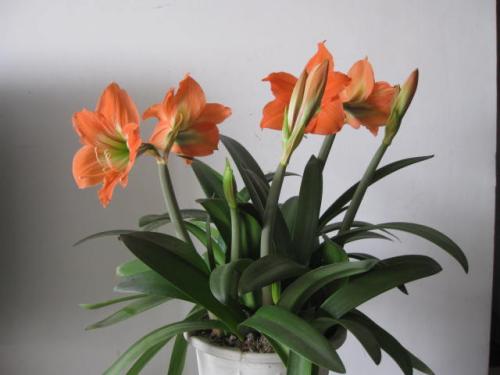
Winter care experience for amaryllis
1. First, the winter dormancy of amaryllis requires suitable low-temperature conditions. The low temperature mentioned here should be around 10°C, and must not be below 5°C, otherwise the bulb will be damaged by freezing; but if the temperature is higher than 15°C, the plant will not enter dormancy and will maintain normal growth, so the purpose of inducing dormancy cannot be achieved.
Care during the winter dormancy period of amaryllis:
2. Water control: Throughout the dormancy period, watering must be strictly controlled. The amount of water should be just enough to keep the bulb from withering. In my personal experience, water a little about every ten days, just enough to make the soil surface slightly moist; at other times, it can be left to dry out.
3. Light: The place where the flower pot is placed should not have bright light shining on it; a little scattered light is best.
4. Care after ending dormancy: After amaryllis has gone through a dormancy period of about two months, you can, depending on personal need, let it wake from dormancy at any time. The specific method is: move the flower pot to a place with a suitable temperature and water it thoroughly once. Within a few days, you can see new leaves of the amaryllis emerging, and the amaryllis has awakened after dormancy.
After the amaryllis has awakened, apply a diluted fertilizer solution once after one week, then gradually resume normal fertilizer and water care, and soon you will see the flower buds emerge and bloom.
Supplementary note: During the winter dormancy period, it requires a cool and humid climate, ideally 10-12°C, and must not be below 5°C. It prefers sandy loam rich in humus and with good drainage. If the soil is very moist in winter and the temperature exceeds 25°C, the stems and leaves will grow vigorously, hindering dormancy, and this will directly affect normal flowering the following year.