Planting Methods and Key Technical Points for Michelia maudiae
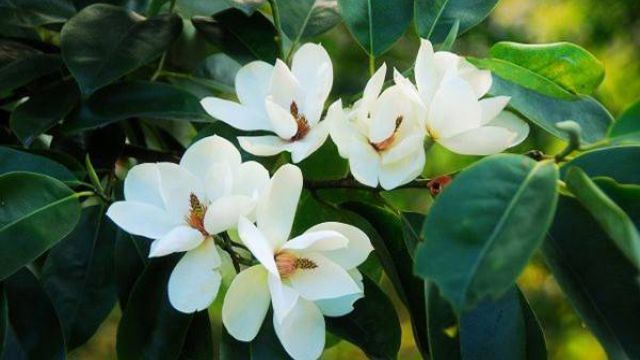
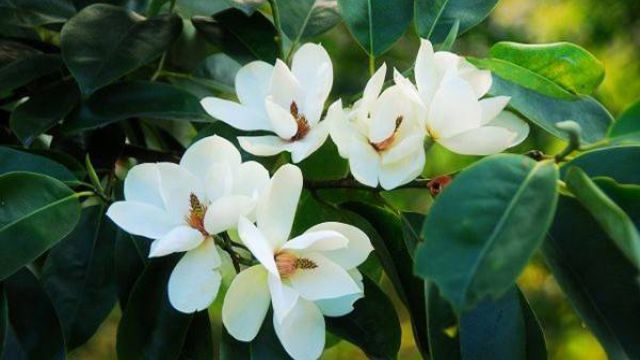
Michelia maudiae (scientific name Michelia maudiae Dunn), also known as glossy-leaved white magnolia and Lady Maud's magnolia. Michelia of the Magnoliaceae family, an evergreen tree. A species endemic to China. It grows fast, has good timber quality and strong adaptability, does not wither in winter, and in early spring is covered with white flowers; the flowers are large, with a delicate fragrance, and the seeds are red, obliquely ovate. The tree form is attractive, with relatively high ornamental and economic value. It is mainly distributed in Zhejiang, Fujian, Hunan, Guangdong, Guangxi, Guizhou and other places.
Cultivation Techniques for Michelia maudiae
Direct sowing
The seeds can be sown as soon as they are collected, or stored in damp sand until late February to early March of the following year for sowing. To increase the germination rate of the seeds and reduce the trouble of storing them in sand, the seeds can be sown directly after being dried in the shade.
Nursery site selection
Michelia maudiae is a shallow-rooted tree species, so the nursery site should be chosen with good irrigation and drainage conditions, moderate sunlight, deep and fertile soil, ample water supply, and well-drained sandy loam.
Seedbed preparation
Before sowing, the nursery site should be deep-ploughed, and the soil should be prepared carefully, achieving "three ploughings and three harrowings." Apply sufficient base fertilizer, with 2500 kg of barnyard manure per 667 sq m, and at the same time use 5 kg of 70% thiophanate-methyl for soil disinfection and 2 kg of 90% trichlorfon for soil pest control. After soil disinfection, begin building the beds, with a bed height of 25 cm, bed width of 110-120 cm, and a walking furrow width of 30-35 cm. The bed surface should be slightly turtle-backed in shape, with drainage ditches opened well around it, so that water does not accumulate in the ditches after rain stops.
Use drill sowing
The row spacing is 25 cm, and the sowing rate is 8-10 kg/667 sq m. The sowing furrow is 1.5-2 cm deep. After sowing, cover the seeds with burnt mud ash to a thickness of about 1 cm, then cover with yellow subsoil 1-2 cm. To keep the nursery soil loose and moist, which is beneficial for seed germination and emergence, it is necessary to cover with langyi grass, with the thickness such that the soil is no longer visible. After sowing, field management of the nursery should be strengthened; in addition to scattering rat poison along the walking paths and around the perimeter, promptly clear the ditches for drainage on rainy days and sprinkle water to maintain moisture in dry weather.
Seedling stage management
In early April, when the average temperature is around 15°C, the seeds begin to break through the soil and germinate. When 70%-80% of the seedlings have emerged, the langyi grass can be removed on a cloudy day or on a clear evening. On the 2nd day after removing the grass, spray alternately with a 0.125% solution of 70% thiophanate-methyl and a 0.5% equal-amount Bordeaux mixture 2-3 times to prevent the occurrence of diseases.
In the early growth stage of Michelia maudiae (April to mid-June), the height growth accounts for 3.6% of the annual growth. The seedlings grow relatively slowly and have poor stress resistance, so work such as weeding, loosening the soil, and applying an appropriate amount of fertilizer should be done well. From late April to late May, apply dilute human and livestock manure at a concentration of 3%-5% and 2% decomposed cake fertilizer every 10-15 days. After June, apply 0.2% compound fertilizer around the seedling roots, and try not to splash the solution onto the leaves.
To improve seedling quality, accelerate seedling growth, and reasonably control seedling density, in May during rainy weather, small seedlings that are too densely planted should be moved out promptly. Small seedlings were interplanted among large camphor trees for a three-dimensional cultivation trial, with a plant-row spacing of 10 cm x 20 cm; the small seedlings' height and ground diameter growth were relatively good, achieving fairly good results. In early July, thin the seedlings to a final stand, leaving 30-35 seedlings per sq m.
From late April to early July, the seedlings are susceptible to root rot, stem rot and anthracnose; from late April to mid-May, they are susceptible to being gnawed at the root-collar area by underground pests such as white grubs and cutworms; from May to June, they are susceptible to scale insect infestation; when any of the above pests and diseases appear, attention should be paid to timely control.
From late June to mid-October is the vigorous growth period of Michelia maudiae, with its height and diameter growth accounting for 68.9% and 60.0% of the annual growth, respectively. At this time the temperature is high and the weather is scorching, so drought relief work should be done promptly: cover the seedbed with a shade shed over 1.20 m high, cover the seedbed with a single layer of 55% light-transmittance shade net, and irrigate with running water; fill the walking paths with sufficient water, and drain immediately after the seedbed is thoroughly soaked. Also apply 0.2% compound fertilizer and urea alternately as a liquid drench around the seedling roots, and try not to splash the solution onto the leaf surface. After August, combined with loosening the soil, broadcast 5-8 kg of compound fertilizer each time to promote seedling growth. In late September, stop topdressing the seedlings. During this period, swallowtail butterflies may eat the young leaves of the seedlings, so timely treatment is needed, spraying with a 0.1% solution of 50% trichlorfon and malathion emulsion.
When the seedlings enter the late growth stage, topdressing should be stopped, and a 0.3%-0.5% potassium dihydrogen phosphate solution should be sprayed 2 times every 10-15 days, which can promote lignification of the seedlings so they can overwinter safely.
The Value of Michelia maudiae
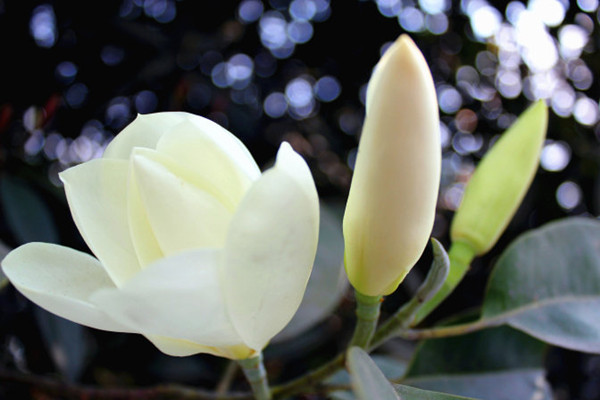
Michelia maudiae has glossy green leaves and pure, bright white petals, and can be used for garden ornament.
Both the flowers and roots of Michelia maudiae can be used as medicine and have medicinal value.
The trunk of Michelia maudiae can also be used as timber; aromatic oil can be extracted from the plant.