Detailed Explanation of Licorice Planting Techniques and Management Methods
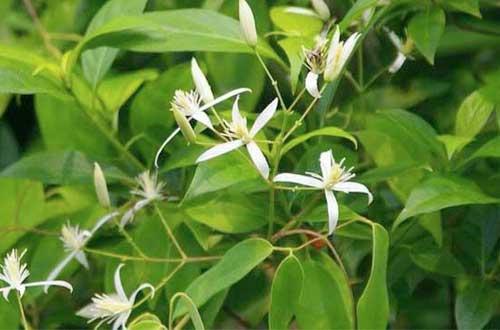
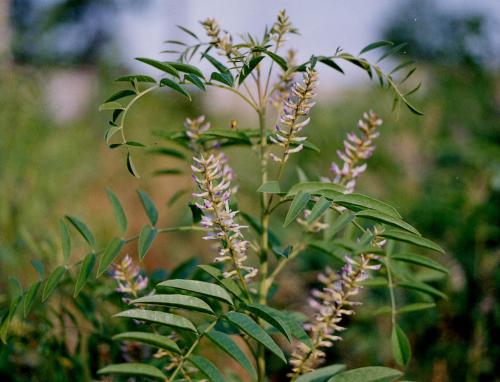
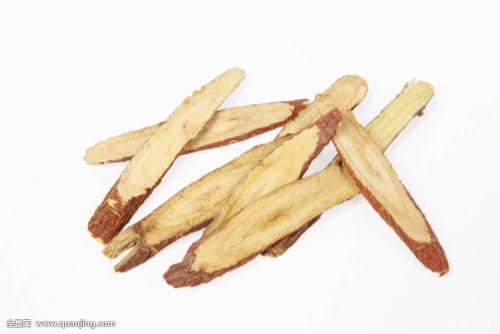
Licorice, (scientific name: Glycyrrhiza uralensis Fisch), also known as Guolao, sweet grass, Ural licorice, sweet root. It is a perennial herb of the Fabaceae family and the Glycyrrhiza genus, with thick roots and rhizomes, and is a tonic Chinese herbal medicine. It is a very good medicine for the human body; the medicinal parts are the root and rhizome. The medicinal material is characterized by a cylindrical root, 25-100 cm long and 0.6-3.5 cm in diameter. The outer bark varies in tightness, and the surface is reddish-brown or grayish-brown. The rhizome is cylindrical, with bud scars on the surface and a pith in the middle of the cross-section. It has a slight odor and a sweet, distinctive taste.
Planting Methods
Treatment of Licorice Seeds
The seed coat of licorice is a hard waxy layer, and it must be treated to break the coat before it can absorb water and germinate. Usually, a grain rice milling machine treatment method is used: adjust the machine's grinding discs to an appropriate gap and grind 2-3 times, so as to scratch the seed coat without crushing the seeds. For irrigated land or seedling beds with good soil moisture, about 10 h before sowing, pour hot water at about 60-70°C into the seeds, stirring while pouring until it reaches room temperature, then soak for 2-3 h, drain the water, and leave for about 8 h before sowing. For dry land or seedling beds with poor soil moisture, it is advisable to sow dry seeds to avoid the soaked seeds "dying" because they cannot emerge in time.
Sowing and Transplanting of Licorice
The most suitable time for sowing and raising seedlings is mid to late May. Sowing can also be done from early June to early August, but the seedlings cannot be transplanted out of the nursery that year and should be transplanted the following year. The sowing rate for seedling raising is 8 kg-10 kg/667 sq m, and the sowing rate can also be increased depending on the germination situation. The normal sowing depth is 2-4 cm. However, when soil moisture is poor, it is advisable to sow dry seeds shallowly to prevent crusting after rain.
The suitable time for spring transplanting is from when the soil thaws to early May. The suitable time for autumn transplanting is from when the seedlings completely stop growing to before the soil completely freezes. 1-2 d before lifting the seedlings, irrigate the seedling land where the soil is dry and hard, so that the soil becomes moist and the seedling rhizomes absorb enough water. The seedling lifting method uses mechanical or manual lifting.
Field Management Methods for Licorice
After transplanting in irrigated land, start the first irrigation within one week, with an irrigation quota of 60-80 m3/667 sq m or sprinkler irrigation wetting depth of 40-60 cm; irrigate the second time in mid to late June, with an irrigation quota of 30-40 m3/667 sq m or sprinkler irrigation wetting depth of 30-40 cm; irrigate the third time in mid to late July, with an irrigation quota of 40-60 m3/667 sq m or sprinkler irrigation wetting depth of 30-40 cm, irrigating 3-4 times throughout the year.
This can be combined with the second irrigation, applying urea with the water each time at 15-20 kg/667 sq m, with topdressing 2-3 times throughout the year. The following year, apply topdressing another 2-3 times, 15-20 kg/667 sq m each time. On dry land, dry topdressing can be carried out in combination with intertillage and weeding or after rain. The specific method is to evenly spread the fertilizer on the ground surface and, in combination with intertillage and weeding, mix the fertilizer with the soil.
For foliar fertilizer, it is advisable to choose potassium dihydrogen phosphate and "special micro-fertilizer for root and rhizome medicinal plants." Spray once each when the seedlings are over 10 cm tall and during the branching stage of the young seedlings. The suitable spraying concentration is 20-25 g of the original drug mixed with 15 kg of water.
Licorice is suitable for growing on idle beach and vacant land where crops cannot be planted, and such land often has many weeds as long as there is water. The success or failure of planting and the level of yield are all related to weeding. When there are many weeds, the utilization rate of water and fertilizer by licorice is low, and the yield naturally decreases. For licorice fields planted on a large scale, weeding should be carried out by combining manual and chemical herbicide weeding, that is, in the year of planting, manual weeding is mainly used. Starting from the second year, for plots with many weeds, select appropriate herbicides for chemical weeding in June-July, hoe and ridge once before the rainy season, and ridge again after autumn. At this time, attention should be paid to hilling soil toward the roots so as to overwinter safely. In the second year, from greening to the beginning of the dog days, carry out intertillage 1-2 times. In the third year after greening, depending on the growth situation, carry out intertillage once or not at all.