A Detailed Guide to Dwarf Umbrella Tree Planting Methods and Care Tips
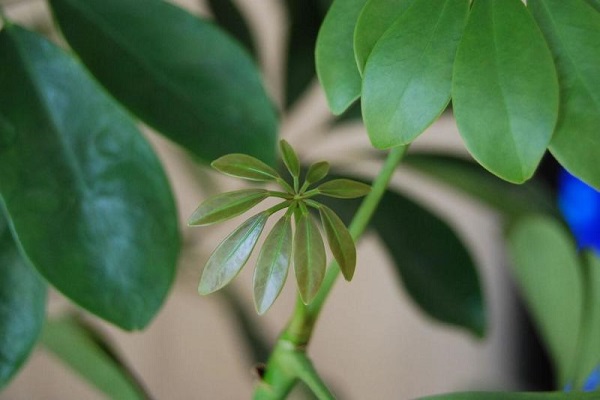
The dwarf umbrella tree is a common indoor green plant, evergreen all year round, and it can also purify the air and absorb formaldehyde. The Schefflera arboricola is an evergreen shrub. It has many branches and dense stems. It has palmately compound leaves with 5 to 8 leaflets, long ovate, leathery, dark green, and glossy. It has panicle inflorescences, small pale red flowers, and deep red berries.
How to grow the dwarf umbrella tree
Soil
The soil for growing the dwarf umbrella tree should be deep, loose, and fertile. For household potted plants, leaf mold or peat soil and garden soil are generally used, mixed evenly with 1/4 river sand or perlite. To ensure the soil is fertile, a small amount of cake fertilizer can be added to the soil as a base fertilizer.
How to pot and plant
Choose a healthy young plant with a well-developed and intact root system, and plant it in a pot in late autumn or before sprouting in spring.
Before planting, place a layer of tile fragments at the bottom of the container, add a small amount of nutrient soil, and after placing the plant into the flower pot, add a small amount of soil so the roots are in close contact with the soil. Then water thoroughly and firm the soil. After newly potted plants are planted, they should first be placed in a semi-shaded place for one week, then gradually moved to a sunny place for normal care.

Watering
The dwarf umbrella tree grows well in an environment with high air humidity and sufficient soil moisture. In daily care, pay attention to replenishing water in time, but do not let water accumulate, otherwise it will cause a large number of fallen leaves. In winter under low-temperature conditions, attention should be paid to controlling water.
If the dwarf umbrella tree is kept in a plastic flower pot, pay attention to timely drainage. When watering, water promptly before the soil dries out completely, and keep the soil moist at all times. In dry weather, spray around the plant, and in the plum rain season pay attention to rain protection to avoid water accumulation in the pot.

Sunlight and temperature
The dwarf umbrella tree likes a semi-shaded environment and is suitable for care in a place with sufficient bright indirect light, so placing one at home is ideal. As long as the light at home is bright, it can be enjoyed for a long time. In winter it can be moved near a south-facing window. In spring and autumn, the flower pot can be moved outdoors to a well-ventilated place for a period of care, but attention should be paid to proper shading to avoid yellowing leaves caused by direct sun exposure.
The dwarf umbrella tree is not cold-tolerant. In winter, the room temperature should be kept above 10°C. If the room temperature is below 8°C for a long time, the leaves will gradually turn yellow, and if it drops below 0°C, the leaves will fall off. Therefore, winter, the hardest time for the dwarf umbrella tree, requires good control of indoor temperature.

Repot and prune in time
The dwarf umbrella tree needs to be repotted once every spring. If a plastic pot is used, note that the soil should be slightly looser.
The dwarf umbrella tree grows quickly and easily sprouts leggy branches. Once it becomes an adult plant, it needs frequent shaping and pruning to keep the plant shape neat and attractive. A dwarf umbrella tree cared for many years has long-lived old branches, and the plant shape may become too large. When new buds sprout each year, heavy pruning can be carried out together with repotting, cutting back branches, leaves, and old roots.

Notes on growing the dwarf umbrella tree
1. A suitable growing environment temperature, suitable drought and waterlogging conditions, and timely watering are all that is needed.
2. Light duration must be ensured.
3. Do not rush to repot a small plant that has been successfully propagated by cuttings; wait until its growth is clearly vigorous before repotting.
4. In summer, spray water on the leaf surface.