Detailed Explanation of the Planting Methods and Technical Key Points for Peacock Flower (Caesalpinia pulcherrima)
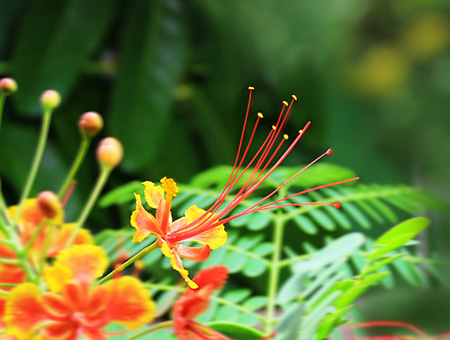
Peacock Flower (scientific name: Caesalpinia pulcherrima (L.) Sw.): a large shrub or small tree; up to 3 m tall, with green or pinkish-green branches bearing sparse thorns. Bipinnate compound leaves with 4 to 8 pairs, opposite, leaflets in 7 to 11 pairs, oblong-elliptic or obovate, with oblique bases and notched tips, and very short petiolules. Racemes terminal or axillary, petals rounded and stalked, orange or yellow, pedicels up to 7 cm long. Pods black. Seeds 6 to 9. Flowering and fruiting almost year-round.

Seed Propagation
Peacock Flower is propagated by seed. From mid-June to mid-December, the pods mature successively, with September to October being the peak ripening period. Collect pods that mature during the peak period, expose them to sunlight, and after they split open, remove the seeds. They can be sown as soon as collected, with the seedlings protected from cold to overwinter, or the seeds can be stored for spring sowing the following year. The thousand-seed weight is about 132 g, and the temperature at germination must be above 20°C. Sowing in mid-to-late March in spring is preferable. Before sowing, soak the seeds in 60°C warm water, and after it cools, continue soaking for 12 hours; germination is rapid, generally beginning three days after sowing and finishing within one week, with a germination rate of about 60%.1. Soil
Peacock Flower has low soil requirements and can grow well in any type of soil, but to achieve its optimal condition, sandy soil that is fertile, airy and well-draining should be chosen, and kept moist during the seedling stage. Before planting, the soil should first be loosened and stones and other debris removed, and farmyard manure mixed in as a base fertilizer to ensure adequate nutrition.
2. Temperature
This plant prefers a relatively warm environment, and overly low temperatures are unsuitable. During cultivation, the temperature should be kept no lower than 8°C. Especially in winter, it should be moved indoors for insulation to prevent cold damage to the plant and losses. If the temperature is too low, sunlight should also be supplemented appropriately to improve the plant's cold resistance, and watering should be appropriately reduced to prevent the roots and stems from being damaged by cold.
3. Watering
When planting and taking cuttings, the soil should be kept moist. When the seedlings reach 15 cm in height, the soil can be kept appropriately dry, which helps the plant take root, makes the stems thick and sturdy, and prevents lodging. During the flowering season, the soil must not be allowed to dry out; water promptly, and on days of high temperature or strong sunlight, replenish water in time.
4. Fertilizing
When the seedlings reach 40 cm in height, besides removing the aged leaves at the base of the plant and pinching off the growing tips to encourage more branches and leaves, fertilizer should also be applied. Use diluted manure water for fertilizing; it must not be too concentrated, otherwise it may easily cause the death of the plant's roots and stems. Before flowering, well-rotted barnyard manure should also be applied once, about 1 kg per plant; after fertilizing, cover with soil and water.