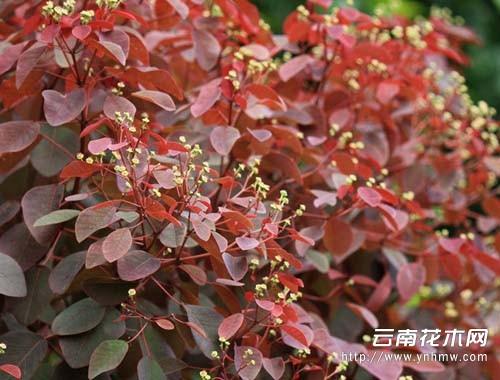
The Chinese tallow tree (scientific name: Sapium sebiferum (L.) Roxb.) is a deciduous tree in the Euphorbiaceae family, genus Sapium. The Chinese tallow tree is a colored-foliage tree species, with leaves turning brilliantly red in spring and autumn, no less striking than the red maple. It is an economic tree species unique to China, with a cultivation history of more than 1400 years.
Cultivation Techniques
Mother tree selection: To ensure the quality of the seeds collected, select excellent mother trees that are over 20 years old, located in good site conditions, growing vigorously, with straight trunks, free of pests and diseases, producing large quantities of seeds, and with good light exposure.
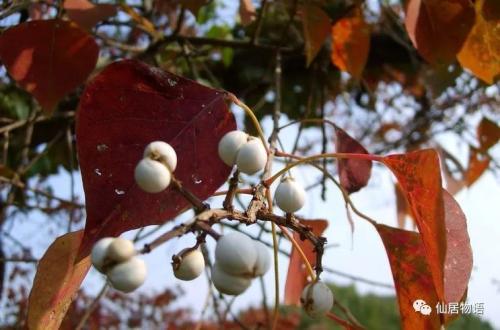
Seed collection time: Seed collection usually takes place in mid-November. The best collection period is when 70-80% of the fruit have fully split open and the seeds are exposed. If collected too early, the fruit have not split, and
the seeds have not yet fully matured; if collected too late, birds will have eaten the seeds and none can be collected. So once the time is right, collect seeds immediately on a sunny day.
Collection methods: One is to let the seeds fall naturally and organize workers to pick them up from the ground; the other is to wait until the seeds are fully mature, spread tarpaulin or similar material on the ground beneath the canopy, and use long-reach pruners or bamboo poles to knock the branches so the seeds fall, then gather them.
Seed processing and storage: After collection, screen the seeds to remove impurities and inferior seeds, then spread the good seeds in a dry indoor area to dry in the shade.
Sowing
Generally, the sowing method is used, while superior varieties are propagated by grafting. Root burial propagation can also be used. Transplanting of Chinese tallow tree is best done in spring when the weather warms before bud break. If the seedlings are relatively large, it is best to transplant with a soil ball. In the 2-3 years after planting, attention should be paid to tending and management. The main pests include the larvae of the camphor silk moth, slug moths, and bagworms, which eat leaves and tender branches, and timely control is necessary. Cultivating an excellent Chinese tallow tree takes 6-10 years; the more premium the nursery stock, the longer the cultivation period required, and premium stock also brings high returns.
Chinese tallow tree saplings are cultivated in the nursery for 3 to 4 years. When the diameter at one meter height reaches about 6 cm, they can be released from the nursery for landscaping use. The specification should not be too small, otherwise it will be difficult to produce a good landscape effect. Transplanting of Chinese tallow tree is best done in spring (April to May). Planting can be done both before and after bud break, but in practice, the survival rate of transplanting during bud break is lower than transplanting before or after bud break.
When transplanting, a soil ball must be kept, with a diameter of 35 to 50 cm. Because urban soil conditions are relatively poor, planting should follow the principle of large pits and shallow planting. Dig a pit of 1 m x 1 m x 1 m, remove construction debris and other impurities from the pit, apply decomposed organic fertilizer at the bottom of the pit, backfill with good soil, then place the seedling in. The planting depth should be controlled so that the surface soil cover is 5 to 10 cm from the root collar of the seedling. After planting, install a support frame, then water thoroughly once, water again after three days, and thereafter determine watering frequency based on weather conditions and soil moisture, generally watering about once every 10 days. The Chinese tallow tree likes water and fertilizer. If drought occurs during the growing season, water promptly, otherwise growth will be poor.

Management
Thinning: When the seedlings reach 5-8 cm in height, begin the first thinning, keeping seedlings at 10-15 cm spacing, removing the inferior and keeping the superior. When the seedlings reach about 20 cm in height, carry out a second thinning along with weeding, so that the row spacing of the seedlings is about 20 cm x 30 cm, keeping 7000 large and strong seedlings per mu. Moderate dense planting is beneficial for trunk form development and height growth.
Top dressing and hoeing: After the second thinning is completed, top-dress the seedlings. From April to July, apply urea 4 times before or during rain, at 5 kg/667 sq m, 7.5 kg/667 sq m, 10 kg/667 sq m, and 15 kg/667 sq m respectively. Hoe and weed at the appropriate time. Following the principle of weeding "when small, and completely," keep the seedbed free of weeds, the soil loose, and the ditches draining well.
Pruning and pest and disease control: Pruning mainly consists of bud removal and removal of new shoots. Starting from when branches begin to appear on the main trunk, remove the axillary buds that are beginning to sprout or remove the new shoots of lateral branches that have already grown. 2-3 prunings are needed per growing cycle. The purpose is to suppress the production and growth of lateral branches, promote the apical growth advantage of the new shoots on the main trunk, and promote height growth. The Chinese tallow tree is a native tree species with relatively few pests and diseases. The main problems are cutworms in the early stage and slug moths in the later stage, which can cause some damage. Use early-morning manual capture to eliminate cutworms; when slug moth damage occurs, spray the leaves with 800x diluted 40% dimethoate emulsion or 800x diluted 80% dichlorvos emulsifiable concentrate, with remarkable results.