Detailed Guide to American Red Maple Planting Methods and Techniques
This tree species grows rapidly and is the fastest-growing of all red maple varieties. American Red Maple has many improved horticultural cultivars, the more representative ones being: Autumn Flame Maple, October Glory, Sunset Red Maple, Suxi Hong, Autumn Blaze, Armstrong, Northwood, etc.
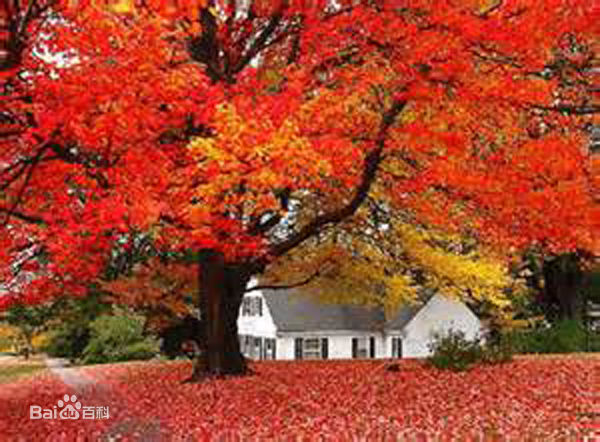
Planting Methods
1. Soil: It is not demanding regarding soil, and can adapt within a soil pH range of 5.5-7.5, so it can grow in slightly acidic soil, neutral soil and calcareous soil, and is suitable for growing in fertile, humus-rich acidic or neutral sandy loam.
2. Watering: Red maple likes moisture during its growth process, but apart from sufficient watering in summer, it should not be watered too much at other times; it is best to keep the potting soil moist regularly, which helps maintain a graceful tree form.
3. Sunlight: Red maple likes warmth; in spring and autumn it can receive full sun, and after summer begins it should be moved to a semi-shaded spot to avoid direct midday sun; in dry, high temperatures, water should be sprayed appropriately to lower the temperature and increase humidity.
4. Temperature: Although red maple likes warmth, it is still relatively cold-hardy. In the Yellow River basin area, where winter temperatures reach as low as -20°C, it can still overwinter outdoors as long as the environment is good. As for areas north of the Yellow River, it is better to grow it in pots, and it is advisable to bring it indoors in winter.
5. Fertilizing: From May to August each year, generally apply diluted cake fertilizer water once a month; from September onward, switch to a liquid fertilizer based mainly on potassium fertilizer, such as a 1% potassium sulfate solution or wood ash leachate, to promote vivid red leaf color.
Nursery Stock Pruning Techniques
- Before planting American Red Maple nursery stock, the root system and crown should be pruned; split, diseased, pest-damaged and overly long roots must be cut off to ensure the original natural posture of the American Red Maple nursery stock.
- If the cut (or saw cut) is larger than 2 cm, anti-corrosion treatment must be carried out.
- The trunk-setting height for street trees should preferably be 3 m; for American Red Maple it can be set at more than 2.5 m, with all side branches below the first branching point cut off, and branches above the branching point thinned or shortened as appropriate.
- For tall deciduous trees such as American Red Maple, the original tree shape should be retained, with appropriate thinning; the retained main and side branches should be shortened at vigorous buds, cutting off 1/5-1/3 of the branches.
- Evergreen conifers should not be pruned, only cutting diseased and pest-damaged branches, dead branches, weak-growing branches, overly dense branches and whorled branches, drooping branches and mechanically damaged branches.
- Evergreen broadleaf trees should basically maintain their tree shape, contracting the crown; when planted in the normal season, thin 1/3-3/5 of the total crown, retain the main framework, cut off peripheral branches, thin the inner crown branches, and remove most of the leaves.
- For flowering shrubs, thinning old branches is primary and shortening is secondary; hedges and ball-shaped plants must be pruned to be neat and uniform, with straight, upright lines, beautiful shapes, smooth cuts and good horticultural effect.
- For climbing and trailing vines, dead and overly long vines, crossing branches and horizontally growing branches can be cut off.