Key Techniques and Management Methods for Celery Cultivation
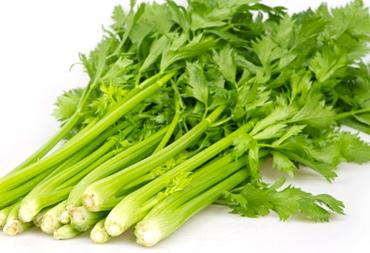
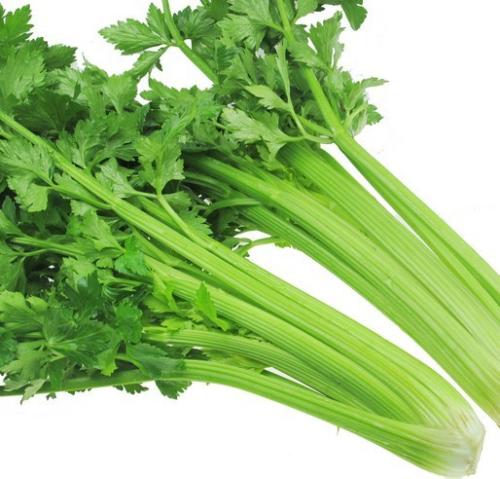
Celery belongs to the Apiaceae family. There are three types: water celery, dryland celery, and western celery. Their functions are similar, but dryland celery is preferred for medicinal use. Dryland celery has a stronger aroma and is called "medicinal celery." However, it is not the same species as cilantro. Celery is rich in protein, carbohydrates, carotene, B vitamins, calcium, phosphorus, iron, sodium, and more. At the same time, it has the effects of calming the liver and clearing heat, dispelling wind and promoting diuresis, relieving restlessness and reducing swelling, cooling the blood and stopping bleeding, detoxifying and opening the lungs, strengthening the stomach and nourishing the blood, clearing the intestines and relieving constipation, moistening the lungs and stopping cough, lowering blood pressure, and calming the mind. Eating celery regularly, especially celery leaves, is very beneficial for preventing hypertension and arteriosclerosis, and also has an auxiliary therapeutic effect.
Planting Time for Celery
1. Planting time for spring celery
In northern China, seedlings are raised under protection from January to March, transplanted to open fields from March to April, and harvested from May to July. In the Yangtze River Basin, March is the suitable sowing period. If sown too early, after the seedlings receive a certain amount of low temperature, they easily pass through the vernalization stage, causing premature bolting. If sown too late, they enter the hot summer later, affecting yield and quality.
2. Planting time for summer celery
After the last frost in spring, seedlings are raised in open fields, transplanted from June to early July, and harvested and marketed from August to September. Summer celery, in the hot and rainy season, grows poorly, has many dead seedlings, low yield, and is not planted on a large area.
3. Planting time for autumn celery
In northern China, seeds are sown and seedlings raised from June to early July, transplanted from August to early September, and harvested from October to November. In the Yangtze River Basin, sowing is from early July to early September, and harvest is from October to December. For late sowing, harvesting ends before bolting in March to April of the following year, which is winter celery. In the Yangtze River Basin and the south, it can be cultivated in open fields, sown from September to November, and harvested from December to April of the following year. In the north, it can be cultivated under protection.
Celery Cultivation Methods
1. Seed selection, sowing, and seedling raising
Celery is divided into Chinese celery (Chinese varieties) and western celery. The former has slender leaf stalks, while the latter has wide and thick leaf stalks. Chinese celery is further divided by leaf stalk color into white varieties and green varieties (Kaifeng Glass Crisp). White varieties have smaller, light green leaves, yellow-white leaf stalks, shorter plants, mostly hollow, with more fiber and a mild aroma, good quality, easy to blanch, short growing period, and low yield per plant. Green varieties have larger green leaves, thick leaf stalks, tall and robust plants, mostly solid, with less fiber and a sweet taste, strong aroma, long growing period, high yield per plant, high production, and poor blanching quality.
According to the biological characteristics of celery, the seeds have a dormant period of 40 to 50 days after harvest, so it is best to use seeds from the previous year for autumn sowing.
Celery seed is botanically a fruit, with a thick coat containing oil glands, and is very small, so it does not germinate easily. Generally, seedling raising and transplanting are used. Spring sowing does not require low-temperature treatment, while autumn sowing requires low-temperature treatment. Before sowing, soak in clean water for 24 hours, then remove, wash with clean water, rub by hand, wrap in gauze, and place in the refrigerator's cold storage room to promote germination. It can also be hung in a well 40 cm above the water surface for germination. Note that it must be rinsed once every day. After about 7 days, white sprouts appear. When 50% of the seeds have white sprouts, they can be sown. Soaking seeds in 5 mg/kg gibberellin can also break dormancy and promote germination.
First, build the seedbed well, plow deeply and harrow finely, apply sufficient base fertilizer, level the seedbed before sowing, then water thoroughly with bottom moisture. After the water has fully seeped in, sow. For every 70 sq m of seedbed, broadcast 100 to 150 grams of seeds. Since the seeds are small, they can be mixed with fine sand, then covered with 3-4 mm (about one flat finger) of nutrient soil. Because the seeds have weak soil-piercing ability, the covering soil must not be too thick. After sowing, cover with a layer of plastic film and pay attention to management to avoid damaging the seedlings. During high temperatures, plastic film should be used on the seedling-raising greenhouse to prevent rainstorm erosion and large amounts of rainwater from entering the seedbed, and shade netting should be covered in time.
Although celery has a well-developed root system, it is distributed relatively shallowly and has poor drought tolerance. It must be watered frequently with small amounts of water to keep the seedbed surface moist. When the seedlings have 1-2 true leaves, after watering, a layer of fine soil should be spread on the seedbed surface to cover the seedling roots exposed above the ground. Each watering should be done in the morning and evening (in high-temperature seasons). When the temperature is low, water at noon.
To prevent damping-off disease at the seedling stage, spray with 70% chlorothalonil 600 times dilution. Apply topdressing 2 to 3 times during the seedling stage, mainly using urea to promote seedling growth. Start thinning seedlings once when there are 2 true leaves. The seedling age is generally 50 to 60 days. When the seedlings have 5 to 6 true leaves and the seedling height is above 10 cm, they can be transplanted.
2. Hardening of seedlings should be carried out 6 to 7 days before transplanting, gradually removing the shade netting.
One week before transplanting, apply a "send-off fertilizer" once, applying 10 to 15 kg of ammonium sulfate or urea per mu. Water one day before transplanting to facilitate lifting the seedlings, and transplant with soil attached. Because celery roots have a very strong regeneration ability, some references require washing the soil clean before transplanting. Generally, hole planting is used, with 2 plants or 3 to 4 plants per hole. A certain density must be achieved, and seedlings should be transplanted by grade. On sunny days, it is best to transplant after 4 p.m., except on cloudy days. The transplanting depth should be such that the roots are not exposed and the heart leaves are not buried. It must be planted firmly, and immediately after planting, water with settling water to help survival.
3. Field management and fertilizer-water management:
During the seedling recovery stage (10 to 15 days after planting), small amounts of water should be applied frequently. After seedling recovery, when watering, apply topdressing in time at 20 kg of ammonium sulfate or urea per mu. After seedling recovery, water less and carry out 20 days of seedling restraint, which is beneficial for root penetration and heart leaf differentiation. After seedling restraint, the climate turns cool, and the plants enter the vigorous growth period. Keep the soil moist, then carry out the second topdressing at 30 kg of ammonium sulfate per mu, applying fertilizer along with watering. Throughout the entire growth period, nitrogen fertilizer is the main type, and nitrogen affects celery quality. Avoid using human feces and urine to prevent heart rot and root rot. After rainfall in high-temperature seasons, irrigate with well water in time to lower the ground temperature.