A Detailed Guide to Growing and Caring for Peyote
Among enthusiasts in China, peyote is also colloquially called "wuyu" or "yu" (fish). Old plants form clusters, with turnip-shaped fleshy roots; the body is oblate or spherical, with dark green or grayish-green epidermis; the plant is 5-8 cm tall, with ribs arranged vertically or in a spiral, the top bearing abundant wool, and the areoles bearing white or yellowish-white wool; the small flowers are bell-shaped or funnel-shaped, pale pink to purplish-red; the berry is pink, club-shaped, and contains more than 10 black seeds.
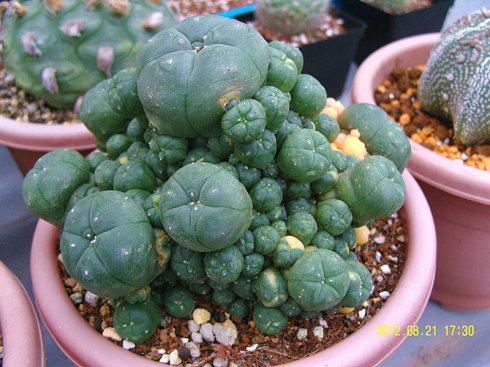
Peyote Cultivation Techniques
Soil requirements: Peyote is best grown in a deep pot. The growing medium should be loose and well-draining. For grafting, a grass cactus or species of the genus Trichocereus such as Trichocereus schickendantzii or Trichocereus schickendantzii can be used as rootstock. Be on guard against red spider mite damage. In summer, provide slight shade; in winter, keep the potting soil dry. Peyote likes warmth, dryness and full sun, fears waterlogging, tolerates drought and partial shade, and requires a large temperature difference between day and night.
Watering method: Peyote's growing season is in spring and autumn. Its swollen taproot fears waterlogging, so apart from keeping the soil moist during the growing season, watering must be controlled at other times. Follow the rule "do not water until dry, and when you water, water thoroughly", avoiding water accumulation in the potting soil, otherwise the roots will rot; and prolonged drought will cause the plant to grow slowly or even stall, with the epidermis becoming wrinkled and lusterless.
Fertilizing method: During peyote's dormant period, note that it needs little or no watering, and fertilizing should be stopped. Peyote likes humid air; some people cover the body with a drink bottle for care, and although the body becomes plump and the epidermis clean and moist, the poor air circulation can cause peyote to contract rust disease, so carbendazim, triadimefon and the like can be sprayed regularly for prevention.
Pest and disease prevention: For peyote, a diluted organic liquid fertilizer or a "low-nitrogen, high-phosphorus and potassium" compound fertilizer can be applied once a month over the long term; do not splash the fertilizer water onto the body. When temperatures are high in summer, the plant grows slowly and requires good ventilation; avoid stuffiness and dryness, otherwise it will easily suffer from red spider mite damage and also develop rust disease or stem rot.
Temperature requirements: Provide appropriate shading to prevent strong direct light from scorching the body. In winter, place it indoors in a spot with ample sunlight; with a nighttime minimum temperature of around 10°C and a certain day-night temperature difference, it can be watered normally so the plant continues to grow. If 10°C cannot be maintained, then control watering and let the plant go dormant; it can overwinter safely above 5°C.
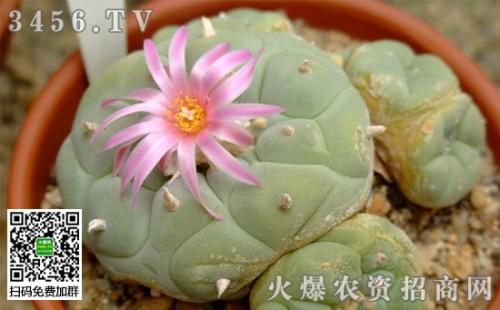
Key Points for Growing Peyote
Peyote has an oblate or spherical body, so when grown artificially it should be planted in a deep pot. Because peyote likes a humid environment, some friends cover the body with a drink bottle for care, but this practice can very easily cause peyote to contract rust disease due to poor air circulation.
Peyote is native to the desert regions of central Mexico and Texas in the United States. It likes warmth, dryness and full sun, fears waterlogging, tolerates drought and partial shade, and requires a relatively large day-night temperature difference. It is fairly cold-tolerant in winter and heat-tolerant in summer, with strong adaptability.