A Detailed Explanation of Avocado Planting Methods and Key Technical Points
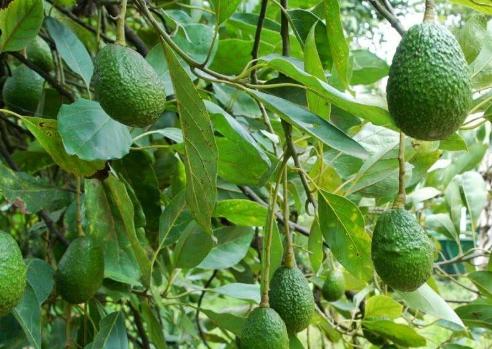
The avocado is a deciduous tree, 10-15 m tall, with a trunk diameter at breast height of 1-1.5 m; the crown is spreading, with many dense branches, and the stems and branches are thick, mostly knotted and often curved; the bark is thick, irregularly cracked, and contains milky sap. The leaves are oblong, with a rounded or blunt apex and a rounded or blunt base; when young, the upper surface is covered with rust-colored soft hairs, and later both surfaces are hairless; the midrib is grooved on the upper surface, while on the lower surface it is rounded and very prominent; there are more than 30 pairs of lateral veins, parallel to each other and slightly raised on both surfaces, with fine netted veins; the petiole is round.
Planting Conditions
Field planting
Seedlings are planted 50-60 cm apart, with a planting spacing of 5-6 m between rows and plants; grafted seedlings begin flowering and fruiting 3-4 years after planting, or seedling trees after 4-6 years.
Mulching
Avocado is a fruit tree that grows under tropical rainforest conditions and in competition for sunlight; its rapid growth is driven by a high-temperature, high-humidity environment, and if the environmental conditions are not met, it grows slowly. Therefore, avocado cultivation abroad often emphasizes growing grass or green manure near the plants in the early stage, and applying a large amount of mulch near the rhizosphere; mulching increases topsoil organic matter, forms a rainforest rhizosphere environment similar to that of the place of origin, stabilizes the ecological conditions of the rhizosphere, and promotes the reproduction of microorganisms that can suppress root rot activity. Therefore, from the young tree stage until the tree itself can form a mulch layer through fallen leaves and before root rot occurs, mulching the tree disk of young trees is especially important. Start mulching in winter, replenish the thickness in spring, and by summer a good mulch layer can be formed. Rhizosphere mulching can also reduce soil water evaporation, lessen the damage to avocado from dry heat, lower soil temperature in summer and raise it in winter, increase soil organic matter, reduce weeds, and prevent soil erosion on sloping land. However, during the rainy season, avoid making the mulched soil too wet.
Fertilization
Conventionally apply nitrogen fertilizer more than 4 times per year, usually by broadcasting or through the irrigation system; for adult trees, during the young fruit stage apply 50 kg of organic fertilizer per tree and 50 g of compound fertilizer, then apply again after harvest with the amount doubled. When leaf analysis indicates low phosphorus and potassium levels, apply phosphorus and potassium fertilizers; on certain types of soil, zinc can be applied through zinc-containing fertilizers or foliar spraying with zinc, which is most effective when sprayed as new leaves unfold in spring; for crops grown on calcareous soil or soil with low oxygen content, the most effective method is to inject chelated iron solution into the root zone. When nitrogen is present in certain soils and irrigation water, the amount of nitrogen used should be reduced; when few new leaves are seen growing on the tree and the leaf color is grayish-white or there is heavy fruiting, more nitrogen fertilizer should be applied.
Drainage
Avocado is evergreen year-round and needs the rhizosphere soil to remain moist throughout the year; it is very sensitive to soil drought, and once water is lacking, physiological functions are impeded, tree vigor declines, causing leaf and fruit drop, and cold resistance in winter decreases, so appropriate irrigation is needed during drought. From fruit set to fruit maturity, maintaining soil moisture is crucial; if drought occurs in the first month after fruit set, young fruit will drop severely. In Hainan Island, the dry and hot weather in April-May causes severe fruit drop in avocado. Therefore, if there are 10-20 consecutive sunny days and the orchard soil begins to crack slightly, irrigation should be carried out promptly; if rainfall remains below transpiration and evaporation for a long time, supplementary irrigation should also be given. But irrigation should be just right: both sufficient and absolutely not excessive, generally it is appropriate to wet the soil thoroughly; if too wet, it will worsen root rot and also reduce the soluble solids content of the fruit. Sprinkler or drip irrigation is best; flood irrigation may cause root rot, while drip irrigation can save 50%-60% of water. If drought causes leaves to begin curling, the canopy can also be sprayed with water. In the rainy season, pay attention to drainage, especially in flatland orchards.