Detailed Explanation of Dendrobium Planting Methods and Technical Points
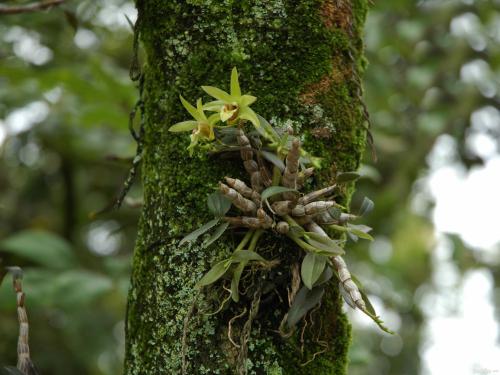
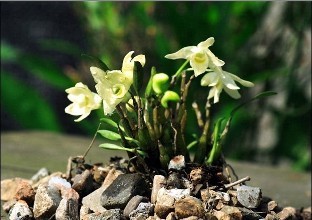
Dendrobium (scientific name: Dendrobium nobile Lindl), also known as Xianhu Lanyun, immortal grass, resurrection grass, Ziy ing immortal plant, hanging orchid, forest orchid, Jinsheng, golden hairpin flower, etc. The stem is erect, fleshy and thickened, slightly flattened cylindrical, 10~60 cm long, up to 1.3 cm thick. It is a medicinal plant, sweet and bland with a slight saltiness in nature and flavor, cold, and enters the stomach, kidney, and lung meridians. It benefits the stomach and promotes fluid production, nourishes yin and clears heat. It is used for yin damage and fluid depletion, dry mouth and irritability, poor appetite and dry vomiting, deficiency heat after illness, and blurred vision. The flowers of Dendrobium are elegant in posture, delicate and lovely, bright in color, and fragrant in scent, and are praised as one of the "four major ornamental foreign flowers."
I. Dendrobium Propagation Techniques
The propagation methods of Dendrobium are divided into two major categories: sexual propagation and asexual propagation. At present, asexual propagation methods are mainly used in production.
1. Sexual propagation, that is, seed propagation. Dendrobium seeds are extremely small, with about 20,000 seeds per capsule, appearing as yellow powder. They usually do not germinate, and can only germinate and grow under conditions of sufficient nutrients, suitable humidity, and moderate light. Generally, they need to be cultured in a tissue culture room. However, although the propagation coefficient of Dendrobium is extremely high, the success rate of its sexual propagation is extremely low.
2. Asexual propagation
(1) Division propagation: carried out in spring or autumn, preferably before Dendrobium sprouts at the end of March or the beginning of April. Select 1- to 2-year-old plants with good growth, no pests or diseases, well-developed root systems, and many sprouts as seed plants. Pull them up with roots, remove dead branches and broken branches, cut off overly long fibrous roots, retain about 3 cm of old roots, and divide into several clumps according to the number of stems. Each clump must have 4~5 stems and can be used as seed stems.
(2) Cutting propagation: carried out in spring or summer, preferably in May~June. Select robust three-year-old plants, take their plump and rounded stem segments, each retaining 4~5 nodes, about 15~25 cm long, and insert them into vermiculite or river sand, with the depth just enough to keep the stem from falling over. Wait until the axillary buds on the stems germinate and grow white aerial roots, then they can be transplanted. Generally, when selecting materials, upper stem segments are mostly used because they have apical dominance, a high survival rate, many sprouts, and fast growth and development.
(3) Keiki propagation: mostly carried out in spring or summer, mainly in summer. In Dendrobium plants more than three years old, axillary buds, also called keikis, sprout on the stems every year, and aerial roots grow, becoming small seedlings. When they grow to 5~7 cm, they can be cut off for transplanting.
(4) In vitro tissue culture propagation: Golden hairpin Dendrobium can be rapidly propagated into test-tube plantlets by tissue culture using the following method. After routine disinfection, the leaves, young stems, and roots of Golden hairpin Dendrobium are cut into 0.5~1 cm explants. MS and B5 are used as basic media, and various media are respectively supplemented with different hormone combinations such as NAA (0.05~1.5 mg/L), IAA (0.2~1.0 mg/L), and 6-BA (1.0~5.0 mg/L). The medium pH is 5.6~6.0, the culture temperature is 25°C~28°C, the daily light period is 9~10 hours, and tissue culture is carried out under a light intensity of 1800~1900 lx. After 19 days, small bud points appear at the stems and leaves. After about 1 month, the small buds elongate and the tips fork. After 2 months, the small buds grow into test-tube plantlets about 2.0~2.7 cm tall with 4~8 leaves. The leaf and root segments show no changes. It was also found that among different formula combinations of media, MS has a clear advantage over B5 basic medium in growth speed.
II. Planting Methods of Dendrobium officinale
1. Time The cultivation time of Dendrobium officinale is generally the two seasons of spring and autumn each year, and spring is better than autumn. In the Zhejiang region, the best time for cultivating Dendrobium officinale is from mid-April to late June each year. During this period, the temperature is 12~25°C, and the air humidity is relatively high. The survival rate of test-tube plantlets after being taken out of bottles and transplanted is relatively high, and the growth time is relatively long; the next best time is from mid-September to late October. During this period, special attention must be paid to cold resistance and freeze prevention when transplanting.
2. Moisture and humidity Water management is one of the key links in the cultivation process of Dendrobium officinale. Newly transplanted Dendrobium seedlings are most sensitive to water. At this time, the water content of the substrate should generally be controlled at 60%~70%. In specific operation, it is advisable that the substrate feels moist when grasped by hand but does not drip. Within 7 days after transplanting (the seedlings have not yet developed new roots), the air humidity should be maintained at about 90%. After 7 days, the plants begin to develop new roots, and the air humidity should be maintained at 70%~80%.
3. Temperature and light The suitable growth temperature for Dendrobium officinale is 15~28°C. Therefore, in order to create a temperature environment suitable for its growth, when the temperature is high in summer, ventilation and heat dissipation in the facility greenhouse must be strengthened, and the temperature inside the greenhouse should be regulated within a suitable range by means of shading sheds, spray cooling, and ventilation cooling; when the temperature is low in winter, the facility greenhouse should be well sealed, and if necessary, various heating methods can be used to raise the temperature inside the facility to prevent the plants from freezing.
Dendrobium officinale prefers shade, and shading measures should be adopted to reduce light. During the growth period, the shading degree for Dendrobium officinale should be about 60%. When seedlings have just been planted, the greenhouse must be covered with shade netting of 70% shading degree or more to prevent strong sunlight from causing seedling wilting and affecting the survival rate. In summer and autumn with high temperatures and strong light, the shade netting of the greenhouse must be well covered and firmly secured, because strong light can easily cause the plants to top out early, preventing them from growing tall and affecting yield. In winter, the shade shed should be appropriately opened to facilitate light transmission and prolong the growth period. For tree-attached cultivation (host-attached cultivation), overly dense branches of the host plants should be appropriately pruned in winter and spring each year.
4. Precautions In the high-temperature seasons of summer and autumn, water should be controlled as much as possible, and the substrate water content should preferably be 40%~50%; after entering winter after November, the temperature gradually decreases. When the temperature is below 10°C, Dendrobium officinale basically stops growing and enters a dormant state. At this time, the water requirement is very low, and the substrate water content should be controlled within 30%.