Detailed Explanation of Pea Planting Methods and Key Technical Points
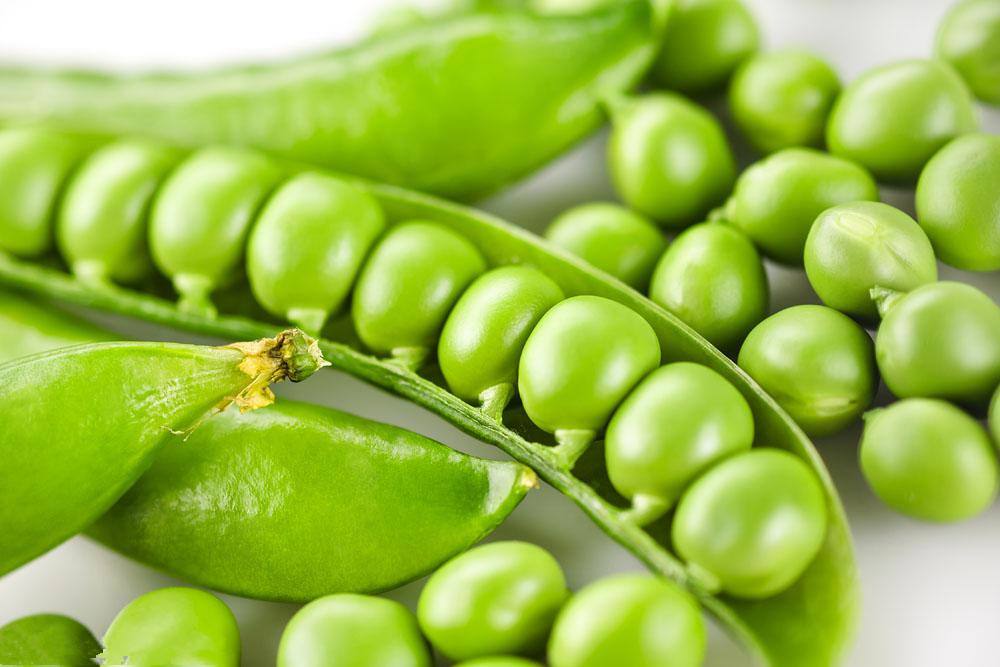
The pea (scientific name: Pisum sativum L.) is an annual climbing herb in the Fabaceae family, growing 0.5-2 m tall. The whole plant is green, smooth and hairless, covered with a powdery bloom. The leaves have 4-6 leaflets, with heart-shaped stipules bearing fine teeth on the lower edge. The leaflets are ovate; the flowers are borne singly in the leaf axils or several arranged in a raceme; the calyx is bell-shaped with lanceolate lobes; the corolla varies in color depending on the variety, but is mostly white and purple. The ovary is hairless, and the style is flattened. The pod is swollen and oblong; the seeds are round, green when fresh, and turn yellow when dry. The flowering period is June-July, and the fruiting period is July-September.
Pea sowing time:
1. In northern China, cultivation is mainly by spring sowing; sowing can be done once the soil thaws, and plastic film mulching can be used for earlier sowing, with the film removed after the seeds emerge. In plain areas such as Guangdong Province, sowing is generally done from late September to mid-November.
2. For off-season cultivation in summer mountainous areas, sowing should be advanced to early August, at the latest by the end of August. Soft-pod peas have stronger heat tolerance and can be planted earlier than sweet peas (soft-pod peas with cylindrical pods). If the altitude is above 600 m, sowing can begin in mid-July. Early sowing and early harvest bring high value, can also avoid snow damage in mountainous areas, and provide a longer harvest period, helping to achieve higher yields.
Pea planting methods:
II. Land preparation and basal fertilizer application
Peas should not be continuously cropped and must be rotated over 3~4 years. During land preparation, plow and turn the soil deeply, let it fully sun and weather, then break up the surface soil finely, open furrows and make beds, and apply sufficient basal fertilizer: 3~4 tons of decomposed farmyard manure, 20~30 kg of superphosphate, and 10 kg of potassium sulfate per mu. For fields with poor soil fertility and short-growing-season early-maturing varieties, an additional 10 kg of urea should be added to the basal fertilizer to meet the needs of seedling growth.
III. Field management
After spring-sown peas emerge, shallow loosening of the soil should be done several times to raise soil temperature and promote root growth, making the leaves thick; for autumn- and winter-sown peas, hilling should be done once before overwintering to keep warm and prevent freezing, and in the following spring rain, loosen the soil and weed.
When buds appear and flowering begins, start watering lightly; in drought conditions, water earlier. At the same time, along with watering, apply 10 kg of quick-acting nitrogen fertilizer per mu or irrigate with 500~1000 kg of human excrement and urine to accelerate vegetative growth and promote branching, then loosen the soil to conserve moisture. Once the basal pods have set, the watering amount can be slightly increased, and phosphorus and potassium fertilizers should be applied.
Per mu, 20~30 kg of compound fertilizer and 10~15 kg of superphosphate can be applied by watering or in furrows. During the pod-setting stage, 0.3% potassium dihydrogen phosphate can be sprayed on the leaves. In this way, the number of flowers, pods, and seeds can be increased. During the peak pod-setting stage, keep the soil moist to promote pod development. Once the number of pods stabilizes and plant growth slows, reduce water to prevent lodging. For vining and semi-vining peas, supports are needed when the plants are about 30 cm tall; pea stems and vines are tender and dense, so low trellises or upright supports should be used