Detailed Explanation of Hotbed Chives (Yellow Chives) Cultivation Methods and Technical Key Points
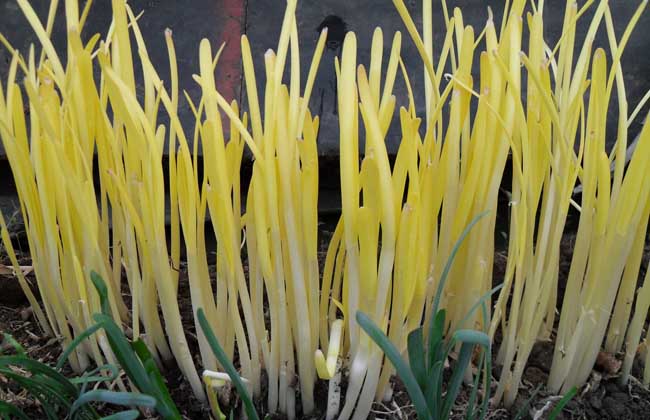
Hotbed chives (yellow chives) are perennial herbaceous plants of the Liliaceae family, a product of garlic chives that have been blanched and turned yellow through etiolated cultivation, also known as chive sprouts, yellow chive sprouts, white chives, etc. Production isolates them from light, growing entirely in darkness; because there is no sunlight, they cannot carry out photosynthesis to synthesize chlorophyll, and thus turn yellow.
Cultivation Methods
Seed Treatment
1. Variety selection: Varieties suitable for cultivation in China include Yellow Chive No. 1, 791 Snow Chive King, Snow Chive No. 4, etc.
2. Plot selection: For hotbed chive cultivation, choose plots with fertile soil and convenient drainage and irrigation, but try not to follow a continuous cropping plot or a plot previously planted with onions or garlic.
3. Seed treatment: Soak the seeds in water not exceeding 53°C; do not use too much water. After soaking for more than 10 hours, mix the seeds with 2-3‰ carbendazim wettable powder and set aside.
Land Preparation and Bed Making
1. Seedling bed: Use 2.5 jin of seed per mu; for every two liang of seed, use 3 sq m of seedbed, and 75 sq m of seedbed per mu. The seedling bed is 1-1.4 m wide. When preparing the land, apply no or little base fertilizer, deep plow about 30 cm, then level with a claw hoe, press flat by walking in flat-soled shoes, and level again to set the shape.
2. Planting bed: The planting bed for hotbed chive seedlings should be prepared on dry land, with furrows opened and watered on the dry bed. The planting bed runs east-west, with windbreaks on the north and west sides. The bed is 2.2 m wide and 30 m long, with 1.4 m between two beds. A windbreak is placed every two beds, with a height of 1.5 m.
Planting Preparation
1. Seedling raising: The seedling raising time for hotbed chives is around April 15 each year. Before raising seedlings, water the prepared seedling bed thoroughly, sow after evenly mixing the seeds with carbendazim, then spray 5% phoxim granules.
2. Mulching: After sowing the chive seeds, cover with 0.5-1 cm of sifted topsoil and immediately level, spray with herbicides such as Hecaojing (a chemical that has no effect on the growth of onion and garlic crops), cover well with plastic film, and press the sides firmly with soil.
3. Topdressing: When 80% of the hotbed chive seedlings have emerged, remove the plastic film. When they grow to around five leaves, water once every 5-7 days, and apply urea topdressing with water twice at 7.5-12.5 kg per mu. Stop watering 5-7 days before transplanting.
Planting Management
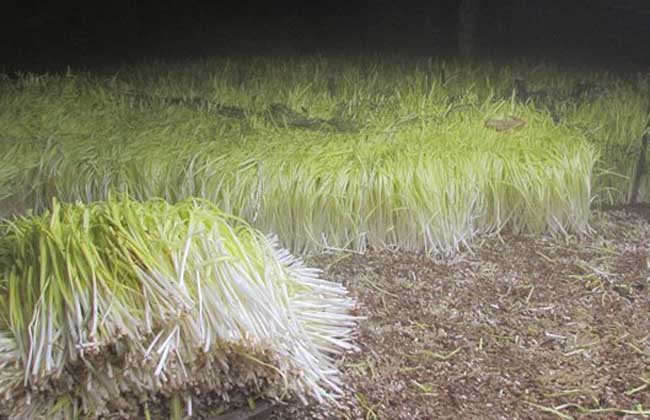
1. Timely bed preparation: Planting of hotbed chives begins around June 25 each year, with the key being to maintain moderate soil moisture in the bed. Prepare the bed on dry land, open furrows on the dry bed, water, and plant. If the bed is prepared while wet, the soil tends to harden, aeration is poor, and new roots struggle to grow.
2. Apply sufficient base fertilizer: Apply 10,000 jin of farmyard manure per mu, together with 20 kg of biological fertilizer, 20 kg of urea or diammonium phosphate, 150 kg of superphosphate, and 35 kg of potassium sulfate. Mix the fertilizer and soil thoroughly and evenly, keep the bed soil moderately loose and firm, and level the bed surface.
3. Timely transplanting: When hotbed chive seedlings grow to 4-5 leaves and about 20 cm in height, they can be transplanted. Transplant at a reasonable density, with appropriate planting depth, appropriate watering, and proper pesticide use.
4. Reasonable close planting: The planting bed for hotbed chives is 2.2 m wide. When transplanting with a row spacing of 30 cm and a single-plant spacing of 5 cm, hotbed chives are both high-yielding and high-quality, and the bed does not need to be rotated for 4-6 years, still maintaining high and stable yields.
6. Appropriate depth: Special attention should be paid to the depth of transplanting hotbed chive seedlings. If planted too deep, tillering is late and scarce, and subsequent growth is not vigorous; if planted too shallow, the clumps easily fall apart. The depth of the planting furrow should be determined according to the size of the chive seedlings.
7. Proper pesticide use: After planting hotbed chive seedlings, broadcast 5% phoxim granules and 25% carbendazim wettable powder along the rows onto the chive roots, using 2.5 kg of each per mu, then cover with soil. Spray once 5-7 days after planting.
8. Timely watering: After transplanting the chive seedlings, water thoroughly immediately, hoe and conserve moisture so that the bed surface appears dry rather than wet. After a large number of new roots have grown, water a second time depending on the dryness or wetness of the bed surface.
9. Fertilizer and water management: Hotbed chives grow year-round and have a high fertilizer demand. According to different cultivation purposes and the growth characteristics and water and fertilizer needs at different stages, apply fertilizer and water reasonably, promoting and controlling as appropriate, and applying them flexibly.
Therapeutic Effects
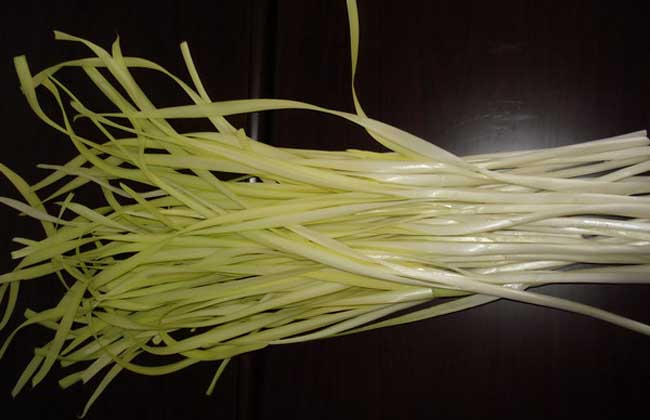
Tonifying the kidney and warming yang: Hotbed chives are warm in nature and pungent in taste, and have the effect of tonifying the kidney and promoting yang, so they can be used to treat impotence, nocturnal emission, premature ejaculation, and other conditions.