Detailed Explanation of Key Points and Management Methods for Black Tomato Cultivation
The black tomato is both medicinal and edible, a treasure in the tomato family, with a rich fruity aroma, high nutritional value, and a very sweet taste, especially suitable for fresh eating. It contains 10 times more lycopene and vitamin C and antioxidants than red tomatoes, and is very easily absorbed by the human body.
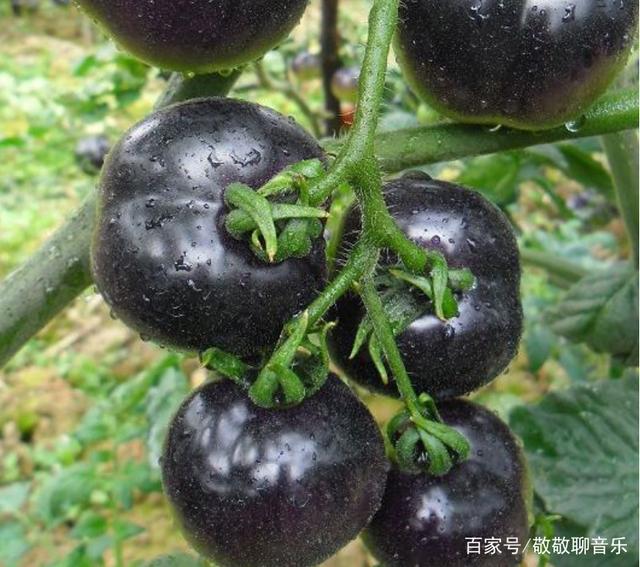
Cultivation methods for black tomatoes:
Seedbed preparation: When planting black tomatoes, a seedbed must first be built. The best location for the seedbed is a plot that is sheltered from the wind and facing the sun, with flat ground, fertile soil, no pollution, sufficient water, and convenient transportation. If the soil in the seedbed is relatively poor, then the soil in the seedbed should be improved as much as possible. Farmyard manure, rotten grass leaves, and crushed straw can all be used to improve the seedbed soil. After the soil improvement is completed, use tools to deep-plow the soil and carry out leveling work. The width of the seedbed is about 1.8 m to 2 m, the height is 60 cm to 80 cm, and the length is normally about 8 m. Use plastic film and other materials to build an arched shed, which facilitates future management.
Seed ordering and germination: Many people do not know where to order black tomato seeds; in fact, they can be ordered from large cultivation bases or online. After the seeds are ordered, soak them in warm water for 6 hours to 8 hours, then place the seeds in a constant-temperature environment for germination. You can use a wet towel or wet cloth to wrap the seeds well. During germination, humidity must be controlled well to help the seeds increase their sprouting speed. Once the seed germination rate reaches above 85 percent, you can proceed with seedling raising and sowing.
Sowing in the seedbed: Seedling trays can be prepared on the seedbed, and the broadcast sowing method can also be used for planting. With seedling trays, the main method is to use a seeder to sow the seeds into the trays, placing 2 to 3 seeds in each cell, then covering with fine soil to a thickness of 0.5 cm to 0.6 cm, and finally watering. Covering with plastic film completes the task. The broadcast sowing method mainly involves evenly sprinkling the seeds onto the seedbed, ensuring 2 to 3 seeds per cm, then covering with fine soil to a thickness of 0.5 to 0.6 cm, then watering and covering with plastic film.
Seedbed management: After sowing is completed, the seedbed only needs good insulation work. Cover with straw curtains at night, and remove the plastic film during the day. After the seeds break through the soil and emerge, open the arched shed in time for ventilation. Ventilate when the weather is clear and there is no strong wind. Water when the seedlings grow to more than 3 cm, ensuring a good growing environment for the seedlings. When the seedlings grow to 5 cm to 8 cm, transplant them for temporary raising.
Transplanting for temporary raising: Temporary raising mainly improves the integrity of root growth in the seedlings. Seedlings with better root growth have a higher survival rate after planting. Prepare nutritional pots, then transplant the seedlings into the nutritional pots, and place the nutritional pots evenly in the seedbed. During transplanting, small seedlings and leggy seedlings can be selected and discarded. After transplanting is completed, carry out normal management and watering work. When the seedlings grow to more than 30 cm, planting can be carried out.
Land preparation and planting: The field should be fertilized, deep-plowed, leveled, ridged, and bedded, and finally the seedlings are planted in the field. The density must be well controlled, with a distance of 35 cm between each row and about 30 cm between each plant. After planting is completed, water the plants, and then the management method is the same as for normal tomatoes. As long as fertilization is controlled well and timed properly, the yield of black tomatoes is guaranteed to a certain extent.
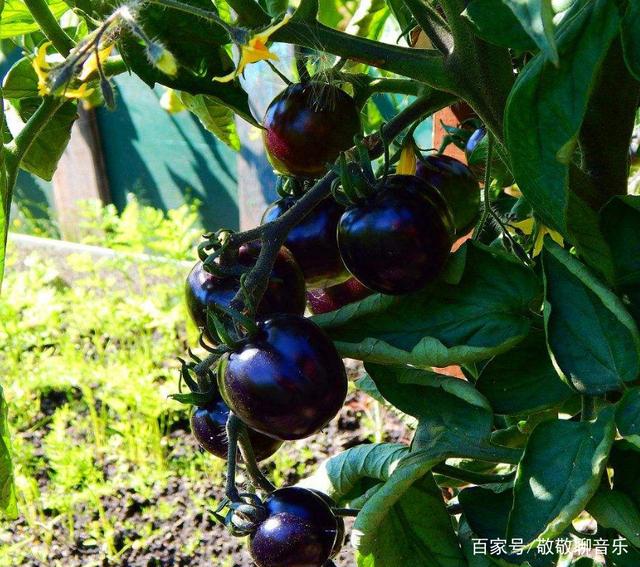
Harvesting and selling: The sign that black tomatoes are ripe is when the fruit turns black-purple. Growers should harvest in batches, package separately according to quality, and then sell them uniformly.