Red-Skinned Potato Cultivation Methods and Key Technical Points
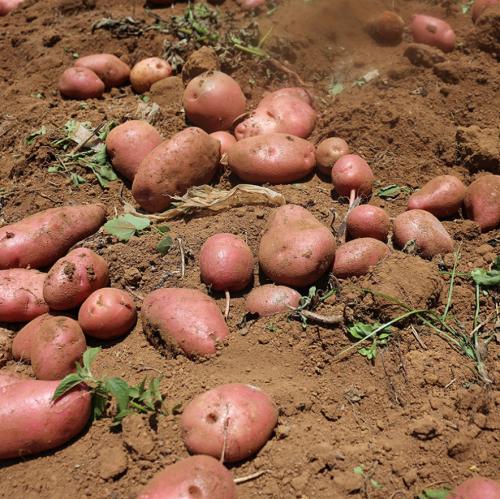
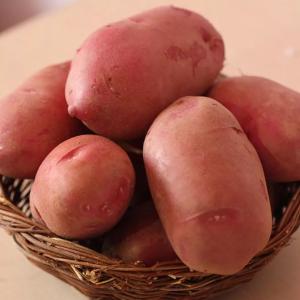
The red-skinned potato originates from the "hometown of potatoes" - Peru in South America. Its production areas are located in Zhaojun's hometown of Xingshan County, Yichang City, Hubei Province, as well as Changyang Tujia Autonomous County and Wufeng Tujia Autonomous County, at high mountain elevations above 1200 m. The red-skinned potato has a distinctive color, ranging from pink to purplish-red. It is rich in various trace elements, especially high in starch and anthocyanins, has antioxidant effects, is nutritious, and offers anti-cancer properties, beauty and skin benefits, heart protection and blood pressure reduction, with excellent therapeutic food effects. Compared with ordinary potatoes, red-skinned potatoes have a softer, more mealy texture, with more juice and stickiness, and are rated as the most suitable potatoes for making mashed potatoes and French fries.
High-Yield Cultivation Techniques for Red-Skinned Potatoes
Soil Requirements
The main soil requirement for potatoes is looseness, because the roots of potatoes consume much more oxygen than other crops (oxygen consumption during tuber formation is 5-100 times greater than that of ordinary crops). In addition, tuber enlargement requires loose, well-aerated soil. Potatoes are not strict about soil acidity or alkalinity, and can grow in a pH range of 5.0-8.0, but their salt and alkali tolerance is very weak. Therefore, potatoes should be planted in sandy loam soil that is on high, dry terrain, loose, deep, and easy to drain and irrigate.
Requirements for the Previous Crop
Potatoes suffer severely from diseases and pests, and crop rotation is an effective measure to reduce soil-borne diseases, pests, and weeds. Therefore, selecting the previous crop for potatoes is an important step that must be considered in production. Generally, the rotation cycle should be more than three years. Potatoes and cereal crops do not share the same diseases, pests, and associated weeds, and their nutrient uptake also differs. Therefore, potatoes are generally best planted after millet, wheat, and corn, followed by sorghum and soybean, while flax, buckwheat, and similar stubble are relatively poor. It must be noted that potatoes should not be rotated with solanaceous crops such as tobacco, eggplant, and tomato, because these crops absorb roughly the same types of nutrients as potatoes and can transmit diseases and pests to each other. In addition, potatoes should not be rotated with potassium-loving crops such as sugar beet, sweet potato, and carrot, otherwise potassium will be insufficient.
Land Preparation Techniques
The greatest requirement for potato land preparation is deep plowing. Therefore, after the previous crop is harvested, immediately plow deeply 25-30 cm. Potatoes are generally planted after cereal crop stubble, and since the previous crop is harvested earlier, one should aim for summer plowing to sun the soil clods, capture autumn rain, and carry out repeated plowing, harrowing, and smoothing along with rainfall to retain as much rainwater as possible and make the soil plow layer loose. Before winter, when the soil surface is dry, light compaction can be applied. When the soil thaws in early spring, freeze-thaw action makes the topsoil loose; when soil moisture content is high, moisture loss is likely, so plastic mulching should be applied as early as possible to preserve moisture. When soil moisture content is low, light compaction can also be used to level the topsoil, reduce large surface pores, and help preserve moisture. For plots where the previous crop is harvested late, deep plowing should be done promptly, followed immediately by harrowing and smoothing to conserve moisture, and early spring compaction to preserve moisture.
Fertilization Techniques
The absorption ratio of nitrogen, phosphorus, and potassium nutrients by potatoes is 2.5:1:4.5, with potassium absorbed in the largest amount. The supply of potassium mainly depends on organic fertilizer. Crop straw contains large amounts of potassium. Heavy application of organic fertilizer, especially barnyard manure and compost, plays a major role in replenishing potassium.
In addition, there is a tradition in potato cultivation of applying large amounts of plant ash to supplement potassium. In terms of fertilizer application methods, deep application is better than shallow application, and autumn application is better than spring application. Organic fertilizer is generally required to be applied entirely in autumn, and phosphate fertilizer should also be mixed with organic fertilizer; it can also be applied together with nitrogen fertilizer in the soil under the plastic film before sowing. From the pattern of nutrient uptake in potatoes, the tuber formation stage and tuber enlargement stage are the periods of greatest nutrient absorption, accounting for about 50% of the entire growth period, while the seedling stage and starch accumulation stage each account for 25%. Topdressing should be early rather than late, generally at the bud stage, and for early-maturing varieties it should be even earlier.
The fertilization amount for plastic-mulched potatoes is determined comprehensively by soil fertility, sowing method, and variety characteristics. Generally speaking, in high-yield areas with a yield of more than 2500 kg per mu, apply more than 3000 kg of organic fertilizer, 4-7 kg of pure nitrogen from chemical fertilizer, and 3-5 kg of pure phosphorus. In low-yield fields, the fertilization amount should be appropriately reduced. In dry mountain fields, organic fertilizer should be applied in autumn so that it decomposes early and releases readily available nutrients. At the same time, organic fertilizer can release carbon dioxide to supplement the CO2 content in the field during the period of vigorous photosynthesis. Apply less nitrogen as the main measure to prevent excessive vegetative growth of stems and leaves above ground. In terms of fertilizer types, organic fertilizer is best as cattle, sheep, or pig manure or straw compost, and common chemical fertilizers are diammonium phosphate and ammonium nitrate.
Disease and Pest Control
At present, the main disease is late blight, and the main pest is the potato beetle. In the early stage of disease occurrence, use 58% metalaxyl-mancozeb 800-fold solution to control late blight, applying twice in succession; use 22% thiamethoxam and lambda-cyhalothrin 3000-fold solution or 3% acetamiprid 1000-fold solution to control the potato beetle.
Uses
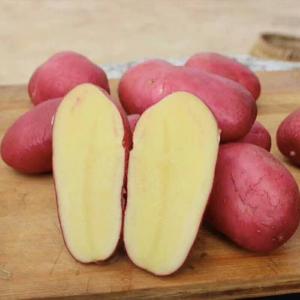
Red-skinned potatoes are rich in proanthocyanidins and large amounts of trace mineral elements. They have the effects of nourishing the blood, protecting the heart, preventing and fighting cancer, delaying aging, beautifying and protecting the skin, tonifying the kidney and strengthening yang, preventing stroke, and preventing and treating high blood pressure and heart disease. Their nutritional value is very outstanding, and their therapeutic food effects are very obvious. They are a very precious delicious dish on the dining table, an essential ingredient in high-end hotels, and a health food for high-end consumers.