Cassia Seed Planting Methods and Key Technical Points Explained
Cassia seed, a name in traditional Chinese medicine. It is the dried mature seed of the leguminous plant cassia (Senna obtusifolia or Senna tora), named for its ability to improve eyesight. In autumn, harvest the ripe fruit, dry it in the sun, thresh out the seeds, and remove impurities. Cassia seed is bitter, sweet and salty in taste, slightly cold in nature, and enters the liver, kidney and large intestine meridians; it moistens the intestines and moves the bowels, lowers blood lipids and improves eyesight, and treats constipation, high blood lipids and high blood pressure. It clears the liver and improves eyesight, promotes urination and bowel movement, has a mild laxative effect, and lowers blood pressure and blood lipids.
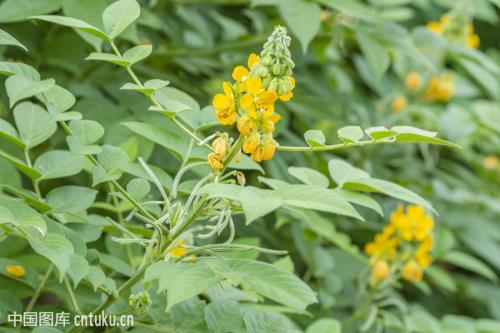
I. Planting Techniques for Cassia Seed
1. Seed selection: Before sowing, the germination rate of the seeds should be tested. Specific method: divide plump seeds into several portions, number them in order, take 125-250g from each portion and place into the correspondingly numbered container, soak in warm water at about 50°C for a day and a night, then pour off the water, rinse once with clean water, then cover with a damp cloth to maintain moisture; after three days they will begin to sprout one after another, and those with a germination rate of 85% or above are selected as seed.
2. Land preparation: In the selected plot, apply 2000-2500kg of barnyard manure and 25kg of superphosphate per mu, spread evenly on the ground, plow, harrow fine and level; generally no beds are made, but if beds are made, flat beds 1.2-1.5m wide can be made.
3. Sowing: Soak the superior seed selected through testing in warm water at 50°C for a day and a night, and once it has absorbed water and swollen, take it out and dry the surface, then it can be sown. The sowing period is best from Qingming to Guyu (mid-April), when the temperature is 15-20°C; too early and the low ground temperature makes the seeds prone to rotting in the soil; too late and the seeds cannot mature, affecting yield and quality. Drilling is preferable for sowing, with row spacing of 50-70cm; open a furrow 5-6cm deep, spread the seeds evenly in the furrow, cover with 3cm of soil, press lightly, and seedlings emerge about 10 days after sowing. In the north, where it is dry, irrigate first and then sow; do not water after sowing, so as to avoid surface soil crusting that affects seedling emergence.
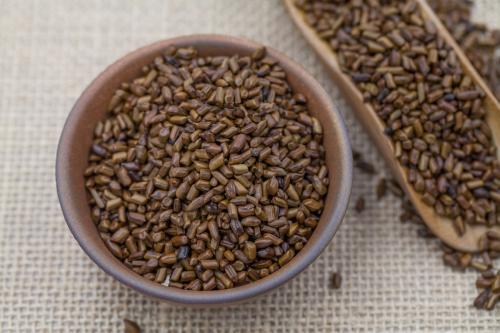
II. Field Management for Cassia Seed Planting
1. Loosening soil and weeding: When seedlings are 3-6cm tall, thin them, pulling out weak or overly dense seedlings; when seedlings are 10-13cm tall, final thinning is done, with plant spacing of about 30cm. Loosen the soil and weed at the same time as thinning and final thinning, keeping the soil loose. Cassia seed is relatively drought-tolerant, and normal growth can occur when the soil maintains ordinary moisture; in dry weather, water appropriately, but during the final thinning period, water less to promote root development; by Bailu (early September), when the fruit tends to mature, watering can be stopped.
2. Thinning and final thinning: Begin thinning when cassia seedlings are about 5cm tall. When seedlings are 15cm tall, combine with cultivating and weeding to establish final spacing at 30-40cm between plants.
3. Topdressing: When seedlings are about 35cm tall, before the plants close the rows, apply 20kg of superphosphate and 10-15k8 of ammonium sulfate per mu, mixed and applied between the rows, then cultivate and earth up, burying the fertilizer in the soil, which can also prevent the plants from lodging.
4. Drainage and irrigation: Throughout the entire growth period of cassia seed, the soil should often be kept moist, especially during the flowering period when it should be watered promptly in dry weather, and drainage should be noted during the rainy season.
5. Pest and disease control: The most common disease of cassia seed is gray leaf spot, whose pathogen is a kind of imperfect fungus, mainly harming the leaves. At first, slightly pale brown lesions appear in the center of the leaves, and then gray mold-like matter is produced on the lesions. Before onset or in the early stage of onset, spray 500 times 65% zineb solution or 800-1000 times 50% thiophanate solution for control. Insect pests mostly occur in late spring and early summer, mainly aphids, which are controlled by spraying a 200 times solution made with dimethoate emulsion.
6. Harvest and processing: Cassia seed is harvested around "Cold Dew" when the pods are yellow-brown; cut down the whole plant, dry it in the sun and then thresh out the seeds, and after removing the pod skins and impurities thoroughly, it can be used for medicinal purposes; those with plump seeds, dry body, yellow-brown color, and no sand or impurities are best.