Detailed Explanation of the Cultivation Methods and Key Technical Points of the Shaggy Mane Mushroom
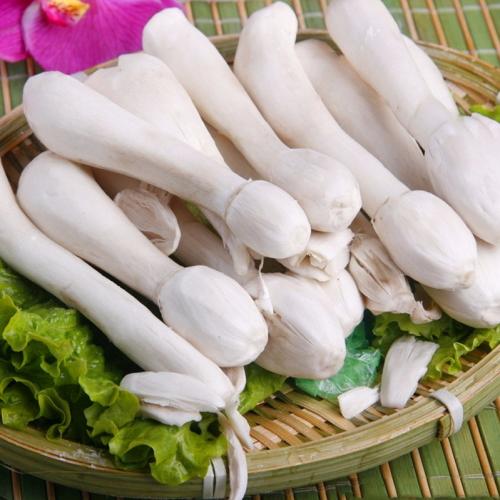
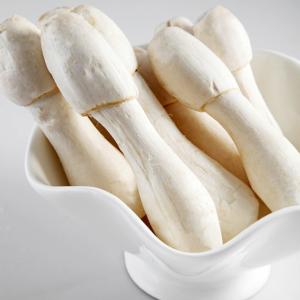
The shaggy mane mushroom, whose scientific name is Coprinus comatus, is named for its shape, which resembles a chicken leg, and its flesh, which resembles shredded chicken; it does not actually taste like chicken. It is a rare mushroom variety with commercial potential that has been developed through artificial cultivation in recent years, and is known as the "rising star among mushrooms." The shaggy mane mushroom is rich in nutrients, delicious in flavor, and excellent in texture, with very high nutritional value.
Cultivation Time of the Shaggy Mane Mushroom
The shaggy mane mushroom is a plant with a very strong ability to adapt to its environment. Its general planting season and cultivation time is from June to August, with mushrooms emerging from September to December. For spring cultivation, the cultivation period is from November to February of the following year, and during cultivation, attention must be paid to important factors such as environmental conditions and temperature.
Cultivation Techniques for the Shaggy Mane Mushroom
1. Temperature Management
The temperature for spore germination of the shaggy mane mushroom is 22-26°C, with the optimum temperature being 24°C. The temperature range for mycelial growth is 3-35°C, with the optimum growth temperature being 24-28°C. The mycelium will not freeze to death at -10°C, but growth is slow; above 35°C growth stops, and the mycelium rapidly ages, autolyzes, and turns black; at 40°C the mycelium withers and dies. Therefore, the natural temperature during the fruiting period should preferably be controlled between 10-28°C, and when high or low temperature weather occurs, cooling or warming measures must be taken.
2. Water Management Techniques
After the bed surface is covered with soil, the moisture of the soil layer should be gradually adjusted and moistened in multiple applications over 2-3 days until the water content reaches about 18%. The standard is that the soil particles have no white core, form a ball when squeezed in the hand, break apart when touched to the ground, and do not stick to the hand, so that the mycelium can quickly extend into the soil layer and grow within it. In combination with temperature, soil layer water content, and mycelial growth, water should be replenished by light and frequent spraying to keep the soil layer in a moist state. After about 10-15 days, once a large number of fruiting body primordia have formed on the bed surface, the amount of water sprayed should also gradually increase to meet the water needs of fruiting body growth and development. As the fruiting bodies grow, develop, and expand, the daily water spray amount per square meter should reach 2000-2500 milliliters. After one flush of mushrooms ends, stop watering for 2-3 days to facilitate mycelial recovery and growth; after the next flush of mushrooms grows, gradually increase the water spray amount again, and repeat this management cycle. The principles of water management can be summarized as: "Spray plenty of water for mushroom formation, keep the fruiting water steady, make the flush-transition water heavy, replenish maintenance water, and spray air water frequently." Spraying water to maintain moisture must be done multiple times in small amounts, and as far as possible do not allow water droplets to accumulate on the fruiting bodies. During the growth period, the water content of the culture medium is 60%-70%, with 65% being the optimum water content. The relative air humidity should be maintained at 80%.
3. Ventilation Management
The shaggy mane mushroom is also an aerobic fungus, and its respiratory activity during physiological processes is also very vigorous, absorbing oxygen and releasing carbon dioxide. The ventilation management of the shaggy mane mushroom differs somewhat from that of other mushrooms: the ventilation volume should not be too strong, otherwise the scales on the surface of the mushroom bodies will noticeably increase, affecting the commercial appearance. When spraying water on the bed surface, ventilation must be strong; after spraying is finished, doors and windows should not be closed hastily, and at least about 1 hour should pass before closing them and covering with film. When the temperature is relatively high, the doors and windows of the mushroom house and both ends of the greenhouse or small arched shed should be hung with wet straw curtains before ventilation, so as to maintain a relatively high environmental humidity inside the mushroom house as much as possible. On rainy days, when air humidity is high, the ventilation time can be appropriately extended. The general principle is to maintain fresh air and sufficient oxygen in the mushroom house while also preventing the microclimate environment from undergoing relatively drastic changes in a short period of time. Keeping the micro-environment in a relatively stable state is conducive to the normal growth and development of the fruiting bodies.
Precautions for Cultivating the Shaggy Mane Mushroom
1. Pest Control
Enclose the perimeter of the shade shed with insect-proof netting to prevent various insects from entering.
2. Erecting a Shade Shed
Strong light exposure inhibits mycelial growth and can accelerate mycelial aging. Avoid direct sunlight, and in summer a shade shed can be set up. Erect a shade shed 2.5-3 m above the cultivation field, and the shade shed must be sealed and light-proof. Cover the shed with a layer of plastic film to prevent rainwater from entering. On top, cover another layer of shade netting. The edges of the shade shed should preferably extend 3 m beyond each side of the cultivation field, so that sunlight from 9:00 to 16:00 cannot shine directly on the mushroom beds. The relative air humidity under the shade shed must not be too high; the highest humidity in the central area is 95%, while the relative humidity around the edges can be maintained at about 75%.
It is understood that the shaggy mane mushroom is a rare mushroom variety with commercial potential that has been developed through artificial cultivation in recent years, and is known as the "rising star among mushrooms." Market demand for the shaggy mane mushroom is very large, so when farmers cultivate it, they must scientifically master the cultivation techniques and precautions for the shaggy mane mushroom, provide a good living environment for its growth, and increase its yield.