Key Points of Forage Grass Cultivation Techniques and a Detailed Explanation of Management Methods
Forage grass generally refers to grasses or other herbaceous plants used to feed livestock. Forage grass has strong regrowth ability and can be harvested multiple times a year, and it is rich in various trace elements and vitamins, making it the first choice for raising livestock. The quality of forage grass varieties directly affects the level of economic benefits in the livestock industry, so attention must be paid to it.
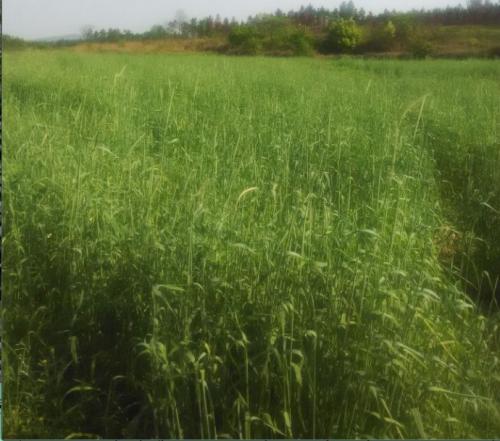
Forage grass cultivation
① Fertilize according to the type of forage grass and its fertilizer requirements: Different types of forage grass require different types and amounts of fertilizer. Gramineous forage grasses have a relatively large demand for nitrogen fertilizer and are sensitive to it. Therefore, nitrogen fertilizer should be the main type, combined with phosphorus and potassium fertilizer. Leguminous forage grasses have root nodules and can fix free nitrogen in the air, so phosphorus and potassium fertilizer should be the main type along with a small amount of nitrogen fertilizer, especially when the root nodules of seedlings have not yet formed, applying a small amount of nitrogen fertilizer promotes the formation of root nodules in leguminous forage grasses, using phosphorus to fix nitrogen and promoting the growth of gramineous forage grasses. The same kind of forage grass also has different fertilizer requirements at different growth stages. During germination, the seeds store abundant nutrients and generally do not absorb nutrients. During the seedling stage, the requirement is relatively small. As the seedlings grow, the requirement gradually increases. The period when gramineous forage grasses absorb the most nutrients is from tillering to flowering. For leguminous forage grasses, it is from branching to the bud stage. Fertilizer should be applied at the right time and in the right amount according to the characteristics of different fertilizers, so as to meet the fertilizer needs of forage grass at different developmental stages.
② Fertilize according to soil fertility: Generally, loamy soil has more organic matter and available nutrients, so as long as the base fertilizer is sufficient and topdressing is applied at the right time, high yield can be obtained. Clay soil or low-lying land with more moisture has higher fertility and stronger fertilizer retention capacity, and organic matter decomposes slowly, so more quick-acting fertilizer should be applied in the early stage, while in the later stage, excessive vegetative growth, lodging, and delayed maturity should be prevented. Sandy soil has low fertility and poor fertilizer retention capacity, so more organic fertilizer should be applied as base fertilizer, chemical fertilizer should be applied in appropriate amounts and frequently, achieving the principle of small amounts and frequent applications. Regardless of the soil type, attention should be paid to the combination of nitrogen, phosphorus, and potassium.
③ Fertilize according to soil moisture conditions: The amount of soil moisture directly affects the formation of humus and the accumulation of available nutrients. If there is too much soil moisture, microbial activity is poor, organic matter decomposes slowly, and available nutrients are few, so quick-acting fertilizer should be applied appropriately. If soil moisture is insufficient or too dry, not only is organic matter difficult to decompose and available nutrients are few, but the applied fertilizer is also difficult to absorb, so in dry seasons fertilizer should be applied in combination with irrigation or rainfall.
④ Fertilize according to the type and characteristics of the fertilizer: Different types of fertilizer also have different characteristics. Those with slower fertilizer effects and not easily lost in the soil can be used as base fertilizer, such as superphosphate and plant ash. Those with faster fertilizer effects and easily absorbed by forage grass can be used as topdressing, such as ammonium bicarbonate and ammonium sulfate.
2. Fertilization methods
(1) Applying base fertilizer
① The role of base fertilizer: Before sowing forage grass, organic fertilizer or slow-release chemical fertilizer is applied in combination with soil tillage to meet the needs of forage grass throughout the entire growth period, and this is called base fertilizer. The role of base fertilizer is to improve soil fertility and meet the fertilizer needs of forage grass throughout the entire growth period.
② Application methods of base fertilizer: There are mainly three methods: broadcast application, band application, and layered application. The first is broadcast application: before plowing the soil, spread the fertilizer evenly on the surface, then plow it in, and then apply fertilizer into the furrows. Band application concentrates the fertilizer, uses less, and has high fertilizer efficiency. The third is layered fertilization: combining deep plowing to apply coarse fertilizer and slow-release fertilizer to the deeper layer, and applying refined fertilizer and quick-acting fertilizer to the upper layer of the soil. With the above fertilizers being fine on top and coarse below, matching the depth and distribution range of the root system of forage grass at different growth stages, the fertilizer is placed at different depths to meet the nutrients needed for forage grass growth.
(2) Applying seed fertilizer
① The role of seed fertilizer: Organic fertilizer, chemical fertilizer, or bacterial fertilizer applied together with the seeds at sowing is seed fertilizer. Its purpose is to meet the nutrient needs of seed germination and seedling growth.
② Application methods of seed fertilizer: For dense drilling, band application in furrows can be used. For spot sowing, transplanting, or cuttings, hole application can be used. Or soak the seeds or mix them with fertilizer before sowing. When applying seed fertilizer, prevent the fertilizer from corroding and poisoning the seeds. Any organic fertilizer that is too acidic, too alkaline, capable of producing high temperatures, or not fully decomposed should not be used as seed fertilizer.
3. Applying topdressing
① The role of topdressing: According to the needs of forage grass, fertilizer applied during its growth and development period is called topdressing. Its purpose is to timely supply the nutrients needed by forage grass at each growth stage, promote growth and development, and achieve high yield and good quality.
② Topdressing methods: The main fertilizers used for topdressing are quick-acting inorganic fertilizers. There are methods such as broadcast application, band application, hole application, and foliar topdressing. When applying topdressing, the type and amount must be determined according to the growth status of the forage grass and specific local conditions such as climate change and rainfall, so as to fully utilize the effect of the fertilizer and prevent waste and damage to the forage grass.