Detailed Explanation of Dianthus Planting Methods and Technical Points
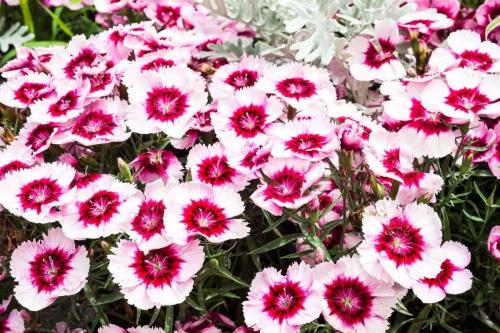
Dianthus, also known as Xing'an dianthus, northern dianthus, awl-leaved dianthus, Mongolian dianthus, thread-leaved dianthus, alpine dianthus, Liaodong dianthus, long-calyx dianthus, long-bracted dianthus, forest dianthus, three-veined dianthus, Latin name: Dianthus chinensis L. It is a perennial herb of the class Dicotyledoneae, family Caryophyllaceae, genus Dianthus, 30-50 cm tall, the whole plant hairless, with a powdery green color. The stems grow from the root crown, loosely clustered, upright, branched in the upper part. The leaves are linear-lanceolate, gradually pointed at the tip, slightly narrowed at the base, entire or with small fine teeth, with the midvein relatively prominent. The flowers are solitary at the branch tips or several flowers gathered into cymes; purplish red, pink, bright red or white, with the top margin irregularly toothed and cleft, markings at the throat, sparsely bearded; the stamens extend outside the throat, the anthers blue; the ovary is oblong, the styles linear. The capsule is cylindrical, enclosed in the persistent calyx, the seeds black, flattened and round.
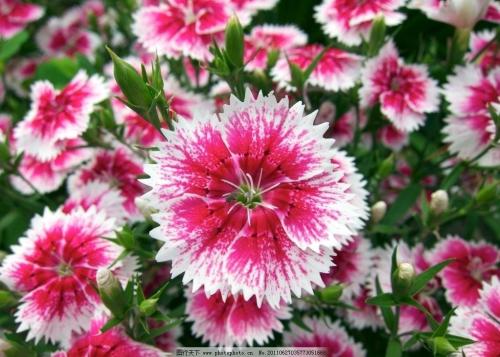
Characteristics: It likes sunlight, tolerates cold, tolerates drought, dislikes waterlogging, and prefers well-drained, fertile sandy loam. It is cold-tolerant but not tolerant of severe heat, and prefers sunny, high and dry, ventilated sites and well-drained fertile loam.
Propagation is by sowing and cuttings. The optimum temperature for seed germination is 21 to 25°C. Sow in autumn and plant out the following spring; for double-flowered varieties that do not easily set seed, divide or take cuttings in autumn. The whole plant of dianthus can be used as medicine and has the effect of clearing heat and promoting urination. Propagation is commonly carried out by sowing, cuttings and division. The optimum temperature for seed germination is 21 to 22°C. Sowing propagation is generally carried out in September. Sow in an open-field seedbed, keep the potting soil moist after sowing, sprouts appear 5 days after sowing, and seedlings emerge in about 10 days. The optimum temperature for growth during the seedling stage is 10-20°C. When the seedlings grow 4-5 leaves, they can be transplanted and will bloom the following spring. They can also be sown directly in the open field in September or sown in pots in a cold room in November-December, and planted out in the open field in April of the following year. Cutting propagation is carried out from October to late February to March of the following year. During the period of luxuriant branches and leaves, cut 5-6 cm long tender shoots as cuttings, and roots form 15-20 days after insertion. Division propagation mostly uses old plants for division after flowering, and can be carried out in autumn or early spring. For example, divide in April, pay attention to drainage in summer, strengthen fertilizer and water management after September, and they will bloom again in early October.
Detailed steps:
1. The day before taking cuttings, first water the dry flower bed thoroughly.
2. Choose healthy branches with strong leaves, and do not choose branches that have formed buds and are flowering.
3. Remove the leaves from the lower part of the branch, keeping the strongest part.
4. Cut below the node (leaf ring).
5. Insert the cuttings into flower pots, propagation trays or mixed cutting propagation soil, and keep moist.
6. Under normal conditions they root within three weeks, and grow best in a coconut coir mixed growing medium.
7. After the cuttings have rooted, pinch the main shoot to encourage new shoots; morning is the best time for pinching.
8. Dianthus likes light and well-drained soil. You can create a suitable growing environment for them by mixing coarse sand into clay or making raised beds. The louder the squeaking sound when you squeeze a handful of sandy soil in your hand, the better the soil.
9. Regular pruning of flower branches can encourage continuous new flowers, but merely cutting off the faded flower heads is not enough; you should cut off the entire flower branch, so as to encourage the plant to tiller from the base.
10. During the growing season, apply a topdressing of water-diluted phosphate-rich tomato fertilizer once every two weeks.
11. To make dianthus bloom profusely and grow lushly, you should cut them short in early September to form dense flower clumps. Dianthus has a long history of cultivation in China