Detailed Explanation of Balsam Planting Methods and Key Technical Points
Balsam (Impatiens balsamina L.), also known as garden balsam, touch-me-not, or balsam stem, is an annual herbaceous flowering plant in the class Dicotyledoneae, order Geraniales, family Balsaminaceae, genus Impatiens. The whole plant consists of six parts: roots, stems, leaves, flowers, fruits and seeds. Because its flower head, wings, tail and feet all curve upward like a phoenix, it is also called the golden phoenix flower. The balsam plant has six parts: roots, stems, leaves, flowers, fruits and seeds. The flowers come in many colors, including pink, bright red, purple and pinkish purple. When the petals or leaves are mashed and wrapped on fingernails with tree leaves, they can dye them a vivid red, which is very beautiful and much loved by girls.
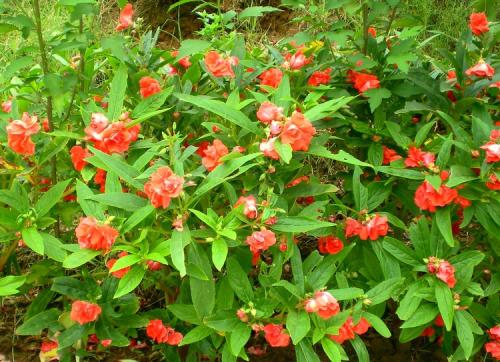
Balsam Propagation Methods
1. Growing environment: Balsam can generally grow in warm, humid and cool climates, but it grows best in sunny places. Soil that is well-drained, humus-rich and fairly sandy loam is more suitable.
2. Land preparation
The balsam root system is not very developed, so before sowing the land should also be plowed once. The depth is about 20 cm. Then rake it level and make raised beds for sowing.
3. Sowing
Generally speaking, balsam propagation is relatively easy, whether by direct sowing or transplanting. For direct sowing, the seeds can be sown in holes in the bed or border. A spacing of about 20 cm between plants and rows is sufficient. When the seedlings grow to 4 or 5 cm, carry out final planting once. For transplanting, sow the seeds in rows in the bed; when the seedlings grow larger, water before transplanting, then set the seedlings out in the new bed at the same plant and row spacing as above.
First level the ground, apply base fertilizer, and mix it evenly with the soil by plowing. For direct sowing, use a row spacing of about 1 chi and a plant spacing of 0.5-1 chi, dig shallow holes 2 fen deep, put 3-4 seeds in each hole, cover with soil level with the surface, and press lightly. Alternatively, open straight furrows 2 fen deep at a row spacing of 1 chi, scatter the seeds evenly, then cover with soil firmly. Keep the soil moist; generally seedlings emerge in about one week. Use about 2 jin of seed per mu. When the seedlings are 2 cun high, thin them.
First prepare the seedling bed well, apply fertilizer and form beds. Scatter the seeds evenly over the bed surface, then cover with about 2 fen of soil, smooth it over and press lightly, and water. Thin the seedlings when they are about 2 cun tall. At about half a chi, they can be moved to the final planting site. Before transplanting, dig holes 1 chi square, pick out stones, apply a little base fertilizer, and plant at the same depth as in the original nursery. Set the seedlings out with their native soil, firm the soil, and water. Determine transplanting density according to the direct-sowing specifications.
4. Fertilization
When preparing the bed, mix fully decomposed organic fertilizer into the soil, then make the bed. If transplanting, after transplanting, during the seedling growth period, apply one topdressing of ammonium sulfate or one application of superphosphate.
5. Cultivation and weeding
During the seedling stage, weeding and cultivation must be done promptly. After the plants grow larger, weeds generally do not grow well, but loosening the soil should still be noted. 6. Harvesting and processing: Each autumn, when the seeds mature, is the harvest period. After harvesting, they must be sun-dried until completely dry for easy storage, and this is the finished product.
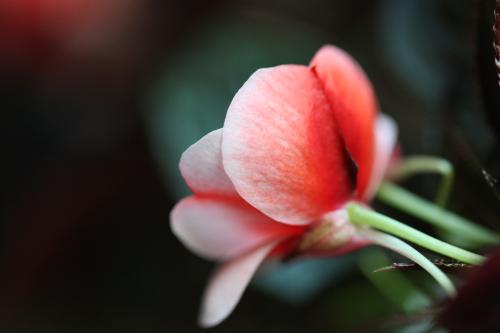
Balsam Care Tips
1. Light and temperature: Balsam likes sunlight and is also shade-tolerant, needing about 4 hours of diffused sunlight each day. Shade it in summer to prevent scorching. The suitable growing temperature for balsam is generally 16-26 degrees Celsius, and during the flowering period the temperature can be kept above 10 degrees Celsius. In winter, place it indoors to prevent frost damage.
2. Watering and fertilizing: The potting soil for balsam should be kept moist. In summer, water more, but there must be no standing water in the pot. When there is too much rain, drain it to prevent waterlogging and rot of roots and stems. In summer, water generally in the morning and evening. Do not water under the hot sun.
3. Pruning: After final planting, pinch off the top of the main stem of the balsam plant, which can strengthen its branching ability; flowers at the base of the balsam can be picked off at any time.
4. Pest and disease prevention: In rainy summer weather, it is prone to powdery mildew. Before onset, spray 160-200 times Bordeaux mixture of equal parts. In the early stage of the disease, spray 1000 times 70% thiophanate solution or 200 times sulfur powder suspension for control.
5. Management: Loosen the soil and weed promptly, and water during drought.
When the balsam seedlings grow to 30-40 cm high, remove the old leaves on the lower part of the stem and pinch off the growing tip, which allows the balsam to branch more.
Balsam likes a warm and humid climate. During the seedling stage it must not be too dry; water promptly according to soil moisture, and pay attention to loosening the soil and weeding. In the early stage, earth up around the roots to prevent lodging. When the seedlings are about 1 chi high, pinch off the growing tip, remove the lower old leaves to encourage branching, and apply topdressing. During the flowering period, water must not be lacking, but waterlogging must also be prevented.
Balsam care requires attention to ventilation. If the care environment for balsam is poorly ventilated, it is easy for the balsam neck to rot.
For pest and disease control, if powdery mildew occurs, spray 0.2 degrees Baume lime sulfur mixture or 50% amobam 1,000 times aqueous solution for control.
Harvesting and processing
Pick the flowers when they first open and sun-dry them to obtain balsam flowers. Those that are dry, freshly opened, free of impurities and not moldy are best. Between summer and autumn, cut the whole plant, remove the flowers and fruits, and sun-dry it to obtain balsam stem. The fruits burst open easily after ripening, so they can be picked when the fruit color turns greenish white. The fruit ripening period varies, so pick as they ripen. Remove the fruit skin and sun-dry the seeds for medicinal use. Those that are dry, plump and free of impurities are superior.