A Detailed Guide to Edamame Planting Methods and Technical Key Points
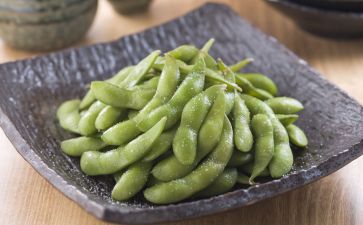
Greenhouse Edamame Planting Technology
1. Land preparation and fertilization. Edamame prefers warmth and is a short-day plant; it is best suited to neutral soil that is deep, rich in calcium and organic matter, and well drained. For early sowing in greenhouses, soil moisture should not be too high, otherwise the seeds tend to rot under low temperatures. Generally, apply about 1,000 kg of decomposed chicken manure and 15 kg of imported three-element compound fertilizer per mu as base fertilizer, applied 1 month before sowing. Practice has shown that heavy application of base fertilizer can improve the cold resistance and yield of edamame. After fertilizing, make flat beds 2.1 m wide, with furrows 0.3 m wide and 0.2 m deep.
2. Timely sowing
1. Variety selection. Local edamame varieties grown for early maturity include Tezao No. 4, Tezaoshu Edamame, and Hefeng 35, but Tezao No. 4 is the most ideal.
2. Sowing. It is best to sow from the end of January to the beginning of February, choosing weather with no strong cold air influence. The seeding rate is 5-6 kg per mu. Use the spot-sowing method, with a plant-to-row spacing of 25 cm x 25 cm and a sowing depth of 3-5 cm; the depth should be uniform to help seedlings emerge evenly. Generally, when the temperature inside the greenhouse is 10-25 degrees C (outside temperature 8-15 degrees C), seedlings emerge evenly in about 10 days.
3. Chemical weeding. After sowing and covering with soil, use 80-100 ml of 5% acetochlor emulsifiable concentrate per mu, diluted in 30-40 kg of water, and spray evenly on the bed surface to control weeds.
3. Greenhouse management
1. Temperature management. In the early stage, the main task is preventing freezing and keeping warm; in the later stage, strengthen ventilation and air exchange. Close the greenhouse properly 1 week before direct sowing, and immediately after sowing cover with plastic film or add an arched film cover. After emergence, pay attention to choosing sunny days to break the film and release seedlings in time. Before emergence, the suitable temperature inside the greenhouse is 15-25 degrees C; during the growing period, the suitable temperature is 20-25 degrees C; during the flowering period, the suitable temperature is 20-28 degrees C. Therefore, the greenhouse should be closed in time to keep warm or ventilated according to the growth characteristics of each stage.
2. Fertilizer and water management. Generally, fertilization is not advisable at the seedling stage. If leaves wrinkle due to low temperature, use 50 g of Huangyeddi micro-fertilizer per mu diluted in 30-45 kg of water and spray once at noon on a sunny day. At the flowering stage, use a 0.5% potassium dihydrogen phosphate aqueous solution for foliar topdressing. The spraying time is before 10 a.m. or after 4 p.m., and cloudy days are best. Spray again after 7-10 days; if rain occurs after spraying, spray once more. In addition, during the pod-setting stage after flowering, apply 10 kg of urea per mu diluted in water.
For water management, do not water after sowing before seedlings emerge; if the seedling stage is excessively dry, water moderately to promote root growth. For water management during the dry-flower and pod-setting stage, follow the principle of "dry flowers, wet pods."
3. Pest and disease control. Because of the low temperature and high humidity inside the greenhouse during the seedling stage, combined with the application of undecomposed farmyard manure, greenhouse edamame is very prone to damping-off and seedling death. Therefore, during the seedling stage, 200 g of chlorothalonil smoke agent per mu can be chosen for chemical control inside the greenhouse, and water-based pesticides should be used as little as possible. When edamame has 4 leaves, sprays such as chlorothalonil and carbendazim can be used for control. Spray once every 1 week, for a total of 2 sprays.
4. Timely harvest. Generally, greenhouse edamame enters the harvest period in late April to early May. Early-maturing edamame values the word "early," so pods should be picked in batches at the right time and brought to market early to obtain better returns.