Detailed Explanation of Rye Planting Methods and Key Technical Points
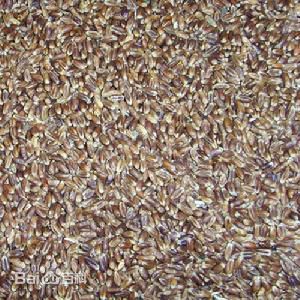
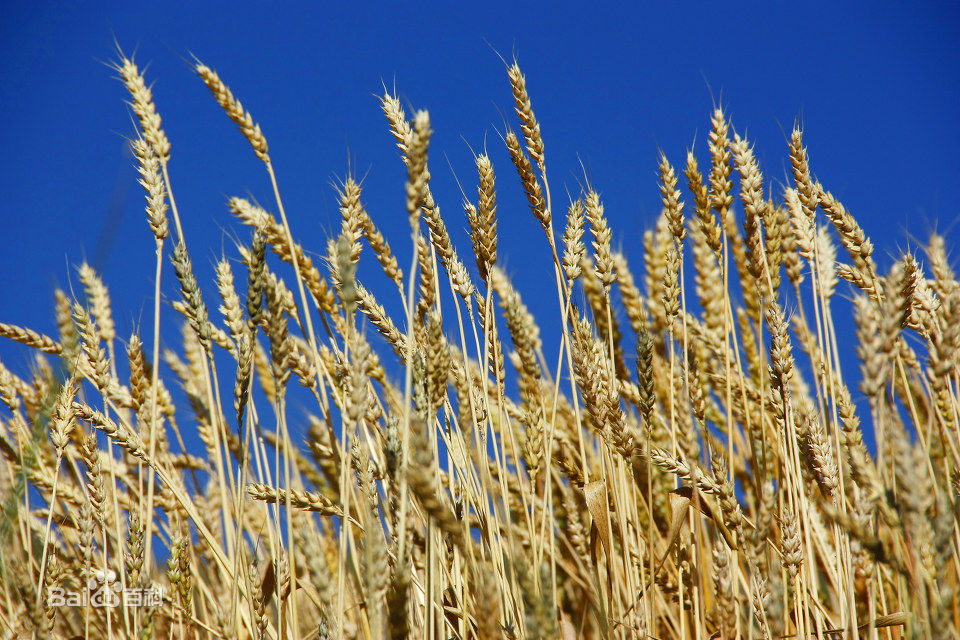
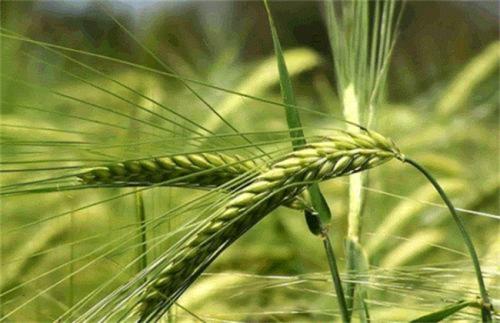
Rye (scientific name: Secale cereale L.) is an annual or overwintering herbaceous plant in the grass family, genus Secale. The culms are tufted, reaching up to 100 cm tall; the leaf sheaths are usually hairless or covered with a white powder; the ligule has finely cleft teeth at the tip; the leaf blades are smooth on the underside and rough along the edges on the upper side. The spike inflorescence is pubescent; it contains 2 florets, the nearly opposite florets are both fertile, the lemma has an awn at the tip, with fine bristles along the lateral veins on both sides of the back, and the palea is nearly equal in length to the lemma. The caryopsis is oblong and light brown.
Planting Methods
1. Sowing:
Ryegrass is a fast-growing annual variety that can be sown in both spring and autumn. Autumn sowing from August to the end of November is optimal. Drilling, dibbling, and broadcasting are all acceptable. For drilling, the row spacing is generally 30 cm, and the sowing depth should preferably be 1-2 cm. The seeding rate per mu is 1-2 kg. When sowing in dry land or paddy fields, pre-soak the seeds in 1% lime water for 1-2 hours; this can advance emergence and improve the germination rate. (Growers must carefully control the lime water concentration when soaking seeds to prevent seed burn).
Autumn sowing or spring sowing. In the southern regions of China south of the Huaihe River, autumn sowing is suitable, and mowing can begin the following spring; in North China and Northwest China, spring sowing is suitable, sown in April-May and harvested in September-October. When the temperature drops below 25 degrees C in early autumn, sow as early as possible. In the middle and lower reaches of the Yangtze River, sowing in mid-to-late September is suitable, no later than mid-October; spring sowing can also be done before the end of March, but for some varieties, both fresh grass and seed yields under spring sowing are lower than under autumn sowing. The seeding rate is determined by seed quality; when both germination rate and purity meet standards, the seeding rate per mu for forage use is 1.5-2 kg. Drilling is common, but broadcasting or intercropping sowing is also possible; for forage use, the row spacing is 20-30 cm. After sowing, cover with soil 2-3 cm deep; in the north, press the soil after sowing. In some intensive cultivation areas in southern Jiangsu, seedling raising and transplanting can also be used.
2. Land preparation:
Ryegrass seeds are small and light, requiring fine land preparation. To ensure sowing quality and ensure good root development, deep plowing is necessary, with a plowing depth of no less than 20 cm. Because ryegrass seeds are small and light, the land should be finely plowed and harrowed before sowing. After the previous crop is harvested, stubble should be immediately cleared and deep plowing carried out. Australian ryegrass has a deep root system, so the soil must be deeply plowed, striving to achieve a loose topsoil and firm subsoil, with fine, crumbly soil and a level surface to benefit seedling growth and development.
3. Fertilization:
At present, most land used for planting forage grass has relatively poor fertility, and grass-family forage grasses require more nutrients, so the application of base fertilizer is very important. Base fertilizer should be mainly organic fertilizer, applying 1500-2000 kg of high-quality manure per mu, and an appropriate amount of chemical fertilizer (10 kg of standard nitrogen) may also be added. On phosphorus-deficient soil, mix 15-25 kg of superphosphate per mu with organic fertilizer and apply as base fertilizer. Topdressing is applied in winter and early spring, generally 7.5-10 kg of urea per mu each time. After each mowing, topdress once, applying 6-8 kg of urea per mu each time.
Because ryegrass has strong tillering ability, grows quickly, and has high grass yield, it needs to absorb more nutrients from the soil. If fertilizer is lacking, yield will decline, and among fertilizers it is most sensitive to nitrogen fertilizer. Applying nitrogen fertilizer can enhance tillering and the growth rate of the plant clump. The practice of the Special Animal and Plant Improved Variety Experimental Farm in Minquan County, Henan Province, is: before sowing, apply 3000 kg of organic fertilizer per mu or 50 kg of compound fertilizer as base fertilizer, mix seeds with 20 kg of calcium magnesium phosphate fertilizer, and during the seedling stage and after each mowing, topdress with nitrogen fertilizer, applying 10 kg of urea or ammonium sulfate per mu, which can increase grass yield by about 20%.
4. Field management:
Ryegrass grows slowly at the seedling stage, so timely intertillage and weeding are needed. In pure-stand fields, if broadleaf weeds are dominant, spray 1-2 times with 2,4-D sodium salt at the seedling stage; after the beginning of spring, the plants grow rapidly and can then suppress weed growth. Irrigate during dry weather. Italian ryegrass is susceptible to damage from armyworms, stem borers, and other pests, and timely control is required.
If weeds are excessive at the ryegrass seedling stage, weed promptly; if the soil is compacted, carry out timely intertillage, combined with earthing up. Australian ryegrass is relatively sensitive to water during the tillering, jointing, and booting stages, so it should be watered appropriately to keep the field moist. Australian ryegrass has relatively strong resistance to pests and diseases. If cutworms, larvae, and mole crickets are found causing damage at the seedling stage, insecticides such as carbofuran and trichlorfon can be used for control.
Common Pests and Diseases