Detailed Explanation of Cabbage Planting Methods and Technical Key Points
Cabbage has the characteristics of cold tolerance, disease resistance, strong adaptability, easy storage and transport tolerance, high yield, and good quality. It is commonly cultivated throughout China and is one of the main vegetables in spring, summer, and autumn in Northeast China, Northwest China, North China, and other regions.
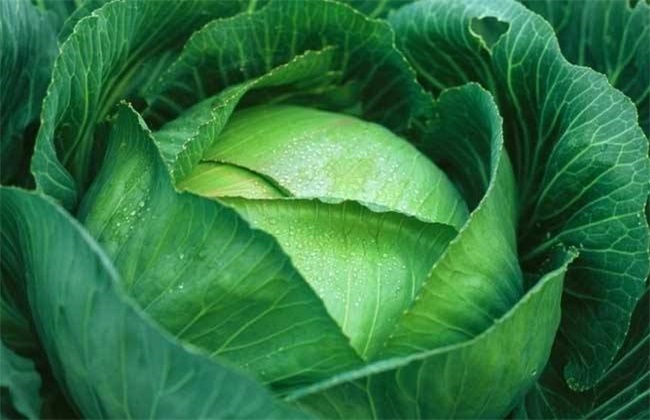
Planting Techniques:
1. Cabbage Planting Time
Cabbage has strong adaptability and is both cold-tolerant and heat-tolerant. In northern China, it can be planted in the open field in spring, summer, and autumn. In the high-cold regions of Northeast China, Northwest China, and North China, seedlings are mostly raised in spring and summer, planted in summer, and harvested in autumn; the growth period is long, and the heads are large, making these the main producing areas for Chinese cabbage and cabbage. In North China and some cities in Northeast China and Northwest China, planting is mainly in two crops, spring and autumn, and multiple cropping is also possible. Raising seedlings in winter and spring, planting in spring, and harvesting in summer is called summer cabbage; raising seedlings in summer, planting in autumn, and harvesting in autumn and winter is called autumn cabbage.
2. Cabbage Seedling Raising Techniques
Cabbage planting all uses seedling raising and transplanting. Spring cabbage is mostly early-maturing cultivation. In cold regions such as Northeast China, Northwest China, and Inner Mongolia, seedlings are usually raised in greenhouses from February to March, with a seedling period of 60-80 days. In North China, there are two seedling raising methods: one is to raise seedlings in cold frames from mid-December to early January and transplant in February to March. The second is to raise seedlings in plastic greenhouses in February, with a seedling period of 40-50 days. Autumn cabbage seedlings are raised from June to July, with a seedling period generally of 35-40 days. Summer cabbage seedlings are raised from April to May, with a seedling period of 30-40 days.
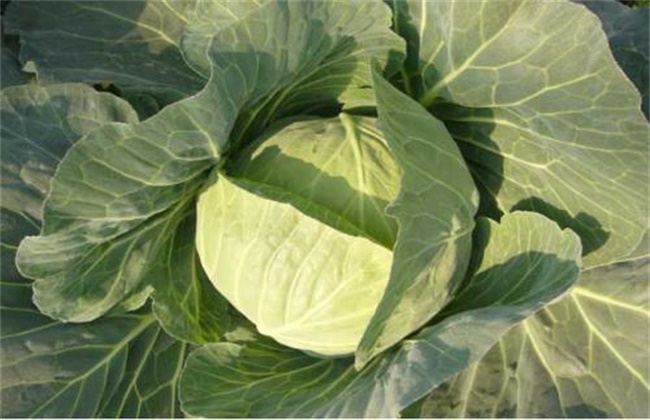
3. Fertilizer and Water Management for Cabbage
After cabbage is planted, it needs to be watered to help the seedlings recover. At this time, because the temperature is relatively low, after watering, the soil should be cultivated and loosened in time to preserve soil moisture and increase soil temperature, promoting the recovery and growth of the root system. Entering the rosette stage, the plant needs to form a strong assimilatory organ and absorbs more water and fertilizer. The first topdressing can be carried out, applying 15-20 kg of nitrogen fertilizer per mu, and fully supplying water to promote leaf head growth. After the leaf head is formed, watering should be controlled to prevent cracking and facilitate storage.
After cabbage survives, carry out the first topdressing, applying 10% diluted human and livestock manure liquid per mu, with 600-800 kg applied per mu. Later, during the spreading stage and before and in the middle of head formation, carry out topdressing, with a concentration of 30-40%, about 1500 kg, mainly using human manure, pig manure, and so on, and a little nitrogen fertilizer can be added; generally adding 0.5 kg of urea per 100 kg is sufficient.
Furthermore, throughout the entire growth period, chemical fertilizer should only be added 2 times or fewer, so as not to affect quality. Under conditions of high temperature, strong sunlight, and long periods without rain, corresponding measures can be taken to carry water to irrigate seedlings or irrigate to moisten seedlings for drought resistance. Irrigation should be carried out on clear evenings. After filling the ditch surface, immediately drain the remaining water in the ditch to avoid causing root rot and affecting growth. In addition, the topdressing of spring cabbage is different from the above-mentioned autumn cabbage topdressing. With the same base fertilizer, spring cabbage generally uses clear water irrigation in winter mainly for drought resistance and preservation, but clear water should not be watered too much; as long as the seedlings are growing well and there is no water shortage, do not water.
After the beginning of spring, spring cabbage grows rapidly. At this time, it is appropriate to topdress 2-3 times with heavy fertilizer at a concentration of about 40%. One time is carried out when the leaves between the plants fill the field soil, called "row closing," and the other 1-2 times are carried out before and in the middle of head formation. Apply about 1500 kg of human manure liquid per mu.